
As Pope Leo prepares for the longest trip of his pontificate, Church leaders in Uruguay say the pontiff will encounter a highly secularized culture, in a country with a very different Catholic history than many of its South American neighbors.
The nation has not had a papal visit since 1988, and leaders who spoke with The Pillar say it has a dire need for evangelization, even amid the prospect of a small revival in faith.
—
Popularly known as the Switzerland of the Americas, Uruguay is one of the most stable countries in Latin America — but it’s also widely regarded as the most secularized on the continent, with Mass attendance among Catholics in the single digits, and more than half the population identifying as non-believers.
Uruguay was one of the first countries in Latin America to legalize gay marriage, abortion, and euthanasia.
Observers have said the country is in many way more akin to Europe than the rest of the continent, as most Latin American countries are also undergoing a process of secularization, but not to the extent Uruguay has.
According to Bishop Milton Tróccoli of Maldonado-Punta del Este y Minas and president of the Uruguayan bishops’ conference, the country has unique historical circumstances.
“Evangelization arrived late in Uruguay, and secularization arrived early,” Tróccoli told The Pillar.
“The first diocese in Uruguay was established in 1878, when most Latin American countries had had dioceses for centuries. Santo Domingo and Lima had been dioceses for over three centuries, just to name two examples. And the country underwent a very aggressive process of secularization not much later on, which excluded the Church from education, among other spheres,” Tróccoli added.
Fr. Julio Fernández Techera SJ, rector of the Catholic University of Uruguay, told The Pillar that Uruguay was a late bloomer, both in historical terms and within the Church.
“Uruguay is sparsely populated, it only has 3.4 million inhabitants in a territory that’s larger than the Netherlands, which has about 5 times more population. It’s an area of late colonization by the Europeans. For example, Montevideo was only founded 300 years ago. And these were lands with very little indigenous population, about 5,000 people, very scattered among very small tribes,” Fernández Techera said.
“When it became independent, it was a country with a very superficial religious imprint: it was officially Catholic, but there were no bishops, no religious orders. And many of the priests were people who had been sent to Uruguay because they weren’t living very holy lives. And from that first decade of independence, there are elements of anticlerical liberalism. So, in a way, in Uruguay secularization and evangelization were happening at the same time.”
According to Fernández Techera, an apparently contradictory dynamic developed in Uruguay. As the country secularized more at the end of the 19th century at an official level, it also became more religious.
“That has to do with the actions of Uruguay’s first bishop, Blessed Jacinto Vera, who was an extraordinary missionary and brought several religious congregations to the country. So, the Church keeps growing in a country that’s officially secular and sometimes very aggressively so. The Church kept growing until the [Second Vatican] Council; in the first half of the 20th century was the period of greatest vocational flourishing,” he added.
“This is my interpretation, and others may disagree, but the hermeneutic of rupture of the Second Vatican Council was very strong in Uruguay, and affected the religious vitality and the vocational influx in the country. While the vocational situation was relatively healthy in the ‘70s and ‘80s, the decline had already started,” he added.
Uruguay started a process of official secularization in the late 19th century — disentangling the Church from organs of civil government — which intensified after the election of José Battle y Ordoñez as president in 1903.
Battle’s government founded public hospitals without the participation of the Church, removed crucifixes in other hospitals, and banned the teaching of religion in public schools.
In 1919, religious holidays were secularized. Today in Uruguay, the Epiphany of the Lord is a public holiday but it’s officially known as “Children’s Day,” Holy Week is “Tourism Week,” and Christmas is “Family’s Day.”
“The Church in Uruguay had just gotten its first dioceses when the ideas of Freemasonry and the Enlightenment were already very popular throughout the Americas. In most South American countries, they found a well-established Church, well-prepared, well-formed, able to stand up to them: with clergy, with bishops, with religious life, with well-formed laity,” according to Fr. Sebastián Alcorta, a formator at the Montevideo seminary.
“In Uruguay, there was little clergy, poorly formed; there was nearly no religious life; and the few committed laypeople there were, were not well catechized. So that ended up creating fertile ground for anti-clerical and, more broadly anti-religious ideas. But there was never a bloody persecution as in Mexico, we didn’t have martyrs in Uruguay,” he added.
“Our leaders sought a French-style laïcite, and I think in many ways they went even beyond. And the great result of this is a profound ignorance of religion. So that leaves a mark in the sense of transcendence, of hope in people in this country. Uruguay has the highest suicide rate in Latin America. I’m not saying lack of faith is the only factor, but lack of transcendence has left its mark in the country’s culture,” Tróccoli said.
“Very recently a polling firm published a survey with up-to-date data on religion in Uruguay,” Alcorta said. “32% of Uruguayans identify themselves as Catholics, but only 9% say they practice their faith. But if we look at Mass attendance, it’s actually even less, 6-7%.”
Fr. Alcorta told The Pillar he believed Uruguay is today practically a mission territory.
“It’s a small and beautiful church; there are fewer than 400 priests in the whole country. There’s still a significant network of about 80 Catholic schools, most of them small, with between 150 or 200 students, and two big Catholic universities, one run by the Jesuits and the other by Opus Dei. The whole country has 16 seminarians in a single national seminary,” he said.
“When I was ordained a decade ago, there were 32 seminarians, and back in the 1970s or ‘80s there were around 90 or 85 seminarians, which was almost full capacity for the seminary. The decrease is in part due to secularization, but also a ‘purification’ process, as there were many young men at the seminary back in the day who felt a calling but more from a social leadership perspective because of the military dictatorship at the time, not as a supernatural calling from God,” he added.
However, Alcorta is optimistic about the future.
“We have young men entering the seminary every year, this year we had eight, last year five, next year five more. I think we hit rock bottom and you can only grow from there, there’s a very good atmosphere among the seminarians and young priests, and they have a deep understanding of their vocation,” he said.
Bishop Tróccoli said that the country is in fact undergoing a similar process as many European countries, with an increase of adult baptisms and people returning to the faith later in life.
“On the one hand, we have less children being baptized or attending catechism, but there’s been an increase in adults requesting baptism and sacraments of initiation throughout the country. We don’t have exact numbers yet, but it’s noticeable, and it’s an encouraging sign that evangelization has to go in the direction of those who haven’t met Christ, whose family perhaps never passed on the faith to them, but have a longing for God,” he added.
“But the most important thing about this is not the numbers, but to place even more emphasis on adult catechesis so it produces convinced Christians with solid formation and spiritual life. We’re less, but practicing Catholics in Uruguay are well integrated into parishes, movements, communities, and are convinced of their faith, want to persevere in the faith, and are coherent in their witness.”
Fr. Fernández Techera said he thinks “we can’t yet speak of a ‘revival’ — what’s happening is that there are some movements that are quite strong, there are some young priests who are very active.”
“If we make the most of it, the visit can be a moment of grace and of reviving our faith. The Church in Uruguay needs a renewal, a greater apostolic zeal, more strength. It’s a gift that a country as small as Uruguay should receive the pope in three different cities, over two full days; we are very excited about that,” he added.
Fr. Alcorta described the situation as both difficult yet full of opportunities for the Church in Uruguay.
“Montevideo is the largest diocese, and has more priests, but most of the other dioceses have only a handful of diocesan priests, some missionaries and religious priests. But not having the riches of the Church in other countries, because we receive no government aid, also gives you a certain freedom of action. While Uruguay has passed a lot of laws that go against Church teaching, the Church has spoken very strongly and freely about these issues,” he said.
“This is why the Archbishop of Montevideo, Cardinal Sturla, likes to say the Church in Uruguay is ‘poor and free, small and beautiful.’”
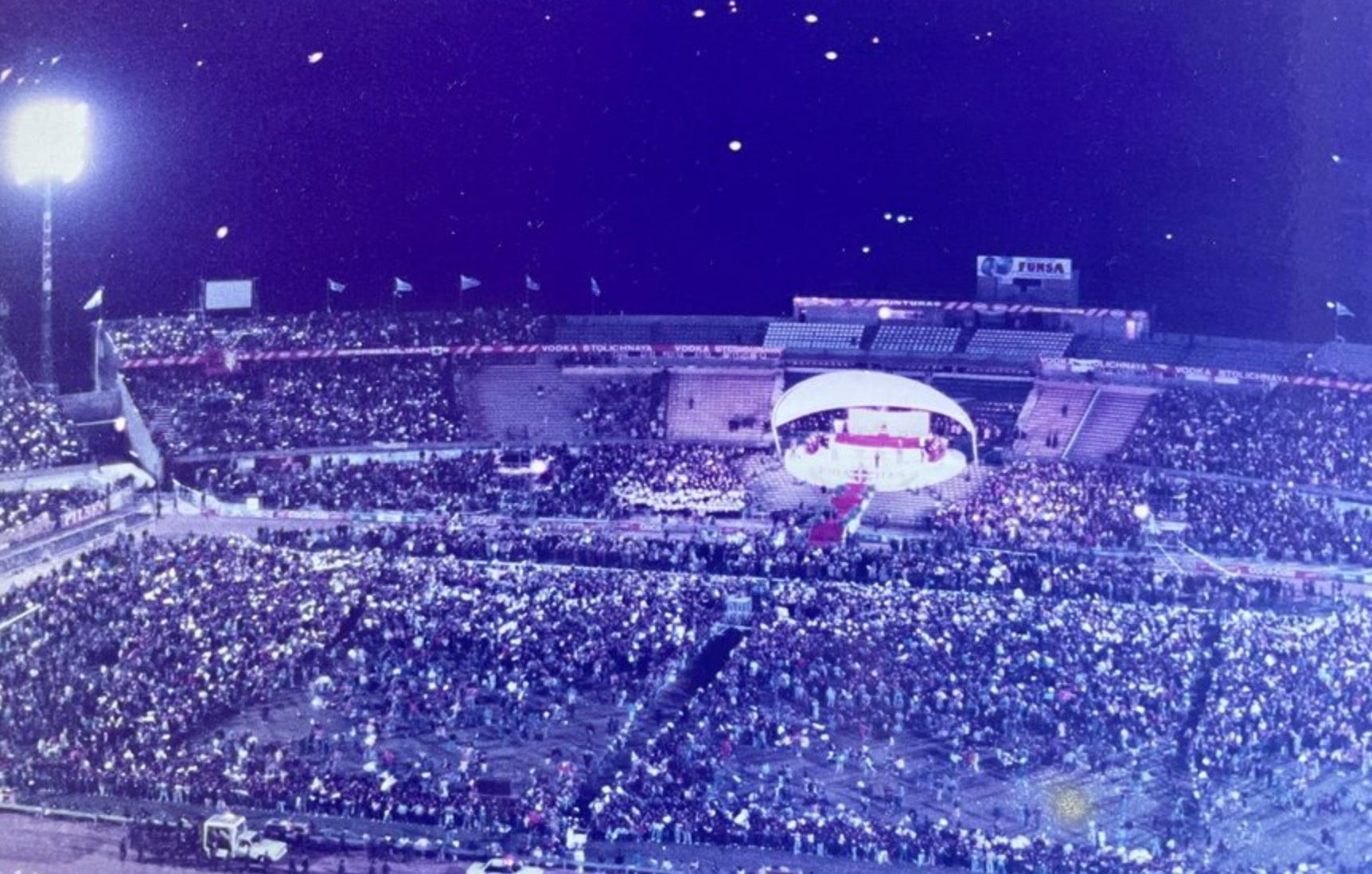
Pope Leo will be the first pope to visit Uruguay since Saint John Paul II visited the country for a few hours in 1987 and then for two days in 1988.
“Pope John Paul II is the only pope that came as a pope, but Pius IX visited the country in 1824 on his way to a diplomatic mission to Chile, many years before he was pope, as did Pius XII when he was secretary of state in 1934, on his way back from the Eucharistic Congress in Buenos Aires that year. Interestingly, despite living most of his life in Buenos Aires, there’s only a single time on record in which Francis was in Montevideo, when he was still a Jesuit in formation at a young age,” Fr. Fernández Techera said.
“Despite the fact that he was superior to the Augustinians for a decade and there being Augustinian communities in Uruguay, it doesn’t seem Pope Leo ever went to Uruguay, and he has said he doesn’t recall ever coming,” he added.
Fernández Techera said that despite the official secularization in Uruguay, John Paul II’s trips to the country left a lasting mark.
“The first time he was actually going to Argentina and Chile to mark the peace treaty that had been signed between both countries in Montevideo, and he stopped less than 24 hours in Montevideo, but it was intense.The whole city was covered in photos of the pope on people’s houses. And there was the official ceremony commemorating the signing of that treaty and a meeting at the cathedral with priests and religious, and then he celebrated a massive Mass at a place called Tres Cruces,” he added.
“Interestingly, the metal cross for the Mass was supposed to be provisional and meant to be removed after the Mass, but the then-President of Uruguay, the agnostic Julio Sanguinetti, proposed that it remain as a monument to the pope’s visit. That sparked a debate in Parliament because many felt this violated the separation of Church and state, but it was voted that it should remain and it still stands there to this day,” he added.
John Paul II visited the country again the next year, staying for three days.
“He went to four cities, which for a country like Uruguay is a lot: Montevideo, Florida, Melo, and Salto. It mobilized everyone, no [foreign] head of state nor any other public figure has ever gone so far into the country, let alone to so many places. It was very significant. I think those visits by John Paul II are in the memory of everyone who lived through them, even non-religious people, because many people came out to see him,” Fernández Techera said.
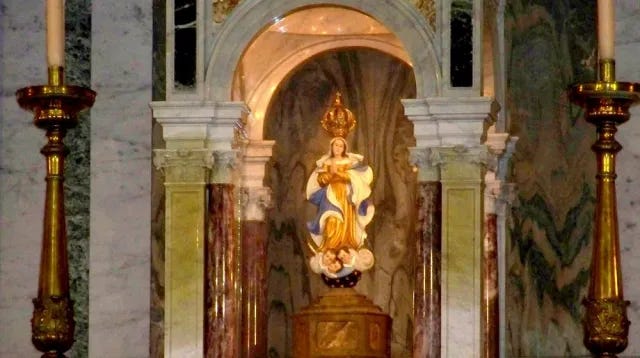
Pope Leo will also be making a stop in Florida to celebrate Mass in the sanctuary of Our Lady of the Thirty-Three, the country’s patroness, on November 8, her feast day.
“Our Lady of the Thirty-Three is a small image of Our Lady of Luján, about 10 inches, carved at the Jesuit missions north of our country, after it was requested for an image to be sent from the missions, and devotion started growing. And when the ‘thirty-three Orientals,’ thirty-three men who fought for the independence of Uruguay from Brazil in 1825, declared independence in Florida, the parish priest brought the image back to the city, and the thirty-three lowered their flags and consecrated our homeland to Our Lady, and the image took the name of Our Lady of the Thirty-Three afterwards. Eventually, Pope John XXIII proclaimed her patroness of Uruguay,” Tróccoli added.
Tróccoli added that despite the secularization and the challenges in the media, the reaction to the visit has been overwhelmingly positive, even among non-religious or non-practicing Uruguayans.
“Even when the visit was just a rumor, there was a lot of expectation, a lot of people will go to see the pope, and the government itself has made itself available for everything that’s needed for the visit,” Tróccoli said.
“The visit has stirred a movement of joy, of hope, among believers and non-believers alike; they want to hear the pope here in Uruguay, they want to see what he’s going to tell us, the message he brings us to Uruguay. And I think that’s also going to be very good for the Church: it’s going to give us encouragement, it’s going to be a boost for our Church and for evangelization.”
Fr. Alcorta said that the visit will also give the Church a role in the public discourse and the media it usually doesn’t have.
“I’ve seen several priests being interviewed on the TV recently, which is not common, and the visit will highlight a lot of the social work the Church does with the poor in the country that most people simply don’t know of, so this is an opportunity for evangelization and to make the Church and its work more known in the country.”
Fr. Fernández Techera said that across the political spectrum, from the mostly secular left, to the more Catholic-friendly right, there’s been support for the trip.
“The authorities from both political blocs are delighted. The pope is going to Montevideo, which is ruled by the left and the other two cities, Florida and Paysandú, are ruled by the right, and there’s been a lot of collaboration to make everything go as well as possible; there’s a very good atmosphere, and a lot of enthusiasm.”
Asked about the challenges of the Church in Uruguay that Pope Leo will get to know, Bishop Tróccoli said that the first one is evangelization.
“I think the pope is going to encourage us to evangelize, he is going to confirm us in the faith, and encourage young people and vocations, and the importance of the family as the center of our society,” he said.
Fr. Fernández Techera agreed.
“I think one of the challenges is to strengthen our apostolic zeal. The Church in Uruguay obviously has a very, very important social presence but sometimes that’s not visible. But with the visit, he’s going to some of the poorest areas in Montevideo, where the Church has many parishes, schools and other social initiatives and people. We’ll notice the Church’s commitment to the poor.”
“But it’s also much clearer today than it was when John Paul II was last in Uruguay that we need to push evangelization even more: the first thing is to announce the good news to the poor, not only bringing material well-being, but the most important thing, which is the spiritual life in Christ,” he added.