The Andorran Prime Minister has announced a plan to decriminalize abortion in the microstate by April next year “whether the Holy See likes it or not,” despite a Catholic bishop serving as co-head of state.
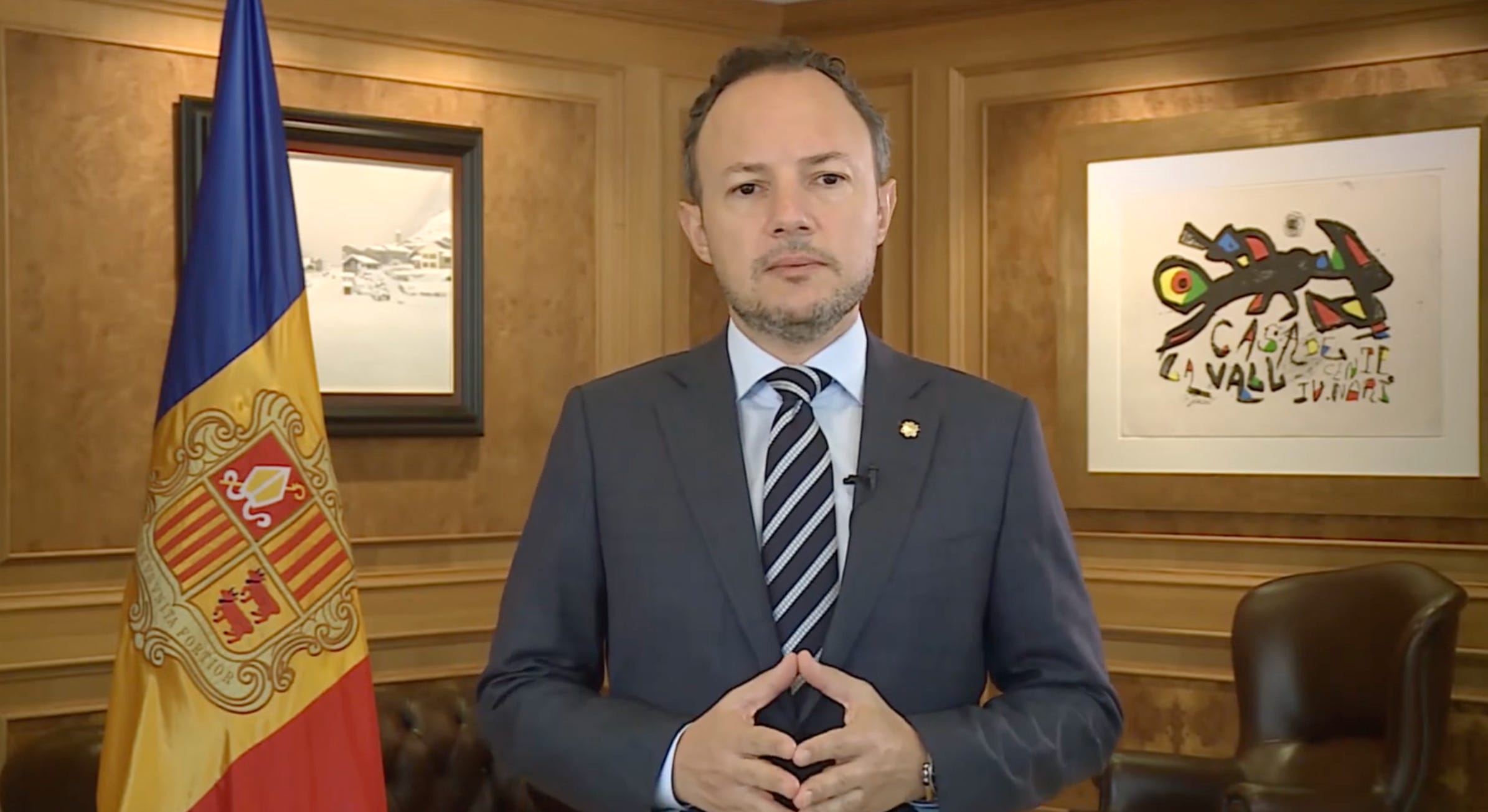
Xavier Espot, the Andorran PM, announced the plan in a Sept. 8 interview, saying that after years of tense talks with the Vatican the government on the issue of abortion dialogue with the Holy See will continue but “with our sights set on the upcoming parliamentary session and, therefore, with the assurance that we can pass legislation to decriminalize abortion.”
The country’s government has been in negotiations with the Holy See for years in an attempt to secure at least tacit approval for decriminalizing abortion, as the country’s co-head of state is the Bishop of Urgell, Bishop Josep Lluís Serrano Pentinat, the territory of which covers Andorra.
Andorra has an unusual political arrangement, with two co-princes serving as heads of state: the president of France and the Bishop of Urgell. As a result, legalizing any measure contrary to Catholic teaching can involve delicate political and ecclesial tensions, as a change in the law could theoretically involve the bishop.
The Urgell diocese, which dates back to the fifth century, serves around 212,000 Catholics from its center in La Seu d’Urgell, a town in Spanish Catalonia.
By law, only one of the country’s two co-princes needs to sign legislation for it to become law, a step usually left to the French president — the other Andorran co-prince — on contentious matters.
“What the government must gain as a result of this dialogue is the deep conviction that whatever we do, whether the Holy See likes it or not will not jeopardize our institutional system,” Espot added in the interview.
While Espot said again that the government wishes to pass the reform before the April 2027 elections, he did not specify a date for its approval or the specific scope of the law.
The text of the proposed law is not public. However, Andorran media has speculated that it would not be a far-reaching decriminalization: it would remove criminal penalties for women who procure abortions in Andorra, while abortion would technically remain illegal, and healthcare professionals could still be liable to criminal penalties for performing abortions.
While the negotiations between the government and the Vatican under Pope Francis were progressing, the process cooled after the former pope’s death.
In recent years, the Church has appeared to signal tacit acceptance of efforts to decriminalize abortion in Andorra, on the condition that the Bishop of Urgell would be exempted from formally sanctioning the measure as co-prince.
Espot said in March 2025 that the law had been “discreetly” negotiated with the Vatican.
La Vanguardia reported in 2024 that Andorran officials were negotiating with the Vatican on a change to national policy on abortion, and claimed that the Holy See had quietly approved the decriminalization plan that year with Pope Francis’ authorization.
The outlet also reported that Vatican Secretary of State Cardinal Pietro Parolin met with Espot in 2023, together with Archbishop Paul Gallagher, the Holy See’s foreign minister, to work toward a compromise on the matter.
Parolin visited Andorra in September 2023 amid rumors that Bishop Joan-Enric Vives, then-Bishop of Urgell, might abdicate as co-prince rather than sign an abortion bill into law, although Parolin ruled out the possibility.
The Vatican secretary of state said in a press conference at the time that the issue of abortion in Andorra was a “very delicate, very complex question that we need to face with a lot of discretion and a lot of wisdom.”
In his first public appearance as Bishop of Urgel on May 31, Serrano said that “there should be dialogue and support for those who suffer… [especially] women in a difficult position” due to abortion.
This was seen by many as a marked change of tone from his predecessor, Joan-Enric Vives, who had threatened to abdicate if abortion was legalized in the country.
Vives had also rejected the possibility of signing any bill that would go against Catholic teaching into law, saying that “when the Andorran people ask for a Catholic bishop to be their Head of State, they know what it implies.”
However, once the Church’s position became public, an uproar among Catholics in Andorra and Spain led the Andorran government to backtrack on its plans — and the Church to adopt a firmer stance.
Baró, the government minister for institutional relations, said in the interview that the “technical and philosophical part [of the bill] is written and ready.”
However, he mentioned that the approval of the bill hinges upon negotiations with the Holy See, as the government has the goal of decriminalizing abortion while maintaining the country’s institutional stability.
“It’s not like the Holy See decides upon this topic, the decision is conducted by the Consell General,” Baró said, referring to the country’s legislative power, “and the government must evaluate if the text is adjusted to these goals before presenting the bill,” he added.
Baró also said that he felt they were “very close” to finding an acceptable balance.
The debate around abortion was reignited in April, after French president and Andorran co-prince Emmanuel Macron visited the principate and said in a speech that “many Andorrans reclaim” the issue of decriminalization of abortion, and that “a dialogue was set in motion” to move forward with the proposal “within the respect of the institutions, everyone’s conscience, and tradition.”
The president of the Andorran government and one of the main supporters of the legislation, Xavier Espot, said after meeting with Macron that he thought it was necessary to move forward with decriminalizing abortion “with realism, with prudence, and with ambition” but said there wasn’t a specific timetable to decriminalize the practice.
Last year, the government was also preparing a companion bill that would maintain the country’s ban on performing abortions while providing public funding for women who travel to France or Spain to abort, La Veu Lliure reported. However, the bill has not been part of recent discussions on the subject.
—
In an Aug. 2025 address to French politicians, Pope Leo XIV said that “Christianity cannot be reduced to a simple private devotion, because it implies a way of living in society imprinted by love for God and for one’s neighbour who, in Christ, is no longer an enemy but a brother.”
“I am well aware that the openly Christian commitment of a public official is not easy,” the pope added, “Neither do I ignore the pressure, the party directives, the “ideological colonizations”, to use an apt expression of Pope Francis, to which politicians are subjected. They must have the courage to say at times, “no, I cannot!”, when the truth is at stake. Here too, only union with Jesus – the crucified Jesus! – will give you this courage to suffer in his name.”
At the end of his September 2025 visit to Belgium, Pope Francis announced he’d open the beatification cause of King Baudoin of Belgium.
In 1990, Baudoin refused to sign a law that would legalize abortion until 12 weeks of pregnancy in Belgium, saying in a message to the country’s PM that he “[feared] that this law will contribute to a palpable diminution of respect for the lives of the weakest among us,” throwing the country into a constitutional crisis.
After significant pushback, Baudouin wrote a message saying: “To those who may be shocked by my decision, I ask them: Is it right that I am the only Belgian citizen to be forced to act against his conscience in such a crucial area? Is the freedom of conscience sacred for everyone except for the king?”
Ultimately, the Belgian government worked out a compromise in which Baudouin declared himself unfit to rule while the government passed the law and then restored him as king a few days later.


According to +Parolin, this is a “very delicate, very complex question that we need to face with a lot of discretion and a lot of wisdom.” No it's not. The Andorran government wants to kill babies. That's not complicated, it's just plain evil.