Apostolic administrator appointed for Rabat during cardinal’s investigation
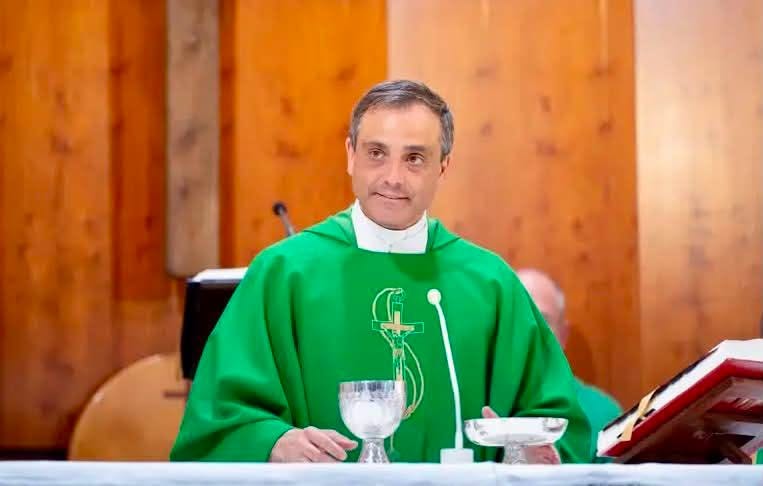
Msgr. Mario León Dorado, OMI, has been appointed as apostolic administrator.
The Archdiocese of Rabat, Morocco, announced Aug. 2 the temporary appointment of Msgr. Mario León Dorado, OMI, as apostolic administrator while the Holy See investigates allegations of sexual misconduct against Cardinal Cristóbal López Romero, SDB.
The move follows allegations from five women about López Romero’s conduct during his tenure in the archdiocese, including accusations that three women experienced inappropriate behavior from the cardinal during the sacrament of penance.
López Romero, who has been archbishop of Rabat since 2017 and was made a cardinal by Pope Francis in 2019, announced July 6 that he would temporarily step down from his post while the investigation proceeds. He has denied committing “any acts of sexual aggression, violence or harassment.”
León Dorado, the apostolic prefect of Western Sahara, will assume responsibility for the ordinary administration of Rabat as administrator sede plena until the investigation is concluded.
León Dorado took his perpetual vows as a member of the Missionary Oblates of Mary in 1996 and was ordained a priest for the same congregation in 2001. He started working as a priest in the Spanish Diocese of Jaén, and also served as a missionary in Western Sahara.
In 2009, he became the administrator of the apostolic prefecture of Western Sahara. In 2013, Pope Francis appointed him as apostolic prefect but he was not ordained a bishop. The territory has around 350 Catholics spread throughout 165,000 miles, served by four priests in two parishes.
The complaints against López Romero were filed two months ago in the Moroccan nunciature by a retired diocesan collaborator and another woman offering written testimony, AFP reported.
The woman reportedly accused the cardinal of “physical gestures” such as “particularly insisting and prolonged hugs” and “something similar to an attempt at kissing her,” from which the woman “escaped.”
AFP said that according to diocesan sources, three other women had also experienced “similar episodes” during confession.
Using the sacrament of penance to incite a penitent into sins against the sixth commandment is known canonically as solicitation. As a canonical crime, it is reserved to the Dicastery for the Doctrine of the Faith.
The Spanish outlet Religión Digital reported that sources at the DDF said they were unaware of any investigation involving the cardinal currently before the dicastery. However, it is possible that the investigation has not arrived at the dicastery yet, since it is still in its preliminary stages.
If found guilty, López Romero could lose his ecclesiastical offices, be suspended from exercising his priestly ministry, or be laicized.
López Romero told AFP on July 6 that he had “answered to his ecclesiastical superiors,” and that he had not “committed any acts of sexual aggression, violence or harassment” and would “fully cooperate with the investigation.”
Spanish publication La Razón said that López Romero is in Spain while he awaits the results of the investigation.
The same publication said that a statement from López Romero was read at a Spanish-speaking Mass in Rabat on Aug. 2.
“Never have so many people prayed for me; this is bearing fruit, and I am grateful for it,” he said in the statement.
López Romero, 74, was born in Almería, Spain and ordained a priest for the Salesian order in 1979, serving as a missionary and provincial superior for decades in Latin America.
He was a missionary in Morocco between 2003 and 2010, and Salesian provincial in Bolivia from 2011 to 2014. He briefly returned to Spain before Pope Francis appointed him to lead the Rabat archdiocese in Morocco.
His 2019 elevation as cardinal surprised Church watchers, given that the Archdiocese of Rabat serves just 20,000 Catholics in 18 parishes, and that Morocco had not previously had a cardinal.
The cardinal was known as a strong advocate of the synod on synodality. Days after the synod had ended, he said that Catholics disagreeing with the synod’s decisions are “morally obligated” to support it, and that synodality is a “prophetic sign that may illuminate the world, because it’s not just about bringing democracy to the Church… but goes much further.”
As president of the Northern Africa bishops’ conference, López Romero defended Fiducia supplicans, publishing a short essay called “Is homophobia the issue?”
In an interview during the general congregations before last year’s conclave, López Romero also said that “respecting the norms of canon law” was a “peripheral” issue in the life of the Church. “It’s important, but it’s always in the service of the mission [of the Church],” he added.
While never a frontrunner during the conclave last year, Spanish media speculated that López Romero was a dark horse papabile.
Hours after the investigation against the cardinal was made public, Fr. Alfons Gea, a Catalonian priest claiming to be the cardinal’s cousin, published a column entitled “My Cousin Cristóbal, the cardinal with feet of clay” in which he seemed to suggest that there was at least some truth to claims of sexual misconduct by the cardinal.
“Nor him, nor me, nor the family, will try to hide from the truth. It is what it is. He’s not the first nor the last to fall short of the sixth commandment,” Gea wrote.
Gea argued that the allegations against the cardinal “should spark a debate about celibacy.”
“Sacrifice, self-giving, austerity, living the Gospel naturally, being a neighbor and a voice for the weak—all of this is going to be blown apart over a romantic entanglement,” he said.
A day later, Gea published a second column which appeared to backtrack some of his comments.
“What were merely my own biases or interpretations regarding the ‘scandal’ have been used by some media outlets as a preliminary accusation. I must say that what was intended to be an apology… has turned into a conviction without a trial,” he said.

