
The president of the U.S. bishops’ conference on Tuesday emphasized the role of the Church in spreading hope to a society characterized by division and secularization.
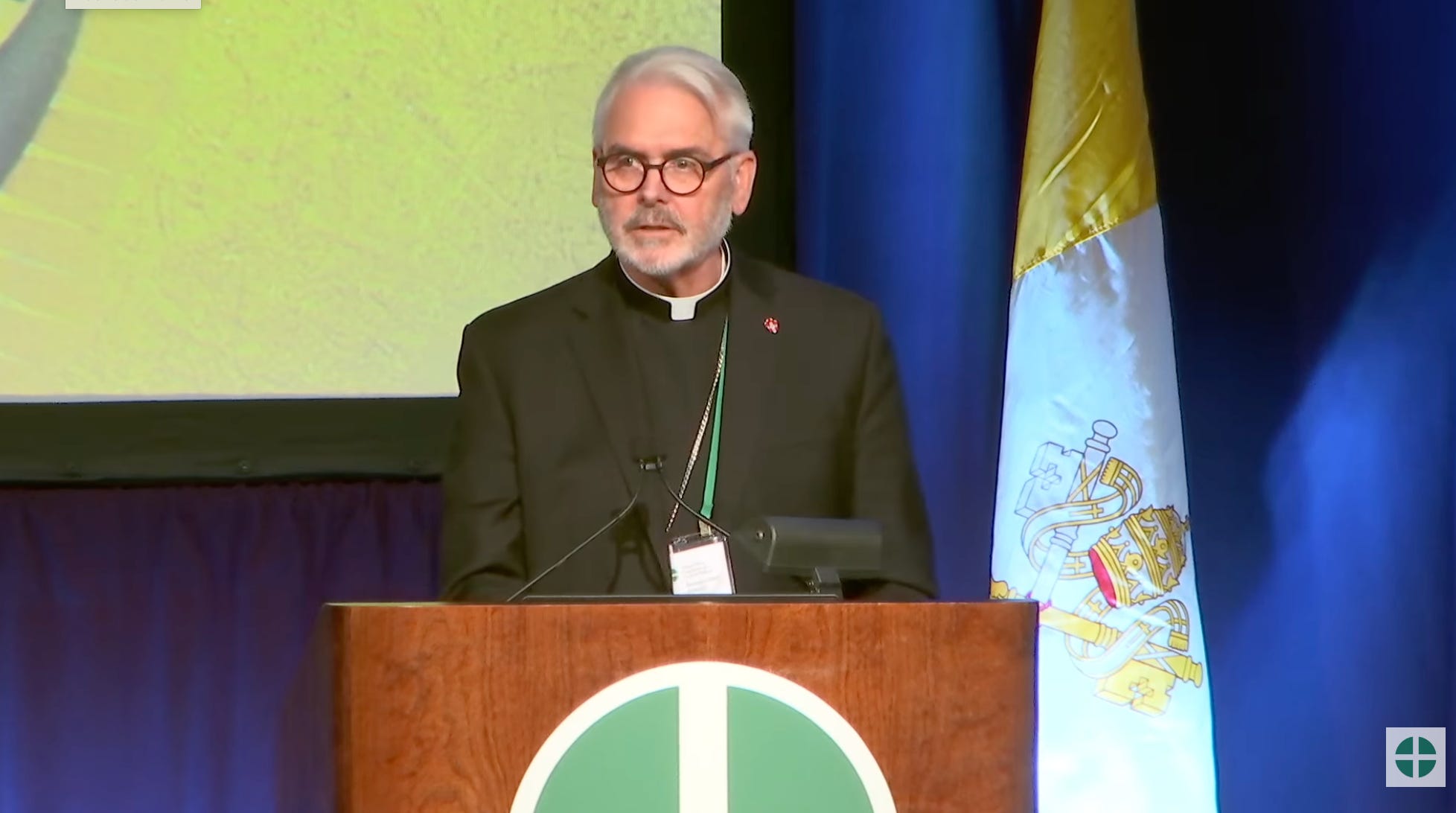
“To a world that is deprived of a sense of hope, where isolation, depression, confusion, and anger all come into play, in such a world the mission of the Church is to act as a construction site of hope, where hope is rooted in Christ and his promise,” Archbishop Paul Coakley of Oklahoma City said Tuesday.
Coakley addressed the U.S. bishops gathered for their fall plenary assembly in Baltimore.
“The world thinks in terms of power. The world sees things through a false binary logic, a world of yes or no, of left or right, of either/or,” he said.
The Church, in contrast, thinks of terms of mission, Coakley continued. And in a society marked by polarization and individualism, a key part of that mission is bringing hope.
The archbishop said he was struck by his recent experience participating in the Vatican’s recent meeting on the impact of Amoris Laetitia.
While he acknowledged that he was “a little apprehensive” about the meeting, he found that it was a powerful experience of listening, sharing, and building community.
The Church needs to similarly offer a “sense of communion and shared purpose” to the country and the world, Coakley said. He pointed to Pope Leo’s image of the Church as a construction site of hope.
The renewal of marriage and family life must be a key focus, Coakley emphasized.
“This will require a new vision of how to prepare and accompany couples, beyond marriage preparation programs, beyond the wedding day, into fully and fruitfully living out a life-long commitment,” he continued, pointing to the experience of the catechumenate as an important resource.
“The world sees marriage as a transaction; but we know it is the foundation for a life of love and fidelity; not a transaction, but a covenant; we need to share that knowledge and experience more broadly and with renewed vigor and confidence.”
Coakley also noted worship as a source of hope for the Church and the world.
“We have all seen the rich and varied fruits of the recent Eucharistic revival, which culminated in the Eucharistic Congress. We need to build on that foundation with intense and intentional liturgical formation of clergy and laity alike,” he said.
“In providing that liturgical formation to all the faithful we build on the gift of hope given to us by the Holy Spirit – a gift that is meant to be shared with the world.”
In working to share hope with the world, the Church must also help society rediscover dialogue and synodal discernment, Coakley said.
This is important both within the Church and, more broadly, in civic life – particularly following the recent contentious elections, he said.
“The polarization, isolation, and anger in our communities and even our families can only be overcome when we rediscover a shared hope,” the archbishop stressed.
“Let us, by word and deed, show how that hope can be found in a common understanding of the dignity of human life and of each person; in a renewed appreciation of our magnificent humanity amid the challenges and opportunities of artificial intelligence with which we all must grapple and come to terms.”
Coakley called the bishops to model the unity and dialogue they hope to encourage.
“We have much work to do. Let’s do it together with fraternal respect, renewed cooperation and pastoral charity.”