“Baseball is like church; many attend, few understand.” Most often this quote is attributed to Leo Durocher, a long-time major league player and manager. The suggestion is that most people who go to a ball game do not really know much about the rules or strategy, just as few comprehend much theology.
However, what struck me when I recently attended a Major League Baseball game is that in an effort to “save” the national pastime, understanding the essence of baseball is being made even more difficult. It’s not the intricacies that are being obscured by this “modernization,” it is the beauty and lessons of the game. I’m not talking about recent rule changes – some of which are abominable (extra inning ghost runners?) – but the raucous stimulation between half innings which is meant to provide the crowd with non-stop entertainment.
This came to mind after I attended a game at Wrigley Field, the most revered cathedral of the “Church of Baseball.” It is the place where “Leo the Lip” Durocher infamously prowled the dugout 55 years ago as the Chicago Cubs manager.
The Cubs were hosting the Los Angeles Dodgers. The Dodgers had the best record in baseball, but the Cubs had won the first two games of the series and were going for the sweep. Many believe this to be a preview of the National League Championship Series (sorry, Brewers fans), the winner of which will be a heavy favorite to win the World Series.
When a friend texted me 24 hours before the game that someone had given him two tickets, I could not pass up the opportunity because I love the Cubs and I knew the atmosphere at Wrigley would be electric, with or without the forecast thunderstorms.
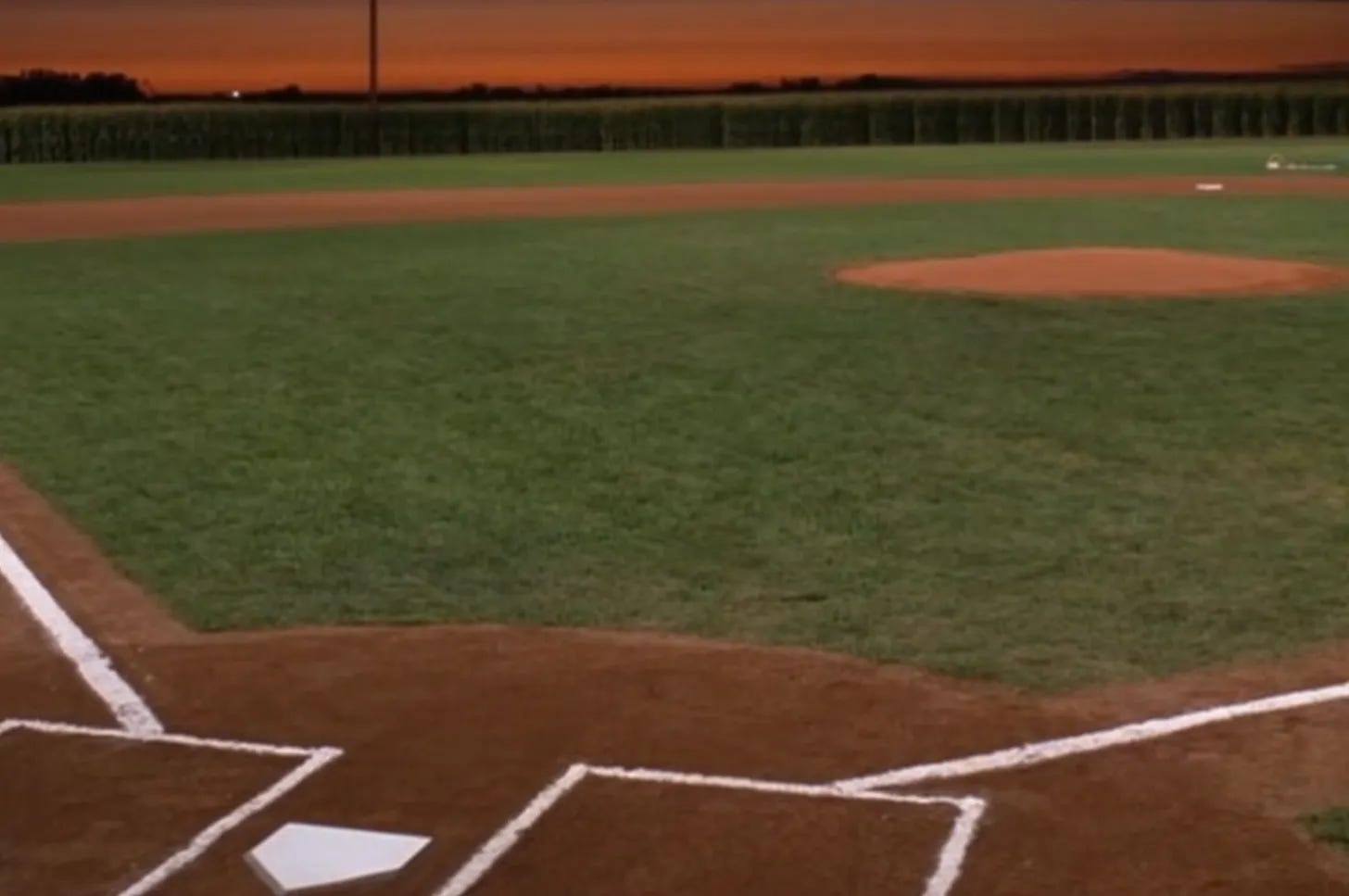
As we walked up the tunnel from the concourse, I was immediately struck by the music blasting loudly over the public address system. While I have the same complaint when I attend any major sports venue, at a baseball game the effort to continuously stimulate the crowd is particularly troubling because it strikes at the heart of the game. Countless writers have waxed poetically about the feel of baseball. It is played on a field of perfectly-mowed grass that makes you dream of picnicking during the lazy summertime.
The game is slow-moving yet punctuated with sudden bursts of action that explode like an unexpected firework. Baseball usually builds to a crescendo over two hours and more. Serious baseball fans have a sense of when it is most important to pay attention and when it is probably okay to chat with friends or make new ones. Comedian George Carlin had a hilarious bit explaining the sharp differences between the “19th century pastoral game” that is baseball and the “20th century technological struggle” that is football.
In many ways, the Cubs-Dodgers game was what I was expecting in terms of action on the field and the feel in the stands. Shohei Ohtani led off the game with a home run for the Dodgers and Pete Crow-Armstrong belted one for the Cubs to begin the bottom half of the first to tie the game. The Cubs took the lead a few innings later and gradually added to it, though they did not capitalize on opportunities to put the game away. Up 7-1 in the top of the eighth, Cub relievers did what they too often have done this season and all of a sudden it was a one-run game heading into the ninth inning. The crowd stood and cheered through the top of the ninth until the final out was recorded and “Go Cubs, Go” played while the team celebrated on the field and the fans in the stands.
In many ways the game lived up to the hype, though it dragged at times early on. But that’s baseball. My experience, however, did not match what I had just witnessed. I was happy they won, it was a good game, the sold-out crowd was rockin’, but it just wasn’t right. On the “el” ride home, I put my finger on it.
The rhythm of the game for the spectators had been constantly interrupted between every half-inning by the incitement of the crowd with music and games. The noise level and commotion in the stadium with every run scored and with the build-up to the final out in the ninth inning had been closely matched by these contrivances. What roused the crowd the most, the PCA home run on the first pitch or the Wendella boat race cartoon on the scoreboard? It was all mixed together. There is no question the average volume was louder between innings than it was during the playing of the game.
I never really had time to simply enjoy the serenity of the greatest ballpark in the world with the alluring green grass of the field and red-brick walls covered in thick ivy. I was dissatisfied.
I understand sports teams think it is necessary to keep fans, especially younger ones, aroused and entertained throughout so they enjoy the experience. Maybe they are correct, in one sense. Perhaps there are some who would not come to games if they had to face their fear of talking to people or sitting in silence, though most of them would have their best friend – the phone – to keep them company. (Yes, I looked at my phone occasionally during the game.) They may then go home and think that it was a waste of time and money to attend because they were not constantly “entertained.”
But attendees of games at Major League ballparks are being deprived of experiencing the game of baseball as an education about living our life. In baseball and in life, we want more positive stimulation and wait in anticipation of it. Sometimes good things happen, sometimes we are disappointed. If you have been a Cubs fan for 60 years, like me, you are almost always crushed. Hopefully we learn to enjoy the process by appreciating the beauty of the action, the environment, the time for contemplation, and the opportunity to connect with others. And by coming to understand that we should never give up hope.
These are the lessons baseball used to teach us, before we were relieved of the “burden” of peace.

