Bishops approve revisions to Dallas Charter
The bishops rejected a proposal to delay the vote until November.
The U.S. bishops voted overwhelmingly on Thursday to approve revisions to the Charter for the Protection of Young People, after a failed proposal to delay the vote, made in order to seek more feedback from diocesan advisors and abuse victims.
The vote on the Charter text was 176-22, with 6 bishops abstaining.
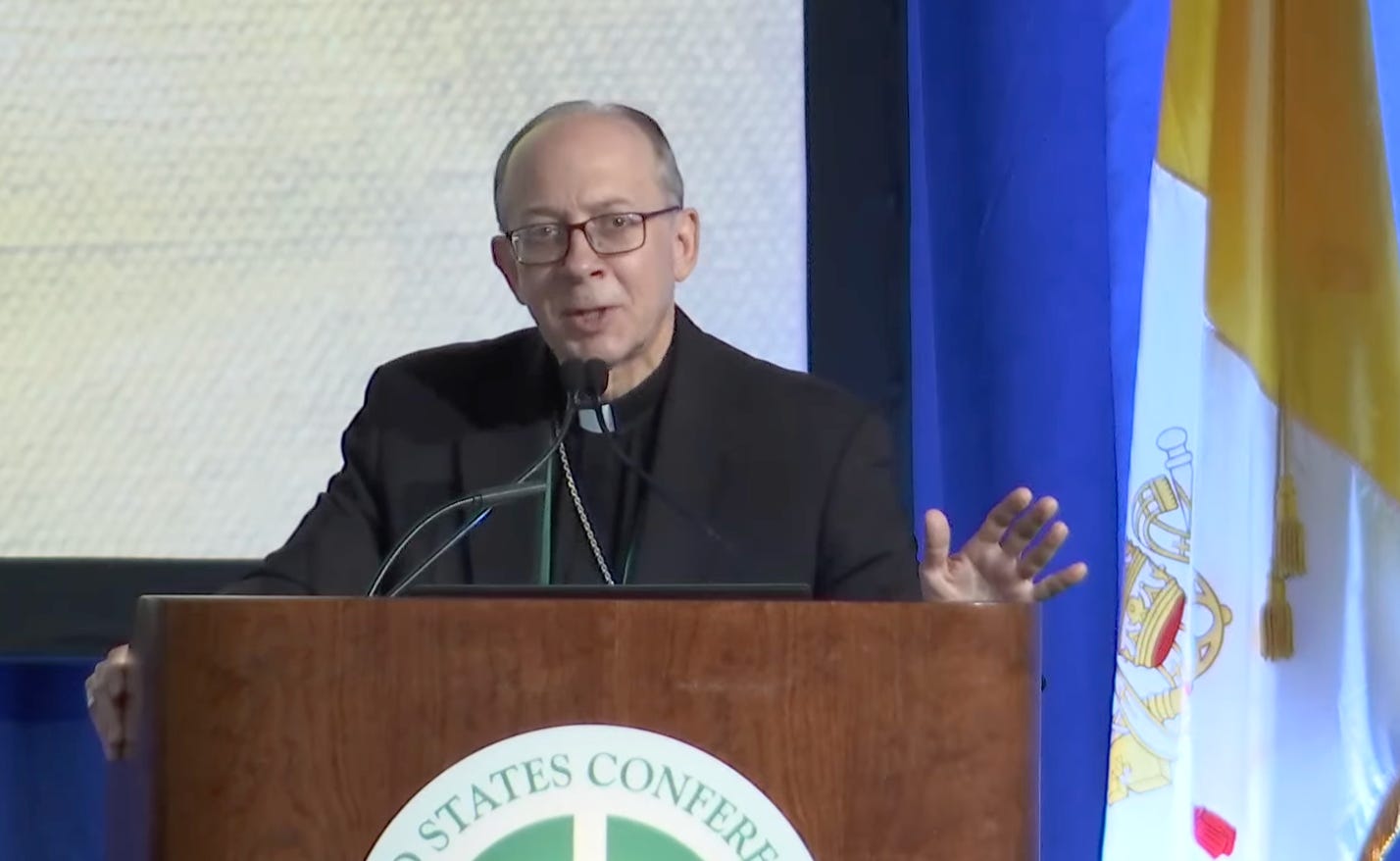
The bishops voted during their general assembly meeting Thursday morning to adopt some amendments to the document, which deals with preventing and responding to cases of abuse by priests. The text of the amendments was not immediately available to the media or public.
Following the passage of the amendments, Archbishop Shawn McKnight of Kansas City proposed delaying the vote on the revised Charter until the bishops’ November meeting. He said the bishops should have the chance to consult with their diocesan review boards, presbyteral councils, and abuse victims on the proposed revisions, given the importance of the document.
“We will be morally committing ourselves, and everybody under us in our dioceses, to what we hold out in this statement,” he stressed.
Bishop Earl Fernandes of Columbus seconded the motion. “I don’t know that we lose very much by delaying,” he said, noting that he wanted to consult with his presbyteral council. “When they aren’t sufficiently consulted, there’s been strong pushback,” he said.
The bishops then debated McKnight’s proposal to postpone the vote.
Archbishop Paul Etienne of Seattle noted that there is precedent for delaying a vote, as a similar request was made with the bishops’ instruction on ministry to Native Americans.
“I think the request that’s being made is very legitimate. I know I personally would like the opportunity for sharing this document, as amended now, with my review board and my priest council and those that work in our safe environment [office],” Etienne said.
“Maybe many of us have become synodality-weary, but this I would say this is an occasion where, as has been mentioned, very little is lost in delaying and much is to be gained: the buy-in that we have in our particular and local Churches,” said Bishop Oscar Cantu of San Jose.
However, Bishop Barry Knestout, who heads the USCCB’s Committee on the Protection of Children and Young People, reiterated his position that the document was ready for a vote, saying, “I’m not quite sure what’s gained through the additional time.”
“There has been quite a bit of consultation already. There were apparently editions of this that were out there - I know it was not an official one that was out before everyone, but there was some time for groups to be able to consult if they wanted that, or bishops to be able to do so at a confidential level,” Knestout said.
Auxiliary Bishop Adam Parker of Baltimore, who was a member of the committee that drafted the revised document, also spoke against delaying the vote.
“Substantial consultation has occurred on this matter, with the committee and others over the past several years,” he said. “If it were the sense of the body of bishops that there were particular inadequacies to the current draft, I think that would be a point of discernment for you, and certainly a rationale for delaying this vote.”
“I agree that consultation can always be of benefit, and certainly there may be some limited benefit to additional consultation on the matter. However, having been involved in the drafting of this revision, I have some reservations as to whether substantial further revision would occur,” he continued.
Ultimately, McKnight’s motion to delay the vote on the Charter failed by a tally of 73-126, with 5 bishops abstaining.
The Charter for the Protection of Young People is the U.S. bishops’ landmark document on clerical abuse of minors. First created in 2002, it is periodically updated.
The current update process has been controversial, sources have told The Pillar, with both some of the bishops and victim advocacy groups calling for the documents to take up a broader scope, directly acknowledging the abuse of adults, abuses of power, and episcopal misconduct or cover-up.
However, Knestout suggested Wednesday that the Vatican itself is preparing documents on safeguarding, and that other USCCB committees might soon issue a “new document separate from the Charter focusing on standards of professional behavior for both clergy and laity with adults, including vulnerable adults.”
Critics argue that because the Charter is seen as the bishops’ landmark document on safeguarding, the omission of adult abuse in that specific text will likely be seen by victims as ignoring the problem, regardless of whether other documents on the topic will eventually also be published.
Archbishop McKnight has been among the most outspoken opponents of the current Charter revision process.
In February 2025, McKnight proposed to the bishops’ conference a new statement that would draw from the Charter but also see the bishops commit more concretely to responding both pastorally and legally to alleged victims of abuse, protecting whistleblowers, communicating decisions, as well as protecting the due process rights of priests.
While some elements of the McKnight proposal were incorporated into the draft Charter revisions presented to bishops this week, others were omitted, and the revised Charter did not reflect his call for a unified document addressing the broad scope of abuses within the Church.

