Brazilian archbishop declares schism, excommunicates Catholics attending TLM
The Archbishop of Maceió has declared that any Catholic who attends an unauthorized Traditional Latin Mass will incur excommunication.
The Archbishop of Maceió in Brazil has declared that any Catholic in the diocese who attends a unauthorized Traditional Latin Mass will incur an excommunication, for the canonical crime of schism.
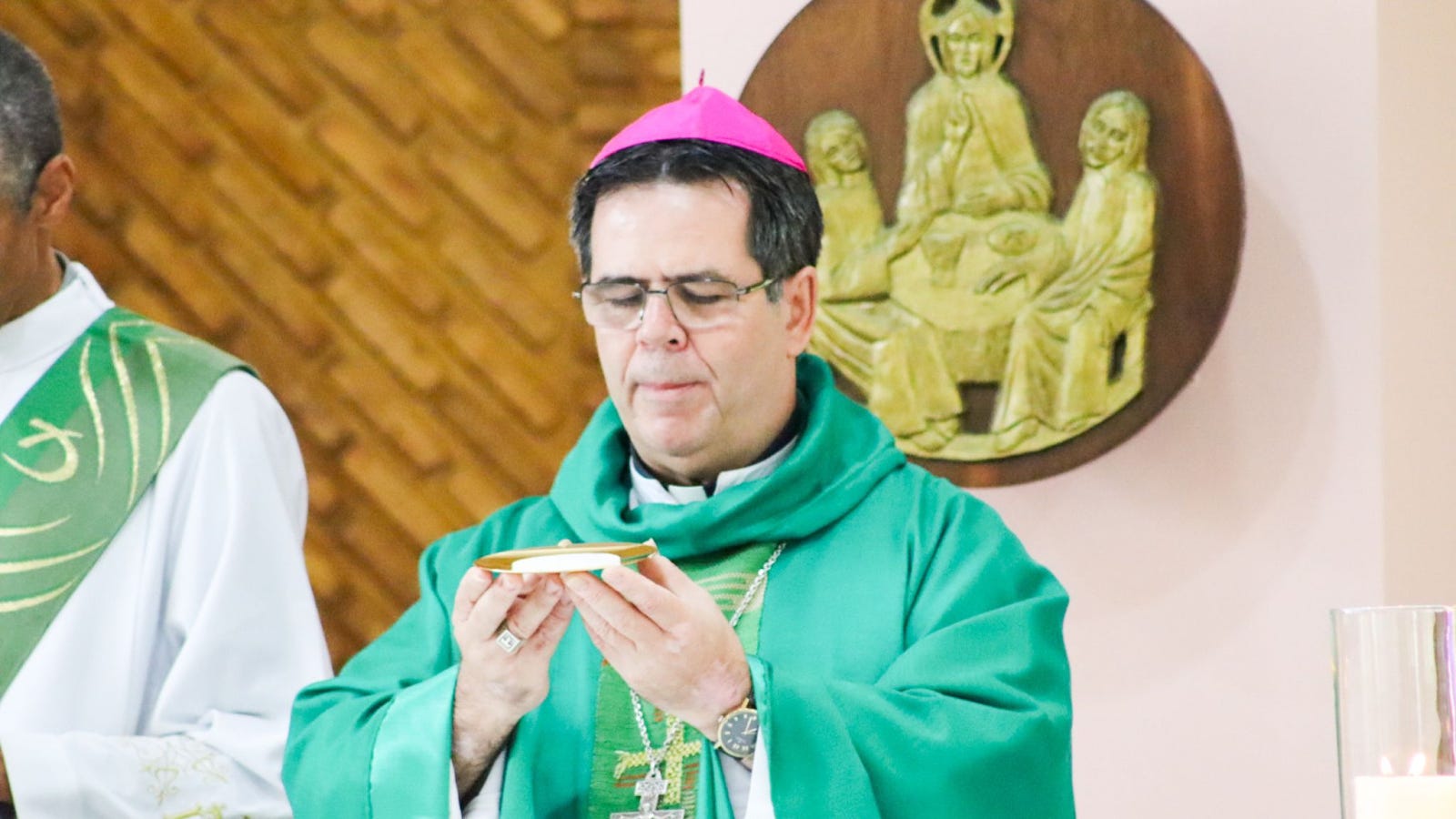
In a Feb.11 statement posted on the archdiocesan Facebook page, Archbishop Carlos Alberto Breis Pereira, OFM, declared that in his diocese, participation in an “old rite Mass in another location [to the single approved location and time] will be considered an act of public schism, resulting in automatic excommunication.”
The bishop’s decree is the most assertive episcopal action aimed at enforcing the norms of Traditionis custodes, Pope Francis’ 2023 motu proprio restricting use of the Extraordinary Form, to be reported so far.
Breis Pereira’s decision is an application of canon law previously unseen in contemporary diocesan governance, and is likely to be challenged for validity at the level of the Holy See.
The archbishop’s decree reminded local Catholics that, if they wish to attend a Mass in the Extraordinary Form of the Roman Rite, they may do so at the authorized diocesan location, the Chapel of St. Vincent de Paul in the city of Maceió, where the Mass is celebrated every Sunday.
The statement describes the authorized liturgy as a “concession” granted by Breis Pereira “with the approval of the Holy See,” in line with the provisions of Traditiones custodis.
“This liturgy is not authorized anywhere else, whether religious or not, nor in any civil law association,” the archbishop stated.
In the decree, the archbishop noted that canon 751 defines schism as “the refusal of submission to the Supreme Pontiff or of communion with the members of the Church subject to him,” and that canon 1364 §1 states that “a schismatic incurs a latae sententiae excommunication.”
The document also noted that, for clerics, additional penalties may be applied under the norms of canon 1336 §§2–4.
While speculation on social media has suggested that the archbishop’s measure was issued in response to the presence in the archdiocese of the Society of Saint Pius X, a traditionalist group with an irregular canonical status, the statement makes no mention of the SSPX, and is instead intended to apply to all Catholics attending Masses offered according to older liturgical rubrics.
—
The Archdiocese of Maceió has a history of concerted episcopal action against the celebration of the Extraordinary Form of the Roman Rite in recent times.
Following the publication of the motu proprio Summorum Pontificum by Pope Benedict XVI in 2007, which permitted widely the celebration of the Traditional Latin Mass and instructed pastors to make reasonable accommodations for the liturgy to be celebrated for stable communities of the faithful who requested it, Archbishop Antônio Muniz Fernandes, the predecessor of Breis Pereira, reportedly declined to implement the motu proprio and banned all Extraordinary Form Masses in Maceió.
In 2023, Muniz read a document during a Mass which declared that it is “permanently prohibited in the territory of the Archdiocese to frequent or invite heretical priests that are not in communion with the Church and want to follow the old rite… these Masses, wherever they are celebrated in the territory of the archdiocese, are canonically prohibited, as the law commands.”
“Anyone who knows of the celebration of these ‘Tridentine Masses’ in parishes, not in communion with the pope, doesn’t deserve the name of Christians or Catholics. They can say they are traditionalists and so on, but none of them has an authorization. And the families who celebrate these Masses in their apartments are also barred from communion with our Holy Catholic Church. Therefore, again, all these so-called traditionalist celebrations are banned in the territory of Maceió.”
While many bishops moved to tighter restrictions on the celebration of the Extraordinary Form after the promulgation of Traditionis Custodes in 2021, the Archdiocese of Maceió appears to be the first case in which a bishop has declared that those who attend or celebrate an unauthorized Extraordinary Form Mass are schismatics and therefore incur latae sententiae excommunication.
Some dioceses have previously decreed excommunication for participation in Masses celebrated by the Society of Saint Pius X, such as the Diocese of Lincoln, though this particular law was issued related to prohibited societies in canon law, and the irregularity of the SSPX and the status of its leadership in relation to the Holy See.
The closest precedent occurred in 1991 when Bishop Joseph Ferrario of the Diocese of Honolulu declared the excommunication of six Catholics in the diocese for seeking an illicitly consecrated SSPX bishop to administer the sacrament of confirmation.
However, the Congregation for the Doctrine of the Faith reviewed the case a year later and concluded that the event did not constitute the canonical crime of schism, rendering the excommunications invalid.
Vatican sources told The Pillar Friday that a recourse against the decision to the Dicastery for Legislative Texts would, if made, likely be considered on several fronts: The decree’s broadly construed criteria for schism, and the scope of the bishop’s authority to regulate liturgies offered within religious houses among them.


“Heretical priests;” congregations that don’t “deserve the name of Christians.”
One wonders, is there a concomitant ban (on pain of excommunication!) on attending church services put on by longstanding and undeniable heretics and schismatics - Protestants and Orthodox, for example - in the diocese?