
The “Synod on the Family,” which opened ten years ago next month, elicited pastoral wisdom that could transform the Church’s approach to ministry with gay and same-sex attracted people–but nobody noticed, because the most relevant synod documents don’t address LGBT+ questions at all.
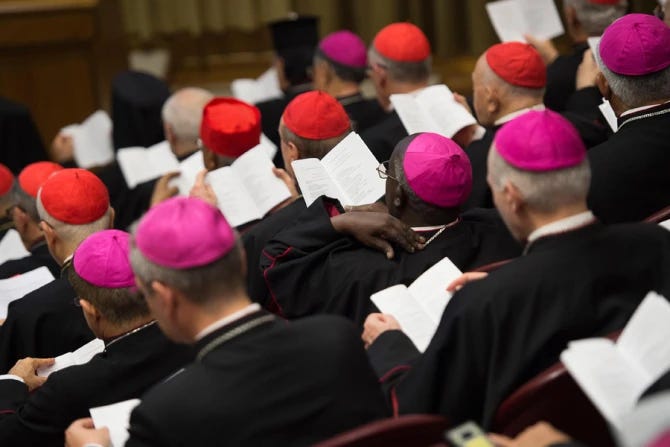
The Fourteenth Ordinary General Assembly of the Synod of Bishops included intermittent discussion of what the synod’s final report called, a bit clunkily, “families who live the experience of having within their family persons with homosexual tendencies.”
The report offers one paragraph that focuses on rejecting “any sign of unjust discrimination” while also politically opposing civil same-sex marriage. It’s easy to see why one of the working groups thought LGBT+ questions were “important enough to have a specific synodal meeting on the topic itself”: There’s little in the LGBT-specific work of the 2015 synod that would seem to meet our moment with something unexpected, something that could break through the stalemate between partisans of chastity and partisans of welcome.
An unexpected perspective does emerge in 2015, though, in the submissions from several African bishops on the subject of polygamy. These bishops offered an approach that is doctrinal and pastoral, intent on opening paths to Jesus and His Church — the exact attitude we need in ministry with LGBT/SSA+ people.