Cardinal of Tehran evacuates to Rome
"I arrived in Rome yesterday, not without regret and sorrow for our brothers and sisters in Iran."
Cardinal Dominique Mathieu, OFM Conv. of Tehran-Isfahan announced on March 9 that he had fled to Rome, along with the staff of the Italian embassy to Iran, “not without regret and sorrow.”
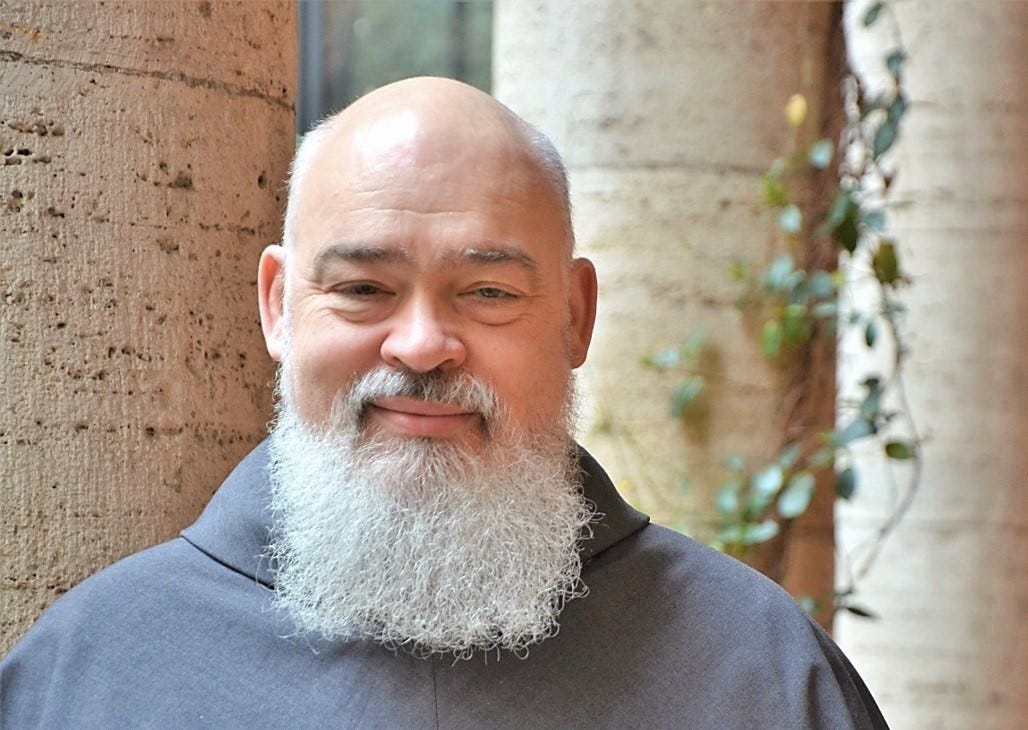
Belgian outlet Cathobel reported that Mathieu had arrived in Rome on March 8 after being evacuated with the Italian embassy staff.
The archdiocese's Cathedral of the Consolata and the archbishop’s residence are located within the territory of the Italian embassy.
“I arrived in Rome yesterday, not without regret and sorrow for our brothers and sisters in Iran, as part of the complete evacuation of the Italian embassy, [where] the archdiocese [is located]. Until I return there, pray for the conversion of hearts to inner peace,” Mathieu said in a statement to Cathobel.
Mathieu, a conventual Franciscan, was appointed as the archbishop of Tehran-Isfahan in 2021 by Pope Francis. He was created cardinal in Francis’ last consistory in December 2024.
The conventual Franciscans confirmed the news, saying on March 9 that the cardinal had left the country two days before.
“We inform our readers that we are in contact with Cardinal Dominique Joseph MATHIEU, OFM Conv. In the context of the evacuation of the Italian embassy — which hosts the Latin Catholic cathedral of Tehran — Cardinal MATHIEU left the country the day before yesterday and is safe.”
The announcement came after his congregation announced on March 5 they had been able to reestablish contact with the cardinal that day.
Before the announcement, Catholics around the world had expressed concern for Mathieu, since he hadn’t been reached since before the Feb. 28 U.S.-Israel attacks on Iran.
On March 4, a spokesman for the congregation had said that their last contact with Mathieu had been on Feb. 28, the day the conflict began. Archbishop Bashar Warda of Erbil, in Northern Iraq, had also said that they hadn’t been able to reach Mathieu. “We have tried several times, but there is absolutely no communication,” Warda said in a TV interview.
The Catholic Church in Iran represents a small minority. The most conservative estimates indicate that there are around 3,500 Catholics in the country, of which 1,300 are Latin Catholics. Other estimates say there could be as many as 20,000 Catholics in the country. According to Vatican statistics, there were only three priests in the country in 2024.
However, Cathobel reported that Mathieu had been serving as the sole priest for the Archdiocese of Tehran’s five parishes.
While Christians are officially recognized by the government as a religious minority and permitted to worship, their churches are closely monitored and their rights are heavily restricted. Distributing Bibles in the local language of Farsi is illegal, as is any kind of evangelization.
Human rights groups say the government has a history of arresting or executing religious minorities and protestors, charging them with offenses including blasphemy, “enmity against God,” ani-regime propaganda, or violating the country’s strict Islamic dress code.
Pope Leo has repeatedly appealed for peace in the region since the Feb. 28 American and Israeli attacks, and Iran’s ongoing response.
On his March 1 Angelus address, Pope Leo said that “tragedy of enormous proportions” was arising, and added, “Stability and peace are not achieved through mutual threats, nor through the use of weapons, which sow destruction, suffering, and death, but only through reasonable, sincere, and responsible dialogue.”
He called all parties to stop “the spiral of violence before it becomes an irreparable abyss”.
A week later, the pope again called for peace in his Angelus address.
“In addition to the episodes of violence and devastation as well as the widespread climate of hatred and fear, there is also the concern that the conflict will spread and that other countries in the region, including beloved Lebanon, may again sink back into instability.”
“We lift up our humble prayer to the Lord, so that the thunderous sound of bombs may cease, weapons may fall silent, and a space for dialogue may open up in which the voice of the people can be heard,” the pope added.

Huh, "cathedral inside an embassy" is an interesting situation - any other info on how exactly that works, diplomatically?
It does make me somewhat surprised that he appears to have been totally unable to communicate for several weeks
Edgar, if you are able to, an interview with Cardinal Mathieu about the situation of the Church in Iran would be great!