
Christians see outsized representation in Iraq’s World Cup campaign
“It strengthens the idea that Iraq is a homeland for all its communities, and that every citizen has a place in its future.”
As national squads begin to arrive in the U.S., Canada and Mexico for the 2026 World Cup, the Iraqi national team is already making headlines.
Two of the team’s members – a player and the team photographer – were held and questioned at the Chicago airport for several hours before being released.
But Iraq’s team is noteworthy for another reason as well: Among the 26 players on the roster are four Christians. That means 15% of the team is Christian, in a country where Christians currently account for less than 1% of the population.
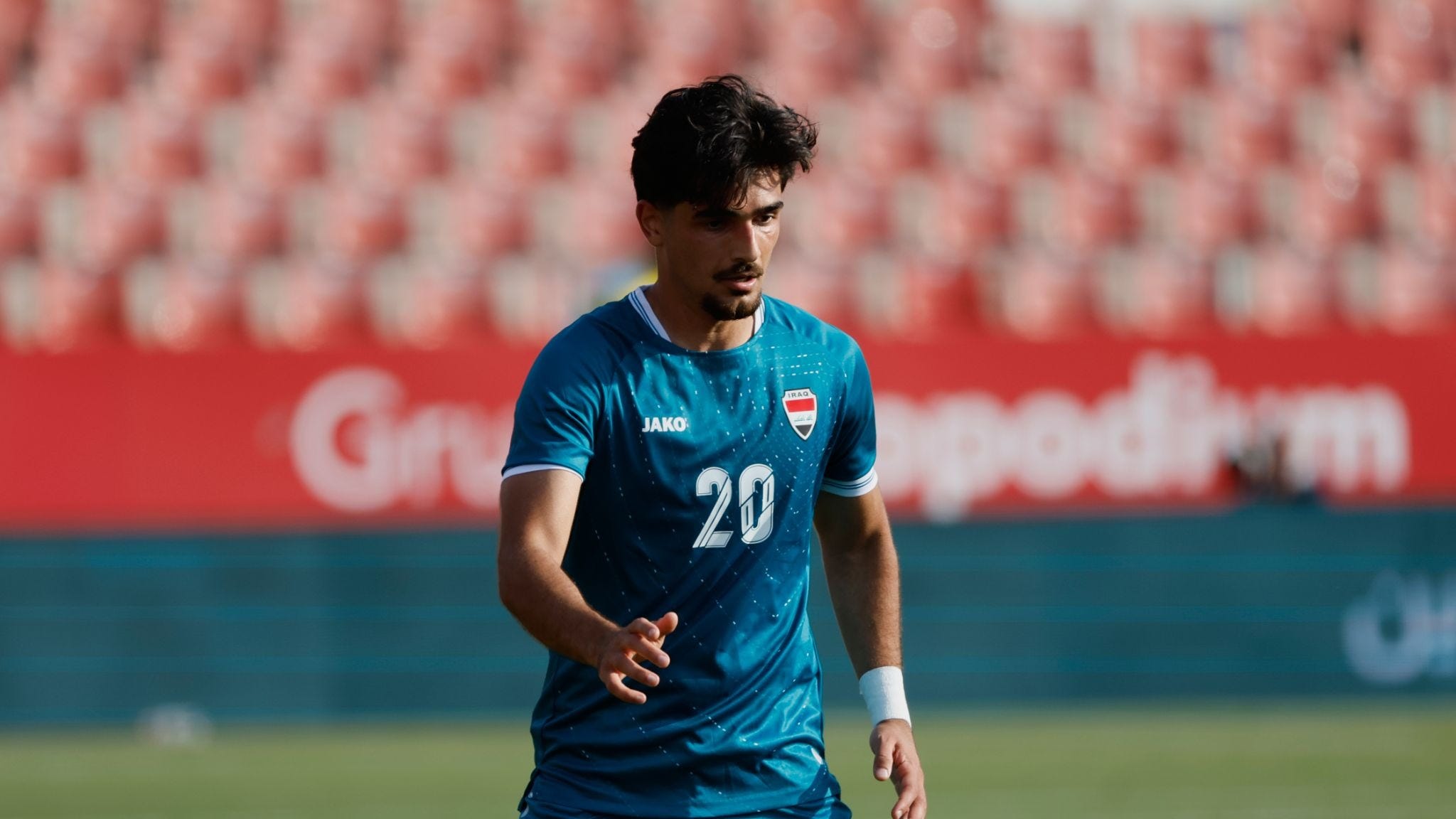
Aimar Sher was born in Iraq but his family moved to Sweden when he was only four. A midfielder who currently plays in the Swedish domestic league, he was named after Argentinean legend Pablo Aimar, also a midfielder, and current assistant coach of the Argentinean national team.
Rebin Sulaka was born in the heavily Christian suburb of Ankawa, in Erbil, Iraqi Kurdistan, but also moved to Sweden when he was 10 years old. Sulaka is a centre-back who currently plays in Thailand.
Sweden has long been a favorite emigration destination for Middle-Eastern Christians, and is home to several teams that serve these communities, often named Assyriska or Syrianska, a reference to Assyrian/Syriac heritage.
Kevin Yakob was born in Sweden and began playing for Assyriska BK, in Gothenburg. A midfielder, he made his way to the top tier of Swedish football before moving to Denmark, where he currently plays.
Finally, Frans Putros was born in Denmark to Iraqi Christian immigrant parents. He is a defender, and currently plays in the Indonesian league.
Some outlets have also listed Marko Farji as a Christian, probably due to the fact that Marko sounds like a Christian name, but he is actually a Muslim Kurd.
There could have been a fifth Christian on the Iraqi team, but team manager Graham Arnold opted not to call up Peter Gwargis, who plays in Australia and was a prominent player in many of Iraq’s qualification games.
Although the Iraqi Christian population is currently small, it has historically played an outsized role in the country’s sports. Ammo Baba, a Christian, is still considered the country’s greatest footballing hero, having scored Iraq’s first goal in 1957 and later managing the national team. He is buried next to Iraq’s national stadium, in Baghdad, and a new 31,000-seat stadium named after him is currently under construction.
While it might seem natural for the national team to reflect the diversity of the population, many other Middle Eastern countries lack this diversity.
It has been 23 years since a Christian played for the Egyptian national team, despite the fact that Copts represent around 10% of the population. While Iran has historically fielded Christians, mostly from its Armenian population, there are none in the current squad.
The only other Arab nation competing in the 2026 World Cup that is comparable to Iraq in this respect is Jordan, where Christians, though only around 3% of the population, have historically played an important role in sports. Jordan has two Christians in its World Cup squad: team captain Ihsan Haddad and young forward Odeh Al-Fakhouri.
The presence of a large contingent of Iraqi Christians on the national team is a source of pride and hope for members of the community.
Marsen Banni, a Chaldean Catholic currently living in the U.S., told The Pillar that the roster fills him with “hope, pride, and excitement, and sends a powerful message that Iraqi Christians remain an integral part of Iraq’s story and glory.”
“For a community that has faced many challenges over the years, seeing our presence reflected in the national team is both emotional and inspiring. It serves as a reminder that we still belong in this country and that we continue to contribute to Iraq’s achievements and success,” he said.
Having Christians visibly celebrated on the national stage for their achievements “reinforces the feeling that we belong, that we are an integral part of Iraq’s social fabric, and that our contributions are valued and appreciated,” he added. “It strengthens the idea that Iraq is a homeland for all its communities and that every citizen has a place in its future.”
Yara, another Chaldean Catholic currently living in the U.S., said she finds it “delightful and even hopeful” to see Christians filling prominent roles on the national team.
Yara, who asked to be identified only by her first name, emphasized that football is a rare unifying force in the country.
“It is a known fact that whenever Iraq plays a football match the entire community, from north to south, gets excited and unites even more as it seeks the victory of the country’s national team,” she said.
“When all people unite and come together to achieve the same goal, they go beyond any religious differences and will focus on just being sons and daughters of the same country, community and nationality.”
Christians are not the only Iraqi minority to be excited by the country’s team. The roster includes Kurds and Iraqis from both the Sunni and Shia communities, and a balance of domestic players and those from the diaspora.
Hussain Sinjari, a former Iraqi diplomat who recently ran as an independent candidate in the country’s presidential elections, told The Pillar that “at least we have one uniting element among all of this indulgence in corruption and mismanagement in Iraq. So yes, people are very proud of this.”
Sinjari, who is based in Erbil, is a secular Kurd who is not aligned with Iraqi political parties.
He said the corrupt political forces in the country are strong, but art and sports are two forces uniting the people.
“In the long run, this is a very important step forward,” he said.
Iraq plays its opening match for the 2026 World Cup against Norway on June 16 in Boston.
Thanks for this interesting information! God bless Iraqi Christians. It’s such a poverty that many Christians in the U.S. (Catholics included) have no idea that there are Christians in/from the Middle East from some of the earliest Christian communities. It’s like when my students express shocked to learn there are Christians in Palestine.
As a commenter on another article pointed out, the World Cup has been very poorly marketed here in the U.S. My husband has had me excited for it since 2018, but articles like this help to generate interest for other matches about which I normally wouldn’t care, and I appreciate that! It’s a great witness to the world that persecuted Christians exist.
What's the World Cup? Is that some sort of soccer tournament?