
The Pillar’s Edgar Beltran is joining Pope Leo on his historic Peruvian homecoming trip. You can follow along with Edgar here, with dispatches that will be updated as his trip continues.
—
—
Leo and Latin pop music
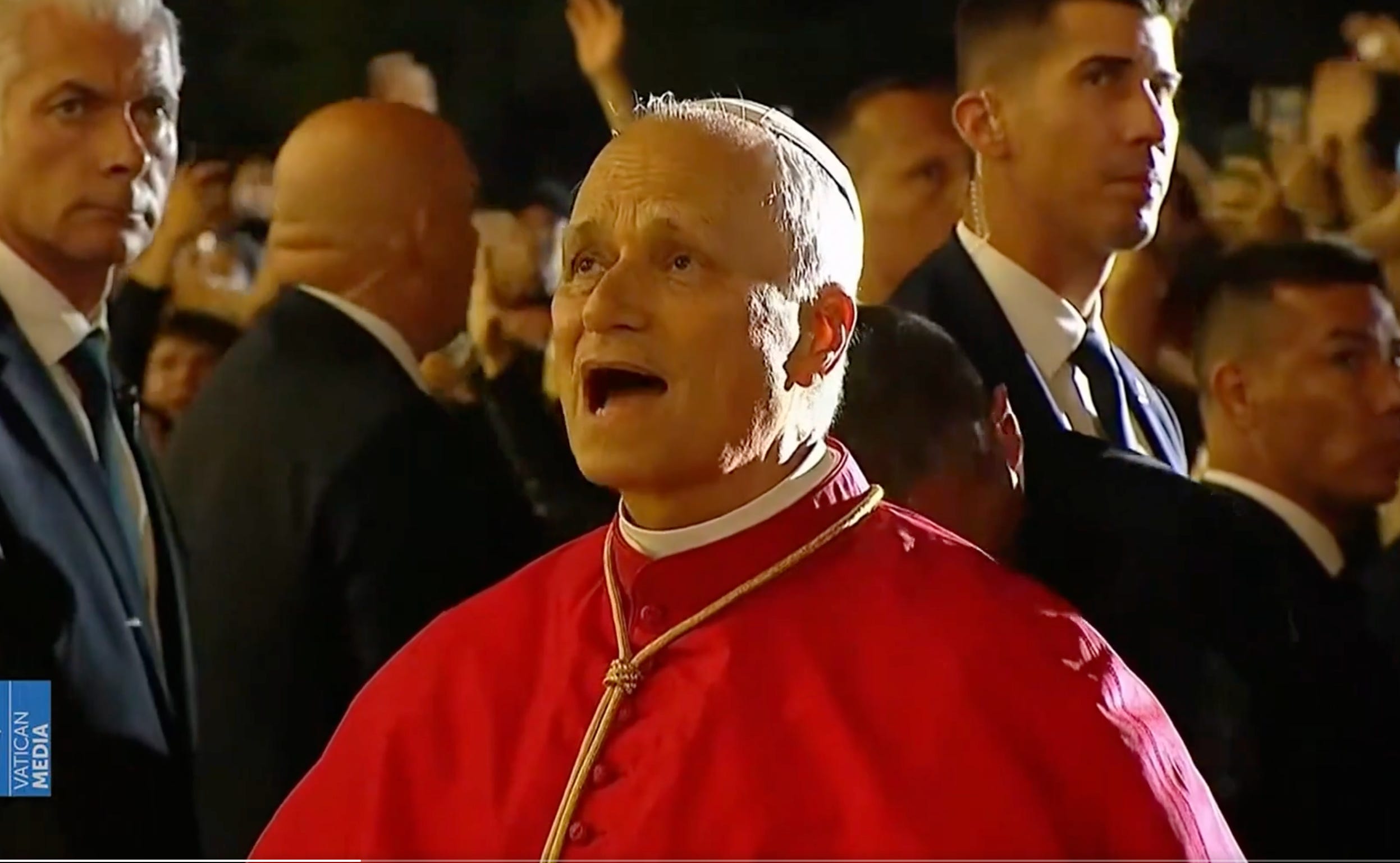
Clips of Pope Leo singing to Latin American contemporary hymns during his trip to Argentina have gone viral on social media. Unsurprisingly, the pope knows these hymns as well as your average Latin American parish priest, because that’s what he was for almost half his ordained ministry.
As a South American myself, it’s almost unbelievable to see a pope singing “Alma Misionera” from the top of his lungs. Even though the Church had a South American pope in Francis, he wasn’t much of a singer.
Admittedly, I have a complicated relationship with Latin American liturgical pop hymns. I think most are well-intended. But I grew up in a dual environment: a parish in which merengue, salsa, bachata and reggaeton were considered suitable liturgical musical genres, and a Catholic school that made me develop a much more traditional sensibility, and led me to somewhat repudiate the first.
At the same time, my former parish priest – a Catholic reggaeton singer – is one of the holiest men I’ve ever met, a man who has saved hundreds or thousands from lives of drug, crime, addiction, and sin. It would be rather ridiculous of me to judge him for his liturgical taste.
Hymns like “Alma Misionera,” “Vida en Abundancia,” and “Pescadores de Hombres,” are not in the same league as liturgical reggaeton. They’re not Gregorian chant either, but they can suitably be used in a liturgy and even accompanied exclusively by organ. And I haven’t met a single person who actually hates these songs. Some may say so publicly but they end up finding themselves singing along anyway.
I was one of those types for some time.
While they’re not the epitome of liturgical music, that was the music I grew up with, and, in many ways, the liturgical music which taught me how to pray. People may think of these hymns as too emotional – ironically, the same people who cry at Mozart’s requiem at a traditional liturgy, as God knows I’ve done too – but I don’t think it can hurt the sensibility or the faith of a young person to ask the Lord to “send us where men need your Word,” or to affirm that the Lord “makes all things anew, and comes to bring us abundant life,” as these songs claim.
I sang and listened to these hymns in my school choir, in adoration as a young man in Venezuela, and now as I write this dispatch.
They may not align perfectly with my liturgical sensibility, and some are admittedly cheesy or outright inappropriate. A long, synodal conversation on liturgical music in Latin America, and guidance from bishops and the Holy See, is much needed.
But I can only rejoice at seeing the pope joining two million young people in telling the Lord “I am up to whatever You ask of me, it matters not what it may be, just call me to serve You,” in one of the most secularized countries in Latin America.