English bishop on ‘personal leave’ charged with rape of a minor
Neither the Vatican nor the diocese disclosed Oakley's arrest when he went on 'personal leave' last year.
Bishop David Oakley of Northampton, England, has been charged with two counts of rape of a minor, local police confirmed June 24. The bishop has been on a leave of absence since October last year, when he announced he was taking time away from the diocese for “personal reasons.”
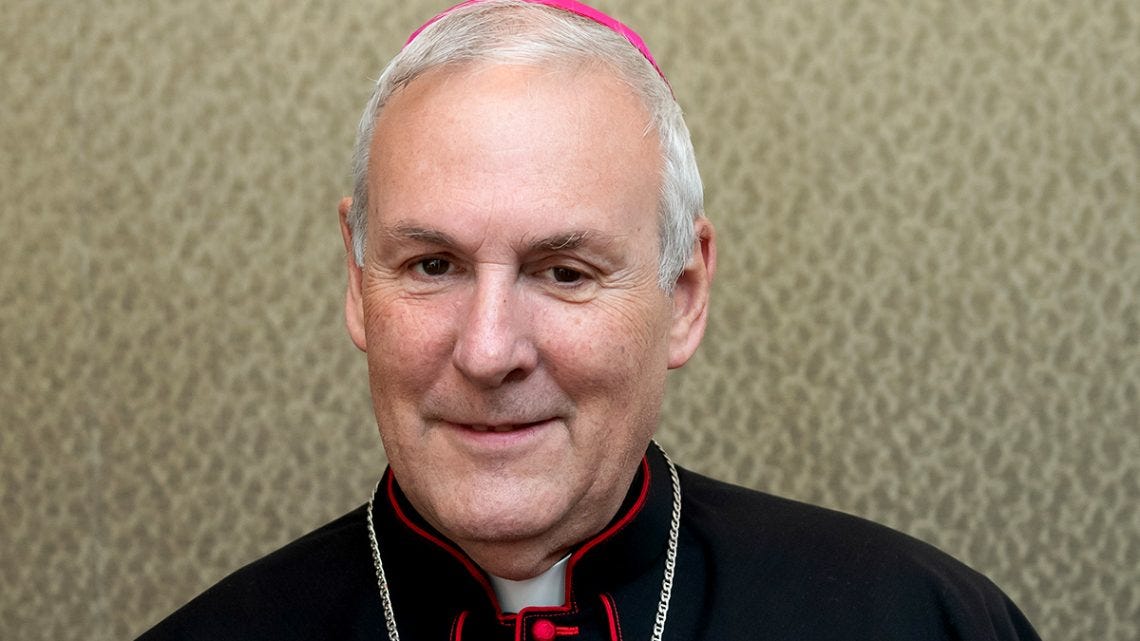
The charges were confirmed by local police this week as part of an investigation into historical allegations of abuse against the English bishop, 70, which involved an arrest last September that had not been previously made public.
Shortly after that arrest, which was not disclosed by the diocese, it was announced that the bishop, who has led the Diocese of Northampton since 2020, had taken a leave of absence for unexplained personal reasons.
A statement from the diocese, released June 24 said that “the Diocese of Northampton can confirm that Bishop David Oakley has been charged after an investigation into non-recent safeguarding allegations. We understand that this will be very distressing for all concerned but cannot comment further on an active legal process.”
The bishop has been charged with two counts of the rape of a female person under the age of 16, The Pillar has confirmed with Church authorities in England. The charges relate to allegations dating back to the year 2000, The Pillar was told.
Prior to his appointment as bishop, Oakley served as rector of St. Mary’s College Oscott, the seminary of the Birmingham archdiocese to which he was ordained a priest in 1980.
The bishop is due to appear in court for an initial hearing on August 14.
At the time it was announced by the diocese that Oakley was taking a leave of absence for “personal reasons,” Oakley was considered a possible contender to become the Archbishop of Westminster and effectively the leader of the Catholic Church in the country.
Oakley’s departure last year was one one of several unexplained cases involving bishops and episcopal appointments in England and Wales which raised questions about unannounced allegations and the vetting of candidates.
In December 2022, Bishop Robert Byrne of Hexham and Newcastle resigned abruptly, saying “the office of the diocesan bishop has become too great a burden.”
The following month, a safeguarding review in the diocese revealed that errors during Byrne’s tenure had “undermined the work of safeguarding professionals and left people at potential risk.”
The review raised concerns about what is described as Byrne’s inappropriate friendship with a cleric who was a registered sex offender, and his decision to appoint as dean of the diocesan cathedral Canon Michael McCoy, who was accused of inappropriate interactions and grooming behavior with teenage boys.
In February 2025, never having formally taken possession of the diocese, Moger announced that “just before I was to begin my ministry in Plymouth, I let it be known that concerns of a personal nature had been raised, to which I had to attend immediately. This has taken longer than I anticipated.”
“All things considered,” the bishop said, “I have come to the decision to present to the Holy Father a request to step down from my appointment as Bishop of the Diocese of Plymouth. The Holy Father has accepted my request. For the immediate future, I will be taking a sabbatical: a time of prayer and personal reflection, the next stage on the journey of my ministry.”
Official Church records refer to Moger as “emeritus Bishop of Plymouth,” and no further details have been given.
Moger’s abortive appointment to the Plymouth diocese was the second time the Holy See saw a candidate in the UK fail to make it to installation for the diocese.
Earlier in 2024, Canon Christopher Whitehead, a priest of the Diocese of Clifton, was due to be ordained and installed as the 10th bishop of Plymouth Feb. 22.
But the Bishops’ Conference of England and Wales announced Feb. 1 that the ceremony would not take place amid an unexplained “canonical process.”
On March 22, the Diocese of Clifton said that a preliminary investigation had determined that “no canonical action was warranted.” Whitehead later resumed his duties as pastor of St. John the Evangelist in Bath.
The Pillar reported at the time that Whitehead’s appointment and withdrawal had also triggered a Vos estis lux mundi investigation into his own diocesan bishop, who was accused of failing to handle the allegations appropriately.
Vos estis, which took effect seven years ago, was promulgated by Pope Francis to address the problems of both clerical sexual misconduct and episcopal negligence in addressing or assessing allegations of sexual abuse and coercion.
However, Vos estis has drawn criticism for a lack of transparency. The Vatican and local officials rarely acknowledge when an investigation is underway, and results are often only announced when they lead to resignations — sometimes made under the guise of “health reasons.”

