
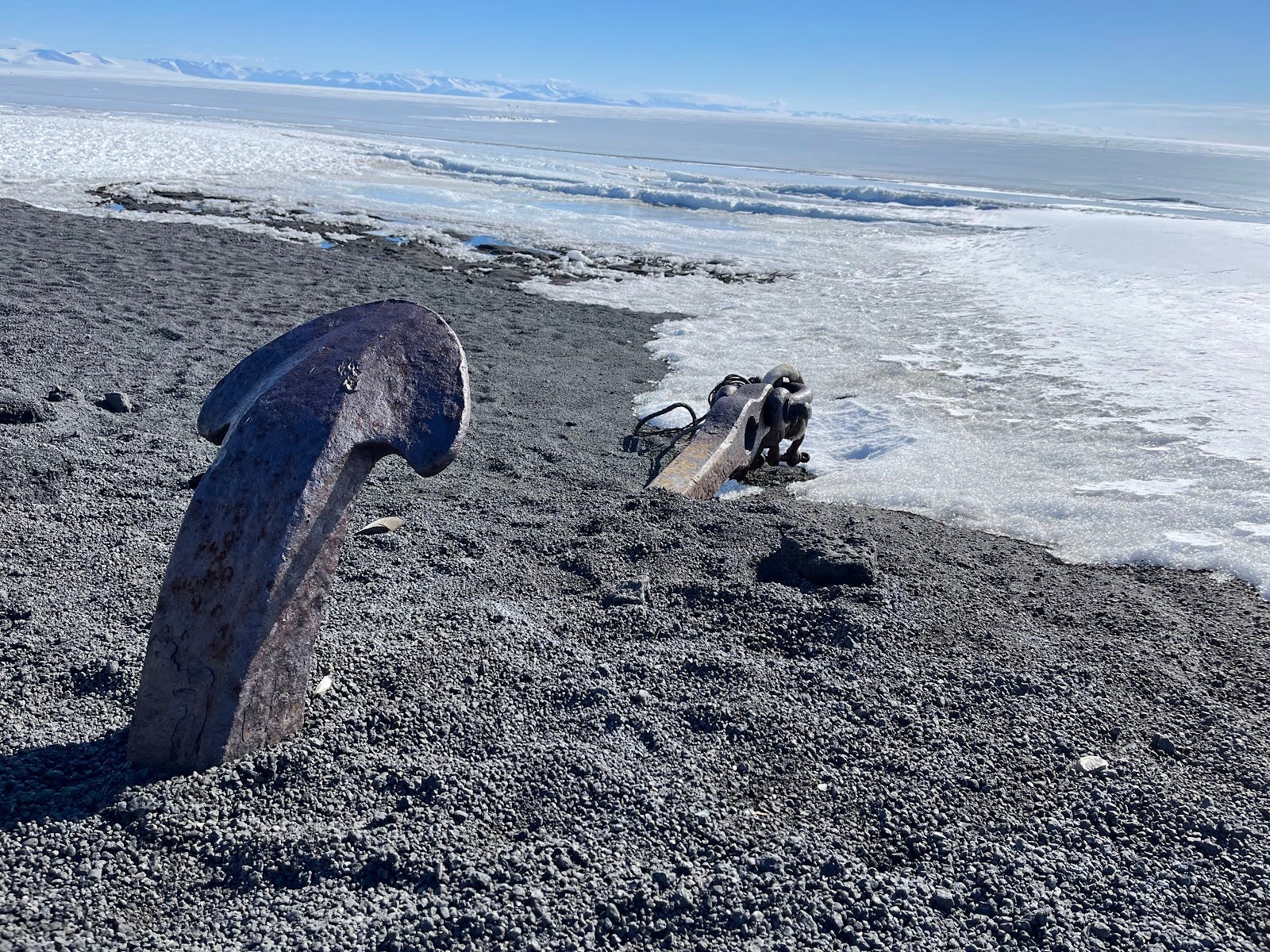
Antarctica is terrifyingly beautiful. The kind of terror you feel in your chest and in your gut — the sort of exposure you feel if you’re rock climbing and look down. There is the constant thought that this beautiful place will quickly kill me if I mess up.
I had the chance to go down there during the austral summer of 2023, as part of my work on the National Science Board. It was a great privilege that few people get to experience, and for that I will always be grateful.
Growing up as a boy in New Mexico, I knew something about Antarctica and I admired the adventures of the men who first explored it in the late nineteenth and early to mid twentieth centuries. But I understood very little about the continent, its importance and what life is really like there — except that it was supposed to be very cold.
My first revelation upon stepping foot on the continent is that there is really no life there, at all.
And by no life, I mean there is pretty much nothing but wind, ice, water and rocks. No visible plants, at all. No animals, except right on the shore or sea ice where there is open water. No birds flying around in the continent’s interior.
Growing up in the high desert, I thought I was well used to desolate beauty and knew what “dry” was. Antarctica is by far the driest place I have ever spent time. It’s so dry and barren, there really aren’t even any smells.
When you’re inside one of its few buildings, or in a vehicle, you can smell people, fuel, and sometimes food, of course, but that’s it. Even on top of a mountain in the high deserts, or the deepest hot valleys of New Mexico, there are some plants and animals. But not in Antarctica. Nothing. Nada.
After our visit was finished, upon returning back to Christchurch, New Zealand, the off-ice base of operations, the very first thing I noticed were the rich smells and the profusion of life. They were everywhere, shocking, and overwhelmingly comforting.
For people to survive in Antarctica, they pretty much have to bring everything with them. And since it’s so far away and so hostile, it takes massive amounts of planning, logistics, and equal parts courage and adaptability. Once a year (once), a supply ship arrives in McMurdo Station to stock up the teams across the continent with what they’ll need for the entire year. The pier to offload the ship and reload the previous year’s refuse has to be rebuilt every year, out of ice, though there are now plans to construct a more permanent pier.
While there are also regular resupply and transportation missions flown in C-130s from Christchurch, they are very limited in what they can carry — in winter weather it is extremely difficult, if not impossible, for them to fly at all.
There are constant weather reports up on the monitors at the McMurdo and South Pole Stations. Everyone watches them like their lives depend on it — because they do. Antarctica is a good place to pray.
Our Lady of the Snows chapel overlooks the Ross Ice Shelf. It’s a very simple non-denominational Christian and Catholic chapel that holds regular services and activities. I spent some quiet time there praying for the safety of the people who work there year-round.
There’s also probably the world’s most southern Marian shrine on top of Observation Hill, overlooking the station, known locally as “Roll Cage Mary,” because the statue of Our Lady is, somewhat, protected by the roll cage of a tractor. It was erected in 1957 in memory of US Petty Officer Richard T. Williams, who died when his tractor fell through the sea ice.
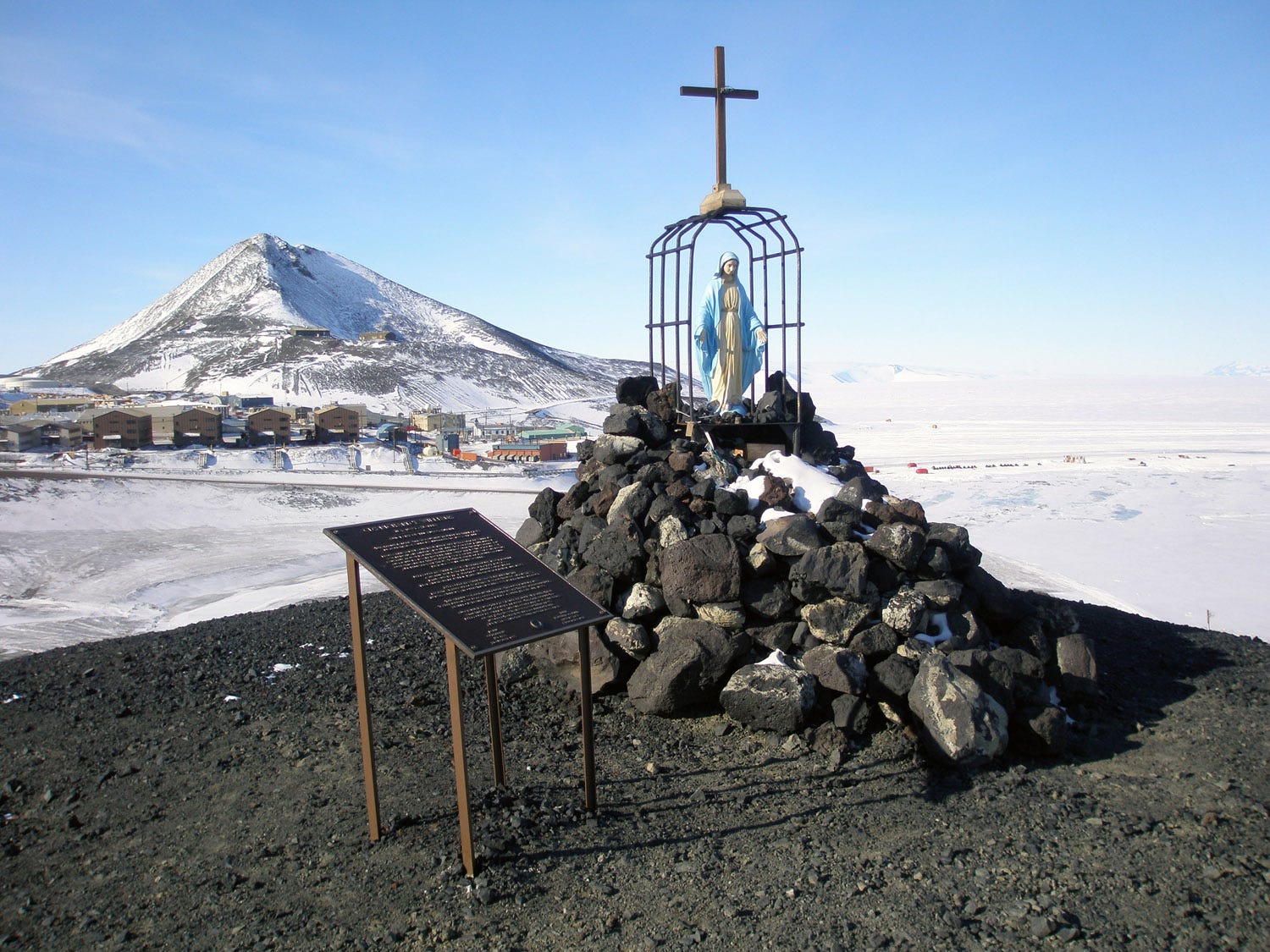
I can’t say for sure if there is another Marian shrine in Antarctica, but I can see why they built this one — and I’m glad they did. She is as weathered and beautiful as can be.
It’s a comfort to know that Our Lady of the Snows is praying for all below. They need it.
Ernest Shackleton, the great explorer of the early 20th century, had three expeditions to Antarctica, and he eventually said his prayers, too.