
A group of more than 200 victims of spiritual abuse and their relatives is asking Pope Leo XIV to take concrete steps to prevent and respond to instances of spiritual abuse within the Church.
In a Sept. 7 letter, published in La Croix, the group asked the pope to clearly define spiritual abuse in canon law, establish independent bodies to receive reports of spiritual abuse, and ensure that new postulants in religious communities receive training about their own rights and responsibilities.
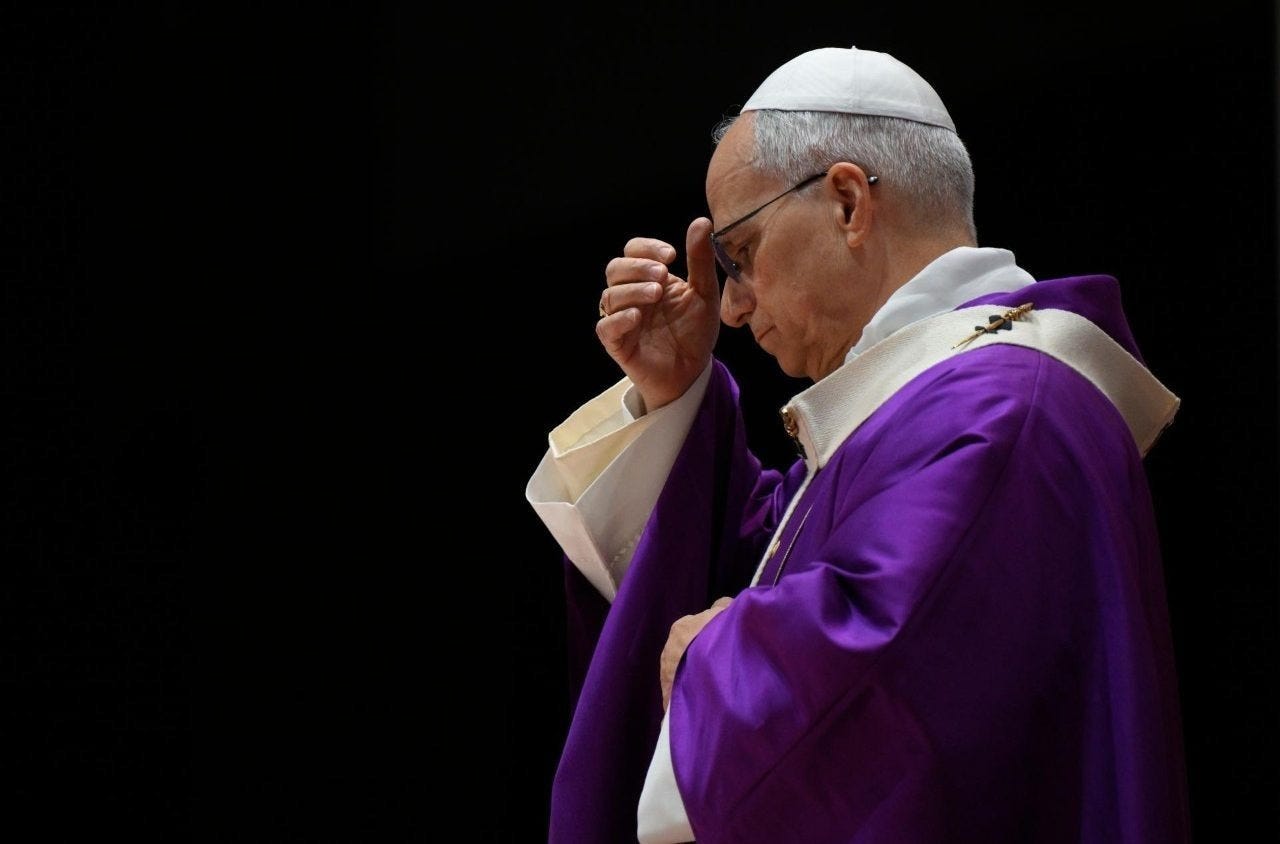
The letter was written on behalf of 214 victims or family members of victims from 37 religious communities in France.
It includes three named signatories -- Bénédicte Nolet de Brauwere, a former sister of the Community of the Lamb; Fr. Gabriel Laguarigue de Survilliers, a former brother of the Congregation of St. John; and Fabio Barbero, a former brother of the Monastic Family of Bethlehem, of the Assumption of the Virgin and of St. Bruno.
The authors of the letter note that Pope Leo, in his encyclical Magnifica humanitas, mentions spiritual abuse first in his list of various forms of abuse that affect the Church.
However, they said, “the denunciation of spiritual abuse still tends to be relegated to the background, behind that of sexual abuse,” and the suffering associated with spiritual abuse is sometimes minimized, because it lacks the visible wounds that often come with other forms of abuse.
Victims of spiritual abuse, the authors said, “are attacked at the very core of their being, in the place of their conscience, their innermost feelings, their quest for God, meaning, and truth. Many of us bear witness to lasting trauma: loss of faith, abandonment of the Church, a feeling of having been manipulated in the name of God, psychological collapse, isolation, inner confusion, an inability to trust again, guilt.”
They said they have been encouraged by various actions taken by the French bishops when spiritual abuse has been reported in religious communities – including apostolic visitations and canonical investigations, profound reforms, and the dissolution of some communities.
Still, they said, “some communities, sometimes even after their dissolution, continue their activities through underhanded means. Others resist any questioning and prohibit access to their rules of life, which contain provisions expressly contrary to canon law.”
The authors of the letter said spiritual abuse can be particularly insidious when it takes place in communities that maintain vibrant public images and inspire trust from young people and families.
“The spiritual abuse we know is based on mechanisms that are now well-identified: the appropriation of the relationship with God by a human authority, the confusion between fidelity to Christ and submission to a person or institution, the inducing of guilt in personal discernment and any critical distance, the instrumentalization of the notion of obedience, the injunction to renounce thinking and discerning for oneself, and pressure on consciences,” they said.
“Specifically, these abuses manifest themselves when doubt is equated with a spiritual failing, when suffering is interpreted as a sign of a lack of faith or generosity, or when inner freedom becomes suspect.”
They added that abuses also arise when vocations are placed under undue pressure, leaders are idealized, a “cult of secrecy” is fostered, and freedom of expression is discouraged out of fear of harming the Church.
The authors of the letter asked Pope Leo to take concrete steps to both prevent and respond to spiritual abuse.
In particular, they called for “a legal and theological definition of spiritual abuse, explicitly recognizing it as violence that violates conscience, inner freedom, and the dignity of persons created in the image of God.”
They also said independent reporting bodies should be created, “tasked with receiving and listening to the testimonies of victims without systematic suspicion or disqualification, evaluating reported situations, discerning potential mechanisms of spiritual manipulation, and formulating recommendations to the ecclesiastical authorities that mandate them.”
New postulants entering religious communities should receive training on their rights and responsibilities, they said, and whistleblowers should be protected when they come forward to make reports.
Religious communities and congregations should be required to follow canon law, and sanctions should be implemented when they refuse to do so, they added.
“We turn to you, Holy Father, with confidence and hope, convinced that a strong magisterial pronouncement, following the appeal launched by Magnifica Humanitas, could contribute to a full recognition of the gravity of spiritual abuse, to better protect the faithful, and to restore the trust of those who have been deeply wounded,” the letter writers said.
Cases of spiritual abuse have arisen a number of times at the Vatican in recent years, most notably in the case of disgraced former Jesuit Fr. Marko Rupnik.
Canon law recognizes spiritual abuse as an aggravating factor to other specific crimes, often sexual. But there have been calls for spiritual abuse to be recognized as its own delict.
A Vatican working group has been discussing the subject since late 2024. In October 2025, Cardinal Victor Manuel Fernandez told Pope Leo that the group was making progress.
In a 2024 audience with Pope Francis, Cardinal Fernández presented a proposal on “false mysticism and spiritual abuse” which led to the creation of the working group. The concept is already recognized by the dicastery “within a very specific context,” the cardinal wrote in a preparatory document.
“Namely, issues related to spirituality and alleged supernatural phenomena, which now are handled by the Doctrinal Section. This includes ‘problems and behavior connected with the discipline of the faith, such as cases of pseudo-mysticism, alleged apparitions, visions, and messages attributed to supernatural origin…’”
“In this context, ‘false mysticism’ refers to spiritual approaches that harm the harmony of the Catholic understanding of God and our relationship with the Lord. It is in this sense that the phrase appears in the Magisterium,” Fernández wrote to Francis.
But the cardinal flagged an issue he believed should be addressed: “There is no delict in canon law classified by the name ‘false mysticism,’ even though canonists occasionally use the expression in a manner that is closely tied to crimes of abuse.”
Fernandez noted that in new norms for the assessment of alleged supernatural occurrences and phenomena issued by the DDF in 2024, the dicastery did recognize that “the use of purported supernatural experiences or recognized mystical elements as a means of or a pretext for exerting control over people or carrying out abuses is to be considered of particular moral gravity.”
Given the dicastery’s recognition of the role spiritual abuse can play in other forms of abuse, and given the dicastery’s increasingly detailed definition of the phenomenon, the situation described can now “be evaluated as an aggravating circumstance if it occurs together with delicts,” the cardinal said.
“At the same time, it is possible to classify a delict of ‘spiritual abuse,’ avoiding the overly broad and ambiguous expression of ‘false mysticism.’”
In my experience, ‘spiritual abuse’, especially when it pertains to the vow of obedience, is much more insidious than just ‘false mysticism.’ The two don’t necessarily go hand-in-hand. I can’t recommend highly enough the book by the Prior of La Grande Chartreuse: “Abuses in the Religious Life and Paths to Healing.”