
In first papal trip, Leo will encounter ‘the now-adult Church in Africa’
Pope Leo XIV will make his first trip to Africa this month, visiting Algeria, Equatorial Guinea, Angola, and Cameroon from April 13 to April 23.
The trip will mark the first time Algeria has received a papal visit. Cameroon and Angola were last visited by a pope in 2009, when Pope Benedict XVI visited, while Equatorial Guinea was last visited by Saint John Paul II in 1982.
The Algerian leg of the trip will be of particular significance, as the pope is expected to visit Annaba, the site of the former city of Hippo, where Saint Augustine served as a bishop.
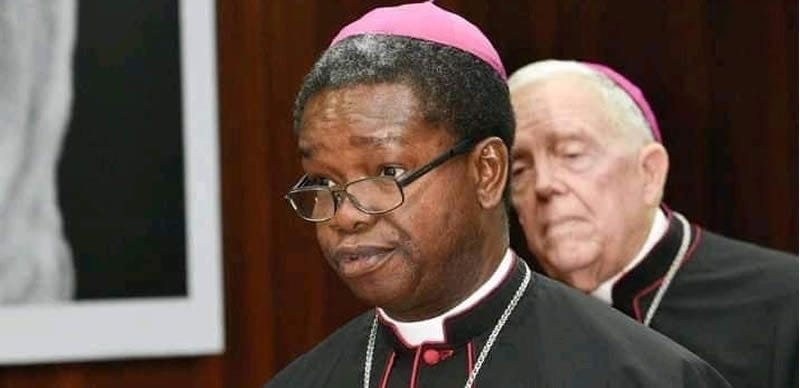
The Pillar spoke about the significance of the pope’s first trip to Africa with Archbishop Fortunatus Nwachukwu, secretary of the section of first evangelization and new particular churches of the Vatican’s Dicastery for Evangelization.
Born in Ntigha, Nigeria and ordained a priest in 1984, Nwachukwu entered the Vatican diplomatic corps in 1994, serving in nunciatures around the world – including in Algeria for several years – and in the Secretariat of State.
In 2012, he was appointed as apostolic nuncio to Nicaragua, a position he held until 2017, when he was made the apostolic nuncio to the English Caribbean, Suriname, and the Netherlands Antilles. In 2021, he became the Holy See’s Permanent Observer to the UN in Geneva, Switzerland, and has held his current office in the Dicastery for Evangelization since 2023.
The interview was edited for clarity and length.
Why do you think the pope chose these specific countries for his first trip?
Our dicastery is not directly involved in the planning of the pope’s visit or in the decision concerning the countries the pope will visit. But the interesting thing is that all the countries that he is going to visit are territories under the jurisdiction of this dicastery. So, I can’t tell you why the pope chose them but I can tell you that they’re in a way representative of the entire continent.
In these countries you have four or five of the major languages spoken throughout the African continent. English and French are spoken in Cameroon, Portuguese in Angola, Spanish in Equatorial Guinea, and Arabic in Algeria. So, from the linguistic point of view, all these countries represent the entire African continent.
From the cultural point of view, you could also say that the pope is more or less covering a large part of the continent. Algeria is in the Maghreb, Northern Africa. Cameroon sits at a very strategic position, the meeting point between the Western and Eastern central parts of Africa. Further south, you have Angola, and Equatorial Guinea represents insular Africa, because the capital, Malabo, is on an island.
So we have all these elements making these countries representative, in a way, of the whole of Africa.
You mention the linguistic and cultural diversity of these countries, but there also seems to be quite a bit of diversity with regards to the local Church. How would you describe the Church in these countries?
I served as the secretary of the apostolic nunciature to Algeria between 1999 to 2002, during a very difficult time for Algeria and especially for the Church in Algeria, due to the extremists who were trying to take power in the country, a civil war that ultimately ended in 2002. This is the time in which the now-beatified Trappist monks of Tibhire were martyred. The Bishop of Oran was also killed, two Spanish sisters were killed leaving Mass. It was a difficult time.
But thanks to God, the Algerian authorities were able gradually to take control, especially with the arrival of President Bouteflika, who then brought back order step-by-step. I am very happy today when I hear of the peace and the calm and the friendliness of the Algerian people these times. When I was there, it was a challenging period, not just for the Church, but also for Algerians in general, even for diplomats.
Algeria is almost 100% Muslim, with a very small Christian minority, but some of these communities have been there for a long time, and most of them are welcome in the midst of the broader Muslim communities. So, their mission is often a mission of presence and of charity. They’re there to show that Christianity still exists in this country.
We don’t have proselytism, it is not allowed in the country. What we have is a presence of witnessing, whereby if people want to embrace what makes you live in a particular way, that then is a choice of every individual. So it is an evangelization based on witnessing.
The Church in Cameroon is vibrant. It’s a majority Christian country, with slightly more Catholics than Protestants but with also a significant number of Muslims.
And then, Angola and Equatorial Guinea, for their colonial pasts with the Portuguese and the Spanish, they’re traditionally Catholic countries in which the Church is growing, developing, and vibrant. Vocational growth in Angola and Cameroon is particularly strong. In Equatorial Guinea, a little less, but it’s also a very small country.
Then, Algeria is an interesting case. We don’t have many vocations. We have some Indigenous Algerian vocations, we’ve even had local bishops, but what’s interesting is that we have some cases of Algerian priests who grew up in Spain or France and became priests there. And even if they grow up outside, they remain with their Algerian roots.
These countries are widely considered authoritarian regimes, and there have been individual requests from activists, and even clergy, for the pope to cancel or postpone these trips in protest. Do you think this is advisable?
If the pope had to cancel trips because of the type of government, then I think the pope would not visit any country in the world, because there is no single country, whether it is in Europe, in the West, or anywhere, that has a perfect system.
If the pope were to cancel trips because of political sins, the pope also should cancel trips to countries that have unethical laws. The pope is a pastor and is the pastor of all sinners. The pope is going there to bring the message of Christ, and that is the message of love, the message of peace, the message of the common good, and the message that supports human life and dignity. Nobody is immune or is to be excluded from this message.
On the contrary, Jesus said in Matthew 9:13, “I have not come to the righteous but the sinners.” So, countries with problematic regimes are the ones that need the visit of the pope the most. We’ve seen time and time again how the presence of the pope has helped to improve the situation of the Church or of the society as a whole in a country. So maybe Pope Leo’s visits will open a small space so that the people can breathe some fresh air.
The pope is a universal pastor. How would you interpret the pope going to Algeria? The pope is Augustinian, he loves his Augustinian tradition, so he’s going to Annaba, what used to be Hippo, to visit where Saint Augustine was a bishop. Anybody would expect that of him. For him, this is going back to the source, going back to the fountain to allow yourself to be refreshed and to draw inspiration. So, for a person that is so profoundly Augustinian in his formation and spirituality, returning to Hippo is something of a particular spiritual significance.
I was just thinking of the pope’s homily at the Chrism Mass. He said that every Christian is invited to mission, and then he went on to speak about the three elements of the mission: detachment, dialogue, and sacrifice. And these are elements that every Christian needs in living out the mission of Jesus Christ.
And I think that the pope will be carrying that with him wherever he goes. He’ll be carrying it with him when he goes to Cameroon. He carries it with him when he goes to Angola. He carries it with him when he goes to Equatorial Guinea because Christians need the pope to remind us of what we are supposed to be missionaries of Jesus Christ.
In several of these African countries, a lot of young people are migrating because of poverty or political persecution. What is the pope’s message of hope in this circumstance?
Just look at his personal life. He grew up in Chicago, became a mathematician, then was sent as a missionary to the jungle in Peru, then back to the U.S., then superior in Rome, then again bishop in Peru. The world is our home. That is the message to young people. Nothing and nobody should discourage you. So, watching the pope himself and seeing what the pope has been able to do despite moving around so much. Do not be hindered by particularly adverse situations.
We are able to harbor and grow talents in every place in the world, it doesn’t matter if the situation in our country is difficult. We can still grow in faith and in virtue. And then with due labor, working hard, trusting Jesus Christ, we’re going to be able to change our lives and transform our society.
The Algeria part of the trip has a significant interreligious dimension, because it’s the sole Muslim country of the trip. Why does this dimension matter?
A major element in Algeria is the relationship between the Muslims and our minority Christian community. One thing the Church has to do constantly is to work on the relationship between the Muslim majority and the Christian minority.
The pope’s presence is essential to this end. There will be gestures and words that will favor, that will strengthen religious dialogue in the country. When I was in Algeria, our relationship with the government was good, it was easy for us to dialogue with them often and to present our concerns. That hasn’t changed much, especially now that there is less tension than there was 24 years ago when I left Algeria.
What are the main challenges that the Church faces in these countries?
The major challenge for the Church in Algeria is having a space to exist and operate as a Christian community. The greatest danger of being a minority is being forgotten in the presence of a crushing majority. That could be a danger in a place like Algeria, that many Algerians might forget that this minority group here is different and should be respected in its difference and should not simply be glossed over or crushed.
That is a major challenge for a Christian community as a minority: The challenge of finding a calm space and environment to exist and to operate.
Now, the Church in Cameroon exists in an interreligious and ecumenical space, while in Angola and Equatorial Guinea as the majority religion. So the challenges of the Church are the challenges of the wider society: poverty, security, bad governance, corruption.
These are challenges that these countries have to confront politically and socially. People in politics and in the wider society in these countries profess themselves as Christians and as Catholics. This means that the problems and challenges of these people are also the challenges of the Church.
The thing is that while political parties and social groups quite often operate with different platforms, we Christians operate with a common platform, Jesus Christ, the word of God.
So we need a common meeting ground in trying to heal our ills. A big problem in these countries is the problem of discrimination along ethnic lines and tribal lines. This bears the seed of a lack of trust, which then brings violence and insecurity, and when you have violence and insecurity, society cannot progress.
Who can solve this issue? Politicians can’t do it because they pursue party interests and personal interests. Will the military do it? The military has good things. Our societies need discipline, but the military quickly succumbs to using harsh-handedness.
People often say we need to go back to traditional culture societies, but that won’t heal divisions, it might increase them, because there’s no common vision. The reliable common ground is Jesus Christ, the Incarnate word of God, and Scripture, both for Catholics and Protestants.
If we focus on Jesus Christ and take the person and the message of Jesus Christ seriously, then we can find solutions and healing for our African societies.
You’ve said in the past that people in the African Church suffer from the “syndrome of the baby in the crib”: The Church is growing in these countries, it is important socially, but at the same time it’s immature. Do you think the papal trip can help?
The pope’s visit can bring attention to what is already there. The Church in Africa has grown. And the only thing is that we have to help the people also to come to an adult mentality as a Church. I’ve spoken about helping our people, African Catholics, to come out of the crib mentality.
The African Church was birthed through Western missionaries. So we grew up being spoon-fed by the Western missionaries that brought us almost everything. They brought subsidies, they brought financial help, education, hospitals. We received everything from them. Gradually, the churches in Africa got accustomed to being at the receiving end, like a child that is in the crib, being pampered and cuddled by their elders in the West.
Sometimes that mentality has remained there. We’re used to turning to the West for everything we need. We ask for financial help and support for everything, forgetting that now we are grown up and as adults, we have to start rolling up our sleeves and trying to find the resources to survive and flourish in Africa.
We need to have an adult mentality if we’re to come out of the crib. If you’re in the crib, you’ll be treated as a baby. When a baby gets in the middle of a conversation, the adults there try to hush up the baby. The baby’s voice is not seen as a contribution, but as a distraction. And they try to stop it by giving the baby some milk to keep it quiet and good while the adults are discussing.
Now, the African Church has to come out of that crib if it is to be taken into consideration in the discussions, if its voice is to be taken into consideration as the voice of a grown-up.
At the same time, we have to avoid arrogance. We have the responsibility of being grateful. I cannot stress this enough. We wouldn’t have the African Church of today that we have if we didn’t have those heroes of our faith, those missionaries that left the comforts of their homes.
The African Church is now supposed to see itself, recognize itself, show itself as an adult Church, bringing fruits into the wider family of the universal Church. And I’m sure that the visit of Pope Leo XIV is going to spread universal light on this dimension of the now-adult Church in Africa.
@Dylan Campbell @Origen Adamantius check this out!
This is great! Thanks so much for this, Edgar!