IOR posts best returns in a decade
The bank paid a dividend to the pope of 24 million euros, up more than 76 percent from last year.
The Institute for Works of Religion posted its best financial results in a decade, according to its annual report released Monday.
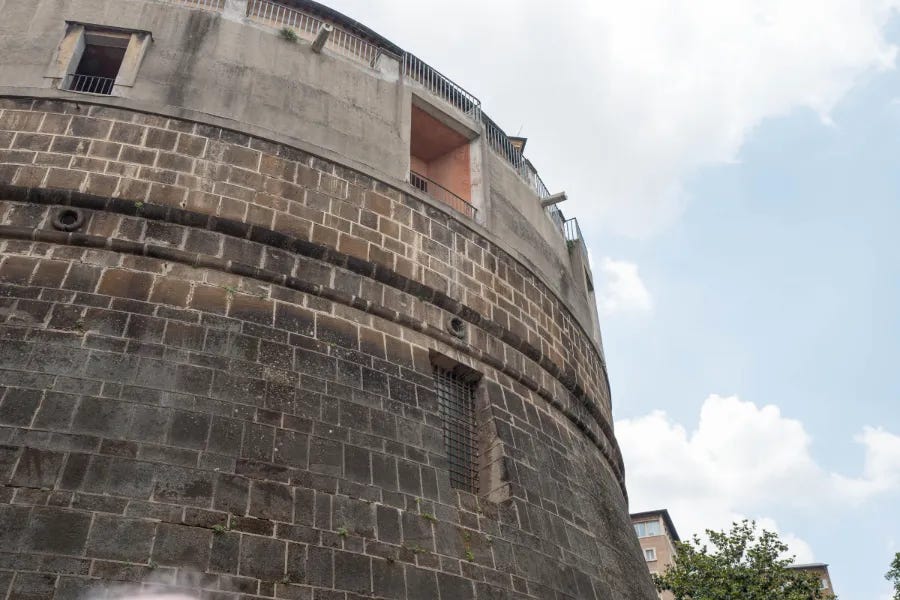
The institute, commonly referred to as the Vatican bank, is the sole commercial financial institution of the Vatican City state. For the financial year 2025, the bank posted net income of 51 million euros — a 55 percent increase from the previous year’s 32 million euro profit, and the strongest result since 2015.
As an institution owned by the Holy See, the IOR paid an annual dividend to the pope of 24.3 million euros, an increase of more than 76 percent from the previous year, while allocating a further 600,000 euros in direct charitable donations.
The IOR, the only Vatican financial body subject to external inspection and international financial regulation, has nearly 6 billion euros of assets under management for its 12,000 clients. Its financial statements are independently verified by the international auditing firm Deloitte & Touche.
According to sources close to the bank, the year-on-year increased profits were considered especially positive because they represented “higher quality” revenue as well.
“In previous decades, the institute had to pursue a more aggressive means of generating revenue,” said one official not authorized to speak to the press. “The Secretariat of State expected a certain amount as a contribution to the [Vatican] budget and it had to be delivered, by going into the bank’s reserves if necessary.”
“Now, after years of reform, the revenue returns have been shifted to more reliable less volatile sources,” the official said. “This allows not only for increasing dividends to be paid but, crucially, for the bank’s reserves to be reinforced.”
The IOR customers include Vatican curial institutions, religious orders, and Catholic dioceses and institutions internationally, usually based in countries without a reliable financial sector, as well as Vatican employees and city state residents.
In addition to increased profits, the bank also boasted an enhanced capitalization and liquidity. Because there is no “lender of last resort” in the Vatican, the bank has a policy of maintaining an above industry standard of risk mitigation.
Each year, the IOR publishes its intermediation margin — the difference between how much it made on interest versus how much it paid in interest to clients. In 2025, the margin was 66.3 million euros, up from 51.5 million in 2024.
The bank also reports annually on its Tier 1 capital ratio, an international standard measuring liquidity and institutional risk exposure for financial institutions. The minimum international banking requirement is a ratio of 6%. The ratio for larger U.S. banks is usually somewhere between 13% and 17%, for smaller private banks the ratio is usually around 25%.
In 2025, the IOR had a Tier 1 ratio of 71.9%, up from 69.4% in 2024.
Sources close to the bank explained to The Pillar that while the “pure” number of the Tier 1 ratio could appear unnecessarily high, the “functional” size of the bank’s capital ratio were approaching what would otherwise be considered standard best practice.
“It has to be borne in mind that because there is no lender of last resort, IOR has to be its own ‘backstop’,” said a senior official. “In addition to providing against a catastrophic market event, mass customer exit, or something similar, there is also a separate employee pension fund which has to be properly capitalized and guaranteed.”
“Once you properly assess the costs of these needs, the effective [Tier 1 ratio] number is closer to 23 percent, which is about right for an institution of this size.”
The increased profits and reserves for the bank mark a high note for its departing leadership team after more than a decade of reforming work.
The annual accounts’ approval last month marked the end of term for the president of the IOR’s Board of Superintendence, Jean-Baptiste de Franssu, and director general, Gianfranco Mammí, both of whom have served past the usual limit of two five-year terms in office.
De Franssu led the IOR from 2014 until last month — exceeding the maximum term allowed under the bank’s governing regulations after being asked to remain in post by Pope Francis.
Under his leadership, the bank became both profitable and financially transparent, coming under the oversight of international regulations and inspections, posting a series of year-on-year increases in profits despite broader Vatican financial headwinds.
Following that result, de Franssu hailed the recovery of more than 17 million euros by the bank “which had been stolen from the [IOR] before 2014” as “amongst the important achievements” of 2022.
De Franssu and Mammí also became the locus of a battle for wider Vatican financial reform in the Secretariat of State’s London property scandal, after they rebuffed a request for a 150 million euro loan from the secretariat to refinance the building after its acquisition in 2018.
Under pressure from senior Vatican officials to approve it, despite their regulatory concerns, the two bankers flagged the loan request to prosecutors, triggering the investigation that ultimately led to the financial crimes trial, currently being heard on appeal, which convicted former sostituto Cardinal Angelo Becciu and eight others.
While De Franssu and Mammí faced retaliatory action from the Secretariat of State for those events, Pope Francis broadened the influence and importance of the IOR in response, ordering that all curial assets and investments be handled by the bank.
That reform was rolled back by Pope Leo XIV last year, who authorized Vatican dicasteries and institutions to effectively choose their own investment vehicles and managers.
Effective April 28, de Franssu was succeeded by François Pauly, previously an IOR board member, in what the bank described in a press notice as a “carefully managed succession process” aimed at “ensuring continuity in the governance of the Institute.”
Pauly, a Luxembourgian national, has served as a member of the Board of Superintendence since 2024. He is currently Chairman of La Luxembourgeoise Group, and sits on the finance council of the Archdiocese of Luxembourg.
According to the IOR statement, he was elected by the bank’s board in December last year, receiving the approval of the IOR’s Commission of Cardinals at the end of January.
He previously served as CEO and Chairman of Banque Internationale à Luxembourg, and until 2021 was a member of the Vatican Pension Fund.
