Is a Catholic school in Portugal discriminating against poor students?
The private school in Lisbon is accused of serving different food to 'poorer' students.
A Catholic school in Portugal has been accused of discriminating against poorer students by providing them with food of lower quality and variety than it serves to richer students.
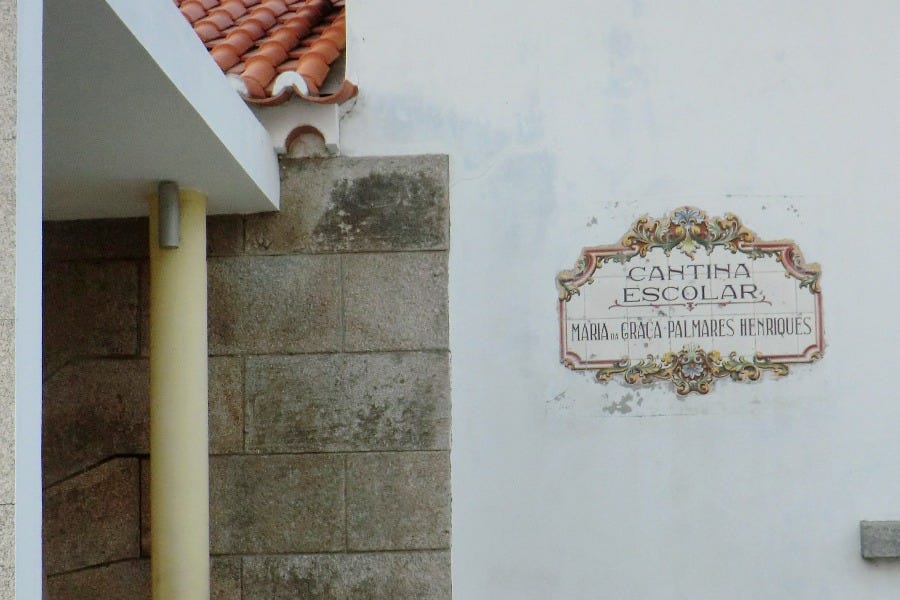
But a review from The Pillar suggests the reality is considerably more complicated than suggested by initial headlines, such as the one run by the news agency Lusa, which kicked off the controversy last week: “Salesian school cafeteria has ‘food for the rich’ and ‘food for the poor.’”
At the center of the story is a peculiar arrangement between the Portuguese Ministry of Education and a small number of private schools, known as “association contracts.” Under those contracts, the state subsidizes the integration of local students in private schools in areas where there are insufficient public schools.
Fátima, home to the Marian shrine and international pilgrimage site, is a rare example of a town with no state-run schools. The number of private schools in Fátima — all of which are Catholic — made the construction of a public school redundant. So the government simply subsidizes the schools that already exist for all local students.
The situation in the Salesian school in Manique, Cascais, is similar. But the difference is that it is one of the rare cases where cohorts of private fee-paying students and public system students exist side by side. Currently, the school has 1,587 students, with 790 paying and 797 attending for free, under association contracts.
In mid-March, a group of parents of association contract students wrote a letter complaining that their children did not have access to the same quality or variety of food as the fee-paying students in the cafeteria, leading to the headline by Lusa, and an ensuing controversy.
Questioned by journalists, education minister Fernando Alexandre commented that “maybe what we need is to reflect on whether it makes sense to have the two regimes coexist in the same school.”
The Salesians acknowledged the situation in their cafeteria, but said that all attempts to solve the problem had been blocked by the Ministry of Education.
Private students pay six euros (around $7) per meal at the school. But students attending under association contracts are covered by the law that applies to public schools, and so pay only 1.46 euros per meal ($1.70). The government provides an additional subsidy of 1.53 euros ($1.77), for a total of 2.99 euros ($3.47) per child, per meal.
A source from the Salesian school, who asked not to be named as he was not authorized to speak about the issue, told The Pillar this was clearly not enough to provide better quality and variety in the cafeteria.
In addition, he said, “students from families with financial difficulties are either fully or partially exempt from paying.” This further reduces the money the school has for food.
“What is more, the government only began paying this subsidy in October, and they didn’t even warn the schools,” the source said.
“They just transferred the money, as if we were supposed to guess what it was for. That is what communication with the Ministry of Education is like, I’m afraid.”
‘We didn’t have any other option’
For a while, the Salesians asked parents of association contract students to pay the difference, and everybody ate the same food in the cafeteria. But when the Ministry of Education found out, it told the school to stop charging parents and refund them in full. It then fined the school.
“We didn’t have any other option than to reduce the offer for the association contract students,” said the Salesian source. “With the reimbursements and fines we had to pay, it just wasn’t viable.”
Those familiar with the school also bristled at the description of the students as divided between “rich” and “poor,” as if all fee-paying students were from wealthy families and all public system students were poor.
They noted that the criterion for being an association contract student is geographical, not financial, so any student, rich or poor, who lives in the catchment area for that particular school is entitled to attend for free.
Only students from outside of the catchment area are required to pay fees, and these are the lowest among private schools in the area administered by the council of Cascais: around 400-600 euros ($463-$695) per month, depending on the grade level.
Further integration forbidden
Rodrigo Queiroz de Melo, the executive director of the Private and Cooperative Schools Association, said that if the minister were to follow up with what many saw as a threat to end the mixed system in the Salesian school, poorer students would suffer most.
He said: “Supposing there was in fact a problem of inequality, the great advantage of this system is in mixing students from different social backgrounds. The solution cannot be to separate them.”
“Basically, what the minister said was that if the amount provided by the state is not enough to ensure an education of the level demanded by the parents of fee-paying students, then we should separate them and have a poor-quality system for the poor, and a high-quality system for the rich. That is simply absurd.”
Queiroz de Melo added: “The infrastructure at the Salesian school in Manique is incomparably better than that of any other public school. And this is only possible because around half of their students are paying.”
“The public system students only have access to a swimming pool, for example, because a considerable number of students are paying fees.”
According to the Salesian source, the school would have liked to be able to integrate the students further, by mixing private students and association contract students in the same cohorts, but this has also been forbidden.
“For years, we asked the government for this. From an educational point of view, it would have made much more sense for us to mix them, but we were always denied this option. The government funds cohorts, and not individual students,” said the source.
In 10th grade, students in Portugal can choose whether they want to pursue humanities, sciences, economics, or arts studies. There have been several cases where association contract students have had to leave the school, because there were not enough public system candidates to open a cohort in their preferred option, rather than being allowed to join one of the private cohorts as a state-funded student.
Queiroz de Melo said that any talk of ending the association contracts in the Salesian school was a non-starter, because the public system students would be left with nowhere to go, since the public schools closest by cannot absorb them.
In fact, according to statements released by the school itself, the Salesians actually operate at a considerable loss with the association contract.
The school said: “In 2025, the Ministry of Education provided funding of 3,309.60 euros [$3,831] per year on average for each pupil under an association contract, which amounts to 275.79 euros [$329] per month — a sum that is clearly insufficient to guarantee a high-quality service. Human resources allocated to association contracts alone accounted for 101% of the funding.”
Although the school likes to see its service to public system students as a mission, it believes the current situation is untenable. It has announced that if the government does not increase its contributions, it will not open association contract classes in 10th grade in the next school year.
The Salesian source said that, although this was only announced publicly after the cafeteria controversy and the minister’s subsequent statements, the decision was taken earlier and was not meant as a form of pressure. Hopes that the ministry will relent and renegotiate its contributions are slim, said the source.
The Pillar asked the Ministry of Education for clarification on what exactly the minister meant about “reflecting on” the current system. But a spokesperson said the minister would not be making further comments.
Prejudice and anticlericalism
Rodrigo Queiroz de Melo suggested that insufficient funding for private schools with association contracts seemed to be overtly ideological.
“The state pays 88,000 euros [$102,000] for association contracts per class, per year. For years, the ministry refused to say how much each student cost at fully public schools,” he noted.
“But last year they provided figures to the Organization for Economic Co-operation and Development and so we now know that on average the state pays 180,000 euros [$208,000] per class, per year, in its own schools.”
This means the association contracts actually save the state money. Yet for years, despite appeals from the private sector, the Ministry of Education has refused to update its contributions.
“There is no doubt that there is an ideological prejudice against private schooling. But what is worse, it seems to be most prevalent among the political elites,” Queiroz de Melo commented.
“The families themselves who benefit from the association contracts love them. But they are constantly being criticized by the center and left-wing politicians who speak from their high horses, because they send their own children to fully private schools.”
“The best example was the socialist secretary of state for education who terminated several association contracts all over the country, but sent her own daughter to the German School in Lisbon.”
Monthly fees for the German School are close to 1,000 euros ($1,158) per month, if you factor in school books, transportation, and the daily six euros for lunch.
The result is that the association contract system in Portugal only applies to around 2% of students, whereas comparable systems account for 20% in Spain, 15% in France, and more than 70% in the Netherlands.
Queiroz de Melo added that the prejudice against private schools could even be seen as anticlerical, given the vast majority of private schools in Portugal, and especially those with association contracts, are Catholic.
“Historically, this has its roots in the 18th century,” he observed. “At the time, Portugal had a network of public schools that was run almost exclusively by the Jesuits.”
“In 1759, the prime minister, the Marquis of Pombal, expelled the Jesuits, and announced that he was going to start a new state-run public school system.”
“But it was only in 1930 that we managed to have as many pre-university students in schools as we had in 1730. So yes, if you ask me, I think there is definitely an element of anti-religiosity involved.”

