Last month’s illicit SSPX consecrations and subsequent excommunications raised expectations that Pope Leo might soon act to expand the celebration of the TLM in communities that are in union with Rome.
But more than a month later, that expected papal action has not come.
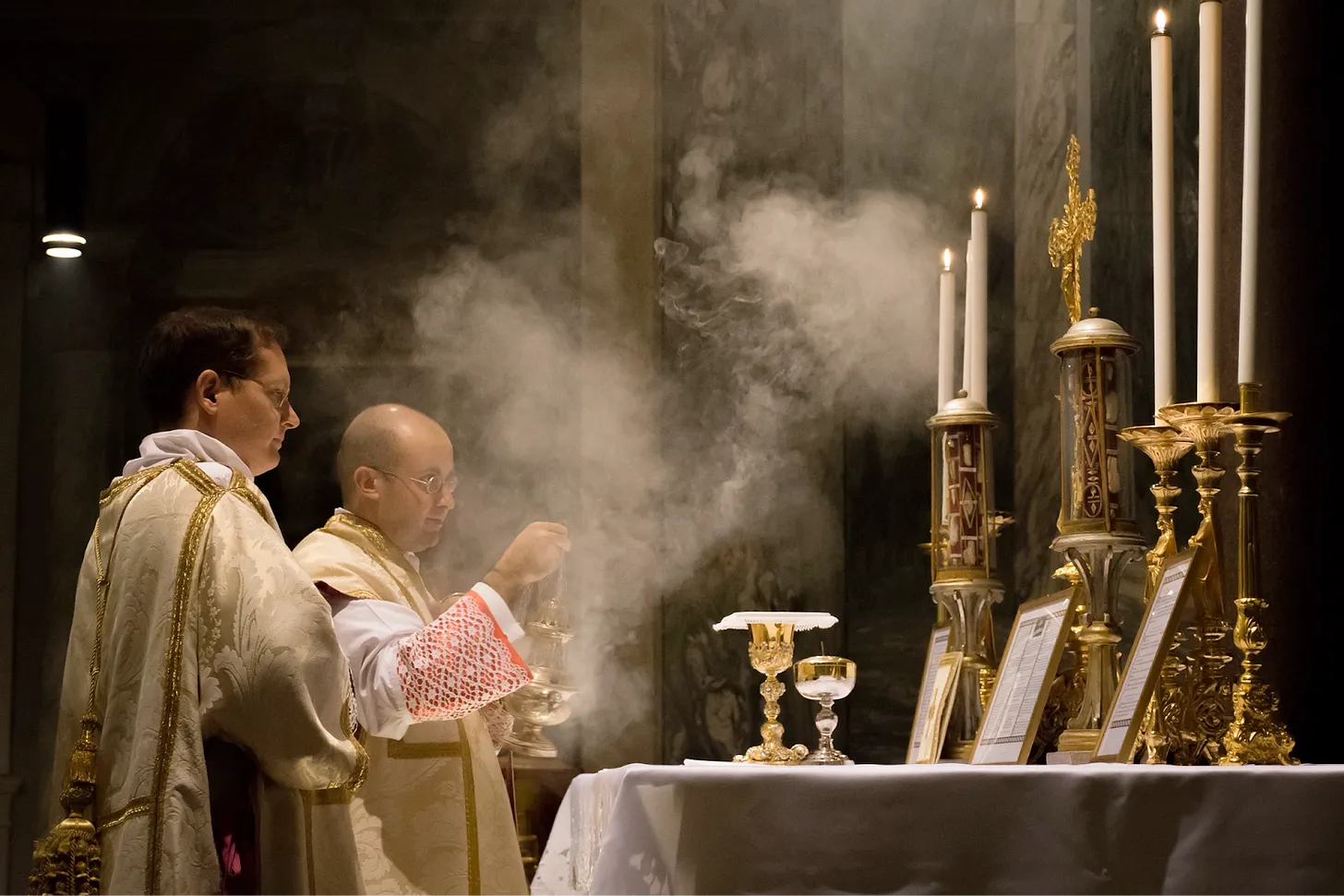
Pope Leo has made a number of small yet tangible gestures towards traditionalist communities in the first year of his pontificate – for example, receiving some of the bishops, cardinals, and religious superiors most closely connected to them, and allowing a traditionalist pilgrimage to celebrate Mass at St. Peter’s Basilica.
Those measures have sharpened expectation in some corners that the pope has planned to address longstanding discontent over Francis’ liturgical policy, with a solution friendly to Catholics who prefer the older liturgical rubrics.
Last week, though, the prefect of the Dicastery for Divine Worship and the Discipline of the Sacraments said in an interview that Pope Leo XIV has no intention of changing the restrictions imposed by Pope Francis on preconciliar liturgical texts.
Has the pope changed his view on the TLM? Or are the comments just talk, filling the weeks of the idle Roman summer?
A careful look at Leo’s choices to date suggests there may be a third interpretation – that the pontiff may intend to keep the liturgical situation in a gray area, leaving policies intact as written, while urging generosity and magnanimity in their application.
When the Vatican last month declared six bishops of the Society of St. Pius X excommunicated — and warned that priests and even some lay attendees of their liturgies could also incur an excommunication — many observers speculated that the pope would soon after make a formal gesture to traditionalist communities who wanted to remain in communion with Rome, with some even speculating on the the establishment of a successor to the Ecclesia Dei commission, which once was charged with overseeing traditionalist communities, until its 2019 suppression.
But more than a month later, nothing concrete has yet happened.
Meanwhile, on July 29, Cardinal Roche, prefect of the Dicastery for Divine Worship and the Discipline of the Sacraments, appeared to rule out any liberalization of Francis-era liturgical restrictions.
The English cardinal said in an interview with The Tablet that “Pope Leo is not going to change Traditionis custodes, and he’s not going back to Summorum pontificum.”
“The abundant diet of Scripture that is now given through the celebration of the Mass and the sacraments is something that wasn’t available to use before, but it is now,” he said.
The cardinal also added that while the TLM emphasizes that the priest acts on behalf of the congregation, the emphasis in the Novus ordo is different.
“In fact, when the Mass is being celebrated, because the baptized people are a priestly people, they too are celebrating with the priest.”
Did Roche’s outspoken comments actually mirror the views of the pope? It’s not entirely clear.
Some observers have argued that Roche felt free to make these comments because at 76 he is, at least in theory, due to retire anytime now, and feels comfortable speaking his own mind, which may or may not reflect the pope’s private thinking.
However, sources close to the dicastery have told The Pillar that Pope Leo respects Roche, especially for how he has approached liturgical controversies with the German bishops’ conference, and that it’s at least plausible that the cardinal’s remarks came from an informed perspective on the matter.
Still, Leo’s own actions in the past year have shown a willingness to take a more cordial stance towards those with an affinity for the TLM, without necessarily suggesting that an abrogation of Traditiones custodes is forthcoming.
For example, in November, The Pillar reported that the Archbishop Miguel Maury Buendia addressed the plenary assembly of the Catholic Bishops’ Conference of England and Wales, informing the bishops that the Vatican would “be generous” when asked to dispense from the restrictions to the traditional liturgy.
These dispensations have become commonplace in several American dioceses, with some even increasing the number of TLMs offered.
And in March, Cardinal Pietro Parolin sent a letter to the French bishops’ conference before their plenary assembly, calling for “the generous inclusion of those sincerely attached to the vetus ordo, in accordance with the guidelines established by the Second Vatican Council regarding the liturgy.”
Several senior Vatican officials in Leo’s closest group of advisors told The Pillar that Leo’s informal and progressive relaxation of the application of Traditionis custodes will not stop.
“It’s not a liturgical issue, but an issue of communion. If you’re in communion with the Church, we should allow for reasonable accommodation for different charismas and styles, including those who are more traditional, and I think that’s the trend now,” one official told The Pillar.
Meanwhile, organizers of the traditionalist Summorum Pontificum pilgrimage told The Pillar that they have asked permission to celebrate a TLM in Saint Peter’s Basilica this year, but haven’t received a response.
One of Leo’s concrete gestures towards traditionalist communities last year was allowing the celebration of a TLM during the pilgrimage in Saint Peter’s Basilica after not being allowed to do so in 2023 and 2024.
One source said organizers of the pilgrimage intend to ask again after the summer.
“The problem is that in the pope’s close circle, they saw that the Mass helped a lot of people but was also used as propaganda and they didn’t like that,” the source said.
If Pope Leo declines to allow the pilgrimage to celebrate the TLM in St. Peter’s, that could be seen by many observers as a sign that he has grown cold to the idea of abrogating, reforming or even loosening the application Traditiones custodes.
However, it is also possible that the lack of a response is a matter of personnel connected with the basilica.
There is growing speculation that Cardinal Mauro Gambetti, Archpriest of Saint Peter’s Basilica, is due to be replaced soon. Rumors in Rome indicate that Gambetti’s replacement might be Cardinal Pietro Parolin, Cardinal Rolandas Makrickas, or Bishop Guido Marini, who are all thought to be friendlier to the TLM than Gambetti.
It is possible that a forthcoming transition in archpriest could be delaying a response about the celebration of a TLM in the basilica
Therefore, silence should not be understood as rejection — at least not yet.
Several Vatican sources told The Pillar the decision to allow the Mass last year happened after Cardinal Raymond Leo Burke asked the pope in an Aug. 22 audience to allow the Mass to be celebrated there.
As questions continue to swirl regarding the future of Traditionis custodes, Pope Leo has not given any indication that a formal, stable solution is close at hand.
And several cardinals and curial officials – including both those considered to be friendly and hostile to the TLM – consulted by The Pillar in the last few months said they don’t expect a solution in the near future, at least not this year.
A Vatican official told The Pillar in April that in a 2025 meeting, Leo acknowledged he did not know much about traditional communities or the traditional liturgy. According to the official, the pope’s central concern was not the liturgy itself, but whether members of those communities accepted the Second Vatican Council.
The pope accepted a suggestion to meet with cardinals, bishops, and others close to traditional communities in order to receive firsthand information from them.
That has seemingly led to audiences with figures able to offer the pope perspectives on the matter: Cardinal Raymond Leo Burke, Cardinal Robert Sarah, Bishop Athanasius Schneider, Fr. John Berg, superior general of the Fraternity of Saint Peter, and the researchers Stephen Bullivant and Stephen Craney, who are set to publish a book on traditional communities in the United States.
So while Roche may be right that Pope Leo is not planning to return to Summorum pontificum or formally amend Traditionis custodes, that does not necessarily change anything about Leo’s approach to the TLM and the expectations surrounding it.
At the same time, while many expected the illicit SSPX consecrations to move the needle towards fewer restrictions on TLM celebrations in communion with Rome, that hope has not yet materialized.
The pope, it seems, is comfortable keeping the situation in a gray area for now – one in which he is not inclined to immediately change the law, but will continue slowly encouraging bishops, through curial officials and papal diplomats, to adopt more generous applications of the Francis-era law.

