Italian bishop accused of antisemitism over petition regarding Israeli author
The petition has drawn vocal criticism from a fellow bishop.
An Italian bishop is facing criticism, including from his colleagues, after signing a June 12 petition urging organizers of a literary festival in his diocese to withdraw an invitation to Israeli novelist Eshkol Nevo.
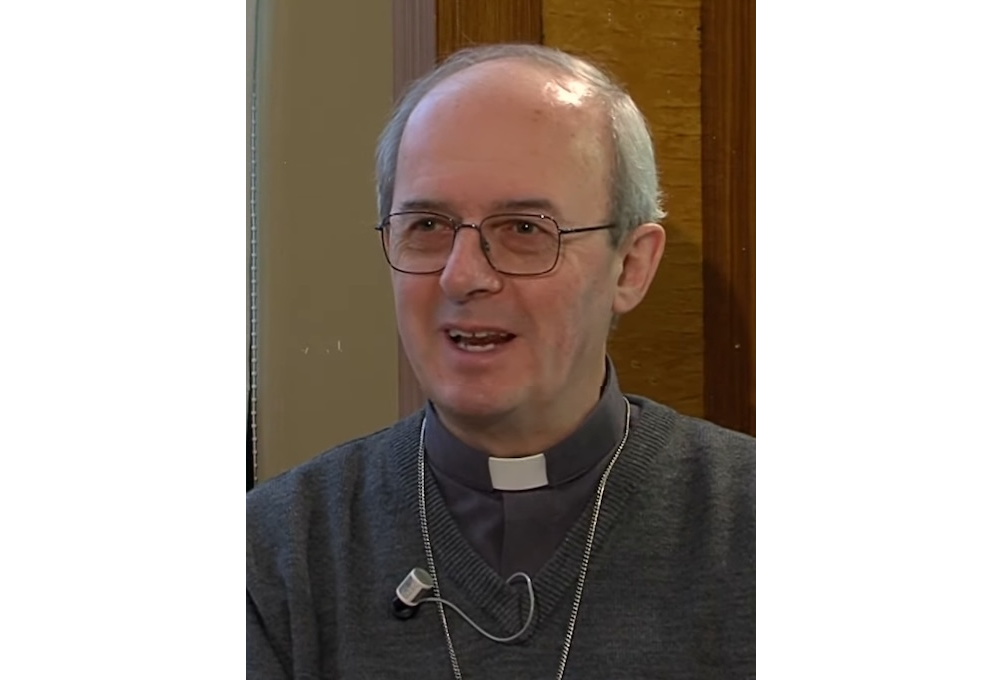
Archbishop Franco Moscone of Manfredonia-Vieste-San Giovanni Rotondo has been accused of antisemitism after joining an appeal calling for Nevo’s exclusion from the Libro Possibile festival, scheduled to take place in July in the town of Vieste.
Moscone has previously drawn criticism for comparing the situation in Gaza to the Holocaust. The archbishop said he signed the petition not because Nevo is Israeli, but because he believes the novelist has not sufficiently opposed what Moscone describes as a genocide in Gaza.
Nevo, however, has repeatedly and publicly criticized both Israeli Prime Minister Benjamin Netanyahu and National Security Minister Itamar Ben Gvir.
The grandson of former Israeli PM Levi Eshkol, Nevo lives in Tel Aviv and is best known for his novel “Nostalgia,” set in 1990s Israel.
However, Nevo has become an even more prominent figure in Italy through a column he wrote for the Italian newspaper Corriere della Sera between November 2023 and October 2025, chronicling life in Israel after the Oct. 7 attacks and throughout the war in Gaza. In the articles, he repeatedly called for an end to the conflict, criticized the Israeli government, and lamented the suffering caused by the war.
The petition signed by Moscone was launched by the regional secretary of the Communist Refoundation Party, Sabino De Razza, and anthropologist Laura Marchetti.
The petition starts by saying that the request to exclude Nevo “stems from the pain, dismay, and outrage we feel over what the Israeli government and military are doing in Gaza and the Occupied Palestinian Territories.”
“Entire families have been wiped out. An entire people has been subjected to bombings, sieges, forced displacement, starvation, and deprivation…Compounding this tragedy is the expansion of Israeli military operations to other areas of the Middle East, particularly Lebanon, where bombings and incursions have caused civilian casualties [and] widespread destruction.”
The petition then says that it doesn’t intend to dispute Nevo’s works or freedom of speech.
“We believe, however, that intellectuals bear a special responsibility during the most tragic moments of history. It is not enough to portray humanity: we must defend it. It is not enough to celebrate dialogue: we must denounce war,” it says in an apparent reference to Nevo’s own criticism of Netanyahu.
“It is not enough to evoke coexistence among peoples: we must take a stand when thousands of civilians are killed, when boys and girls die under bombs, when entire communities are deprived of their land, their homes, and their future,” the petition adds.
In a Jun. 14 interview, Moscone said that the petition is “not about censoring a writer or banning his works. The point is another: what role should an intellectual have today in the face of tragedies involving thousands of people?”
The archbishop said the petition “invites consideration to the appropriateness of hosting him at a festival without his ever having expressed a clear position on what the Israeli government is doing.”
He criticized Nevo for not “having the courage to offer a contribution of criticism and clarity… The current situation in Israel is no longer sustainable. One expects an intellectual to say things as they are. This particular intellectual has not done so.”
In an uncommon move among Italian bishops, Archbishop Michele Pennisi, emeritus archbishop of Monreale, publicly criticized Moscone, saying that “the Israeli government’s policy must be condemned, but that doesn’t make it plausible to exclude a writer from the festival simply because he is Israeli. It constitutes an act of anti-Semitism. Everyone should be able to freely express their opinions without being required to explicitly declare their compliance with the order.”
On the day the petition was released, Nevo spoke at an event in Bologna, where he said “not only am I ashamed [of the Israeli government], but Ben-Gvir represents neither me nor the values of my country nor Judaism… in four months, my country will vote. I will do everything I can – I’m just a writer – so that this man is no longer part of the government.”
This is not the first time Archbishop Moscone has drawn criticism for his statements on global affairs.
In March 2025, Moscone took part in a march for peace in Puglia, where he was one of the speakers. During his address, he said that “since 1947 the Gaza Strip and Palestine have been an open-air concentration camp. Since October 7, 2023, they have become an extermination camp.”
“What has always struck me is that the people behind this concentration camp [in Gaza] are the very people who were victims of concentration camps until the end of the Second World War,” he added.
In a June 2025 address, he also encouraged Italy to leave NATO, saying “we must have the courage to free ourselves from this American leash. And, I say this without caution and without mincing words, in my opinion this means leaving NATO.”
“A second missed opportunity was the Minsk Agreement (Belarus). If the West had respected them, Russia’s invasion of Ukraine would not have happened,” he added. “Pope Francis was right when he said, ‘We’ve gone barking at Russia’s doorstep.’ I was living in Poland when it joined NATO, and I said to myself, ‘We’re headed for a new world war.’”
In the same address, he had said that Cardinal Pietro Parolin, Vatican secretariat of state, had asked him “to be ‘prudent’ when discussing certain topics, which is a way of giving me a friendly reprimand!”
Moscone has also spoken against American foreign policy, and in one interview questioned the idea that Iran was actually rearming itself.
“The West, in recent decades, has fueled tensions and then wars. I’m not saying that regimes like Assad’s in Syria or Saddam Hussein’s in Iraq were paradises, but there were no civil wars before international intervention,” he said.
Moscone’s archdiocese is also at the center of one of the largest financial crises in the Italian Church.
On May 27, the pope signed a chirograph establishing a commission for the direction and oversight of the Casa Sollievo della Sofferenza (House for the Relief of Suffering), a large hospital in San Giovanni Rotondo – part of Moscone’s archdiocese – founded by Padre Pio in 1956 and overseen by the Vatican Secretariat of State.
According to several reports, the hospital has a debt close to €250 million. The hospital is also in the middle of a €32 million dispute with regional authorities, and in a tense internal situation over new labor contracts.
In April, 1,300 workers filed a court injunction demanding payment of a 2024 contractual adjustment, which would provide each of the workers with an average €170 for every month since the adjustment.
Cardinal Pietro Parolin went to the hospital on May 5 to celebrate its 70th anniversary, while workers organized a demonstration protesting contractual adjustments and management decisions, such as the extension of night shifts to 12 hours.
After a TV program on Rai 3 – one of Italy’s public TV stations – claimed that the total debt had grown to €250 million and that issues included inflated paychecks and administrative corruption, Gino Gumirato, the director of the foundation, said that the foundation actually owed “only €108 million.”
Local outlet Il Post reported on May 28 that the debt included €116 million to suppliers, €40 million to banks, and €5 million in unpaid wages to employees, plus the €32 million in dispute with the regional government of Puglia.

