Knanaya Catholic marriage rules dispute heads to supreme court
“For 37 years, we have lived under a cloud of uncertainty.”
A Catholic archdiocese will appeal to India’s Supreme Court after a state high court issued a long-awaited ruling against its unique marriage rules.
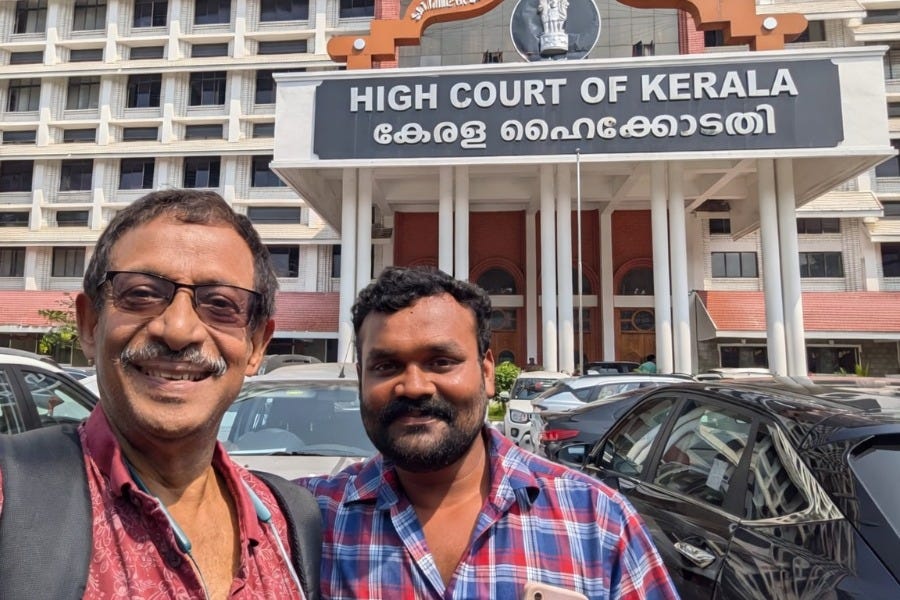
The Syro-Malabar Archeparchy of Kottayam said March 23 that the high court judgment was unacceptable and it intends to appeal against it, because the ruling contradicted “the traditions, customs, and procedures followed for centuries” by the Knanaya Catholic community.
The archeparchy, founded in 1911, is solely for Catholics belonging to the Knanaya people, an ethnic group tracing its origins to Jewish Christians who migrated from Mesopotamia to India in the 4th century.
Membership in the archeparchy is determined by birth into a family with a Knanaya Catholic father and mother.
As membership is linked to family lineage, young Knanaya Catholics are expected to marry someone within the same community, a norm known as strict endogamy. If they wed a Catholic from another diocese, they relinquish their membership in the archeparchy.
But a 181-page judgment by the Kerala high court, issued March 23, dealt a blow to the norms of the archeparchy, which has around 191,000 members and is based in the southern Indian state.
The ruling, issued in response to an appeal from the archeparchy, said: “The appellants have conspicuously failed to establish that the practice of endogamy attains the character of an essential religious tenet, or that it confers upon them any enforceable authority to regulate the personal choices of members through coercive or non-coercive expulsion or excommunication.”
The court added that “while individuals may, out of personal volition, choose to adhere to endogamous preferences, any formulation — direct or implied — that legitimizes institutional endorsement, regulation, or encouragement of such practice, stands impermissible in law.”
“The autonomy of the individual in this regard is absolute and admits of no ecclesiastical encroachment,” it said.
The judgment came after a decades-long legal battle over the archeparchy’s marriage rules.
The dispute that led to the high court ruling can be traced back to 1989, when layman Biju Uthup was denied permission to marry another member of the Archeparchy of Kottayam, reportedly because an anonymous informant told the Church authorities that his grandmother was not a Knanaya Catholic.
A series of public meetings led to the creation of the group Knanaya Catholic Naveekarana Samithy, known by its initials KCNS, which began to take legal action against what it saw as the archeparchy’s unjust policies.
After the KCNS filed a petition, a district court in Kottayam issued a 155-page ruling in April 2021, saying that members of the archeparchy should no longer forfeit their membership when marrying Catholics outside the community.
Archbishop Mathew Moolakkatt, the head of Archeparchy of Kottayam, sought to overturn the ruling. Kerala’s high court refused to lift the lower court’s order, but agreed to hear an appeal against it.
This week’s high court ruling was also spurred by the case of Justin John, another member of the Kottayam archeparchy. John had sought permission to marry Vijimol Shaji, a Catholic belonging to the Syro-Malabar Archeparchy of Tellicherry.
Believing he would receive permission following the 2021 ruling, John prepared for his wedding. But at the last moment, his pastor refused to give him a vivaha kuri, a document indicating that his archeparchy had no objection to the marriage.
The couple was limited to exchanging garlands in front of the church in front of a reported 1,000 guests.
John filed a contempt of court case in 2023. The archeparchy denied it was in contempt of court. A judge closed the case in September 2024, but John resumed his legal challenge in October 2024.
In addition to the KCNS case and the contempt case, a third case was launched by Biju Uthup, concerning the Kottayam archeparchy’s decision to deny him a vivaha kuri in 1989.
In September 2023, a judge ordered that the Uthup case be heard along with the KCNS case in a joint proceeding.
The high court ruling could have taken several more years, but it was expedited after Justin John made applications to the court.
John described the high court judgment as “a victory for the next generation.”
“It protects families — the spouse and the children — from being rendered stateless by a community they were born into,” he said.
“The court has recognized that the right to marry, the right to dignity, and the right to one’s faith are inviolable. This outcome was achieved because we refused to let delay defeat justice.”
The high court also issued a ruling March 23 in the Uthup case, which dates back to 1989.
The 30-page judgment dismissed an appeal by Church authorities against a lower court decision in favor of Uthup.
Uthup, a retired aeronautical scientist who has pursued his legal battle for more than three decades, said: “This is not just a personal victory, but a vindication of my family’s honor and a triumph for justice.”
“For 37 years, we have lived under a cloud of uncertainty. Today, the court has affirmed what we have always known: that faith unites, but the rule of man cannot divide. I am grateful that the judiciary has upheld the true spirit of the Gospel.”
Commenting on the implications of the high court rulings, Uthup said: “In substance, the court rejected the attempt to use endogamy as a legally enforceable basis for exclusion, denial of marriage related rights, or deprivation of membership rights.”
“The judgments affirm that refusal to follow endogamy cannot by itself justify expulsion, forced exclusion, or denial of rights that flow from recognized membership.”
“Taken together, the two decisions move the issue from the level of an individual grievance to the level of a broader legal principle, with direct consequences for affected members and their families.”


I feel like we all need an explainer to go with this article!!!
Wait I’m confused - this is a secular state judiciary ruling on the workings of a Church’s membership requirements?
Um?
Im not sure the way this church’s membership is just or charitable or any thing that should be allowed, but letting a civil secular court boss around a Church seems…. No bueno.