Leo creates commission to manage Padre Pio hospital with €250m debt
Casa Sollievo della Sofferenza was founded by Padre Pio in 1956 and is overseen by the Vatican Secretariat of State.
Pope Leo approved on May 27 a commission to administer a Vatican-owned hospital founded by Padre Pio that allegedly accrued a €250 million debt.
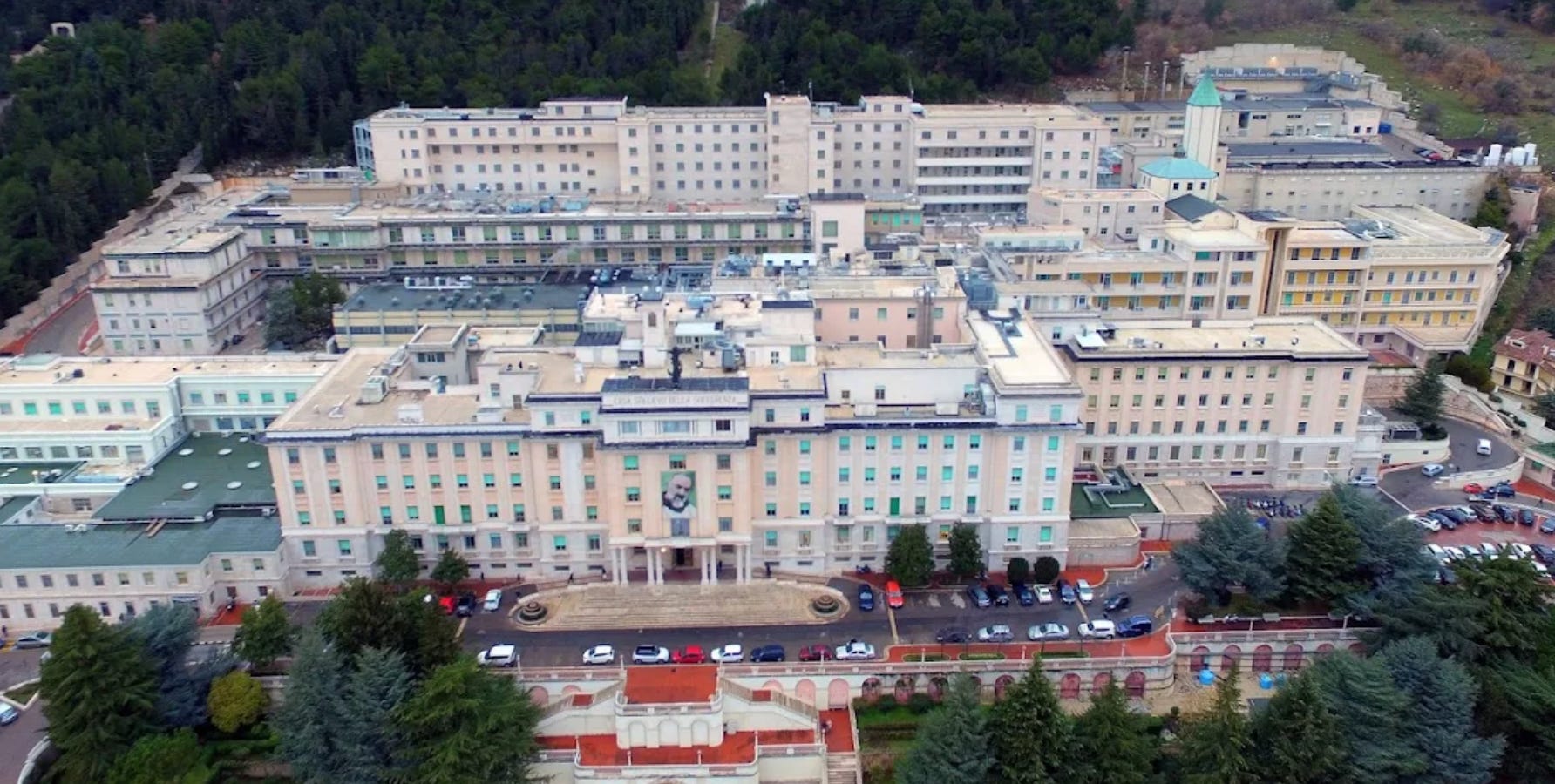
The pope signed a chirograph establishing a commission for the direction and oversight of the Casa Sollievo della Sofferenza (House for the Relief of Suffering), a large hospital in San Giovanni Rotondo founded by Padre Pio in 1956 and overseen by the Vatican Secretariat of State.
According to several reports, the hospital has a debt close to €250 million. The hospital is also in the middle of a €32 million dispute with regional authorities, and in a tense internal situation over new labor contracts.
Padre Pio himself laid the hospital’s cornerstone in 1947 and it was officially founded in 1956. The Casa Sollievo is one of the largest hospitals in southern Italy, with 756 beds and 2,700 employees.
The chirograph says that the commission will have full financial, patrimonial, and operational authority to carry out the mission of the foundation.
The chirograph says that the decision was made because “the evolution of the times, of technology, of law, and of the economy places the Church’s mission before the challenge of continuous renewal,” especially in the healthcare sector.
The commission will analyze the foundation’s situation to improve its “efficiency, effectiveness, and long-term sustainability of its work and mission, and give concrete implementation to the solutions thus identified.”
The commission will be led by Maximino Caballero Ledo, prefect of the Vatican’s secretariat for the economy, and Fabio Gasperini, secretary of APSA, the Vatican’s asset manager.
The pope also appointed Archbishop Paolo Rudelli, sostituto of the Secretariat of State, Archbishop Giordano Piccinotti, president of APSA, and Archbishop Giorgio Ferretti of Foggia-Bovino as members of the commission.
The situation at the hospital has been critical for several years. Media reports in 2024 indicated that the hospital’s debt had surpassed €220 million in debts to suppliers, workers, and creditors.
In April, 1,300 workers filed a court injunction demanding payment of a 2024 contractual adjustment, which would provide each of the workers with an average €170 for every month since the adjustment.
Cardinal Pietro Parolin went to the hospital on May 5 to celebrate its 70th anniversary, while workers organized a demonstration protesting contractual adjustments and management decisions, such as the extension of night shifts to 12 hours.
After a TV program on Rai 3 – one of Italy’s public TV stations – claimed that the total debt had grown to €250 million and that issues included inflated paychecks and administrative corruption, Gino Gumirato, the director of the foundation, said that the foundation actually owed “only €108 million.”
Local outlet Il Post rported on May 28 that the debt to suppliers was €116 million, €40 million to banks, and €5 million in unpaid wages to employees, plus the €32 million in dispute with the regional government of Puglia.
The hospital claims that the Puglia Region did not fully reimburse certain services such as emergency room care.
Although Casa Sollievo is a private foundation, it is accredited by the Italian National Health Service to treat public healthcare patients and be reimbursed by regional authorities afterwards.
The foundation claims that it is owed more than €32 million for these services, while regional authorities say that the hospital has received even more than its agreed annual spending limit of €265 million, which would mean that the hospital should actually return millions of euros to regional authorities.
Other media reports revealed unusual hiring practices in the hospital, such as administrative assistants quickly becoming managers, secretaries who were classified as chief physicians in the salary scale, and disproportionate benefits for certain members of the staff.
The issues go even further back. Domenico Crupi, the director general of the hospital since 2007, resigned in 2019. According to Silere non possum, the resignation was due to the fact that under his administration the Vatican “had not faithfully represented the true state of the accounts to the Holy See. These accounts, they say, depicted a balanced situation, while the actual deficit was quite different.”
In 2024, the hospital planned to reduce its bed count to 585 over the next three years and to only selectively replace retiring staff.
However, the foundation remains locked in a dispute with the workers’ unions, which say employees have borne a disproportionate share of the burden.
On Nov. 26, Gumirato informed union representatives of a proposal to modify the contract of workers, turning them from public to private contracts, which potentially means that employees would lose their productivity bonuses, which amount to €1,500 per year, but haven’t been updated since 2018.
The decision led to widespread protests and the threat of a strike, which led the administration to eventually scrap its plans.

