
Pope Leo spent the weekend in Latin America, kicking off his highly anticipated 12-day trip to Uruguay, Argentina, and Peru.
While there had been some speculation about whether Leo would be able to make the trip just a few weeks after undergoing surgery to remove a cancerous growth from his lung, the pope told journalists on the flight from Rome that he himself “had no doubt and was convinced that this trip had to go forward.”
In the first few days of his trip, Pope Leo met with educators and victims of abuse, heard testimonies from those experiencing poverty, and addressed civil and diplomatic leaders.
Here are a few highlights from the first few days of the pope’s trip:
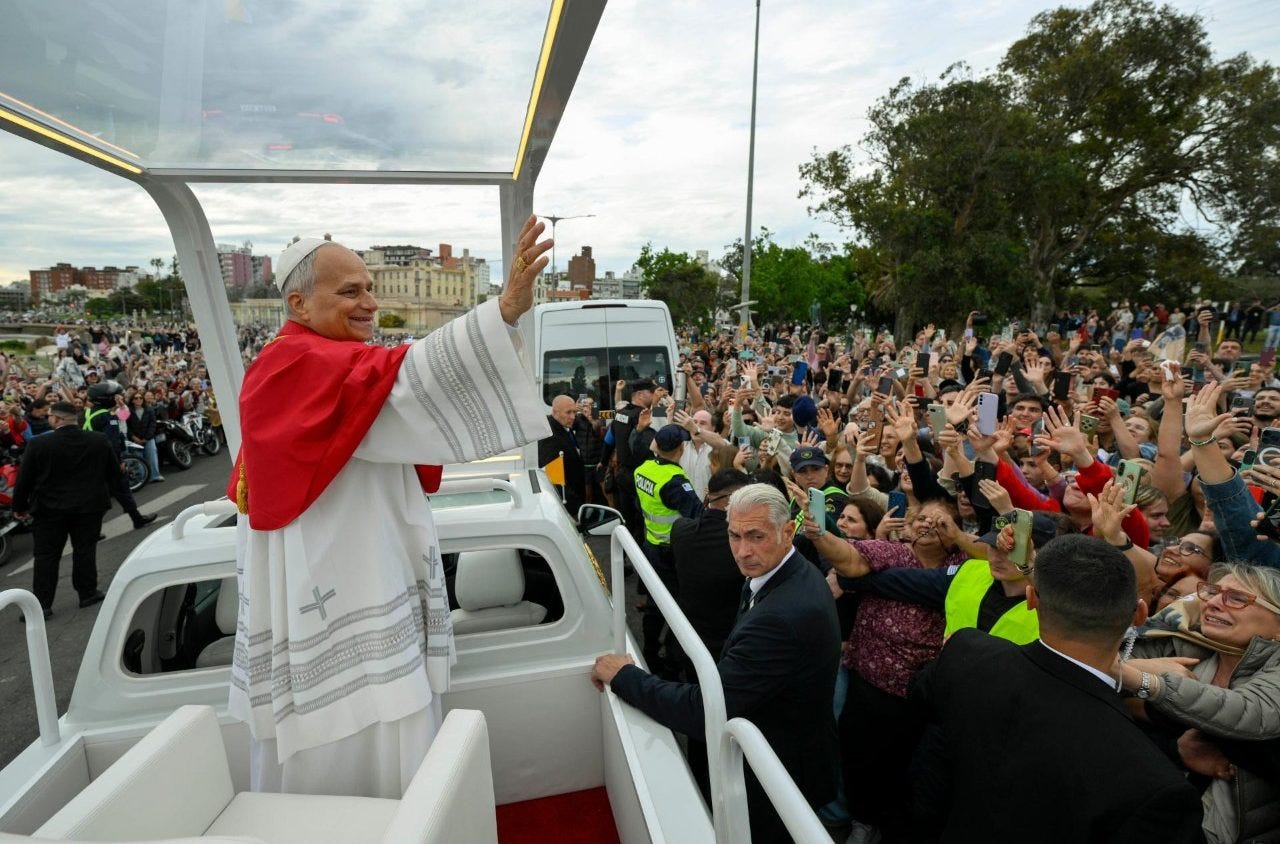
A call to resist secularization
Uruguay is a highly secularized country, more so than many of its Latin American neighbors. Government efforts to secularize the country -- Holy Week was officially renamed “Tourism Week,” a century ago – took place at a time when the Church had not yet been well-established in the country.
The pope acknowledged the threat of secularization in his speech at the Nov. 7 prayer vigil in Montevideo. He urged Catholics in the country to resist “the advance of secularization and an increasingly widespread religious indifference.”
Pope Leo offered words of encouragement, saying that though Catholics may be a minority, they have an important role to play in spreading the Gospel. He pointed to the example of Bethlehem, a small and politically powerless town that was chosen by God to bring forth the savior of the world.
“When we are few in number, when our strength wanes, when we realize that our social presence is no longer what it once was, we may be tempted to judge our situation by purely human standards. The Gospel invites us to see things differently. God chose Bethlehem, and that choice alone is enough to prevent us from equating smallness with insignificance,” he reflected.
“Bethlehem asks us a simple question: Is there room for him? Is there room in our time, in our way of thinking, in our homes? Is there room to listen to him, to receive his forgiveness, to allow his word to correct us? We need to keep Christ at the center of our lives through prayer, Mass, Confession and the meditative reading of the Gospel. We must all become disciples again and again. If we want others to find Christ, we need to know the way to Bethlehem ourselves first,” he continued.
‘We cannot turn a blind eye’
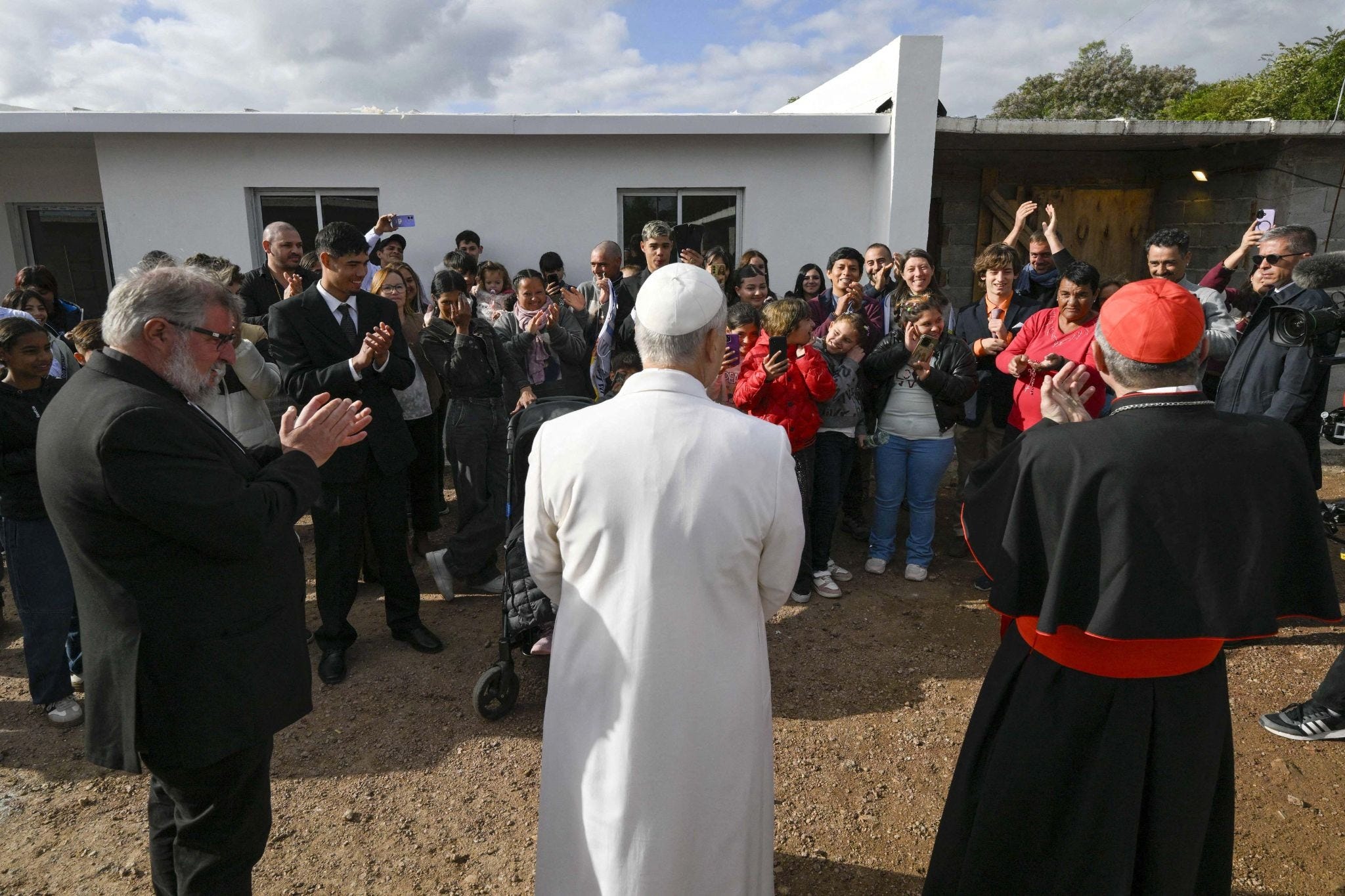
Meeting with residents of the impoverished Cassavalle neighborhood, Pope Leo called for cooperation among religious and civil leaders to address those impacted by poverty and hardship.
“We cannot turn a blind eye to the fact that there are children in Uruguay who do not go to school for fear of never returning home. We cannot silence our conscience when we see a mother lacking the means to feed her children. We cannot ignore the many people around us who are suffering, alone and vulnerable,” he said.
“In a country as rich in resources as this, children should never have to go to bed hungry or be denied the chance of a decent education and a dignified future because of the insecurity that reigns in the streets. Much less should they have to suffer violence to the point of losing their lives.”
The pope reiterated this plea in his remarks to civil leaders in Uruguay, saying, “Caring for those who suffer is a responsibility incumbent upon the entire human family.”
“Sickness, disability, physical pain, loss of autonomy, poverty, unemployment or social exclusion can make it especially necessary that others offer help,” the pope said.
A ‘thank you’ to women
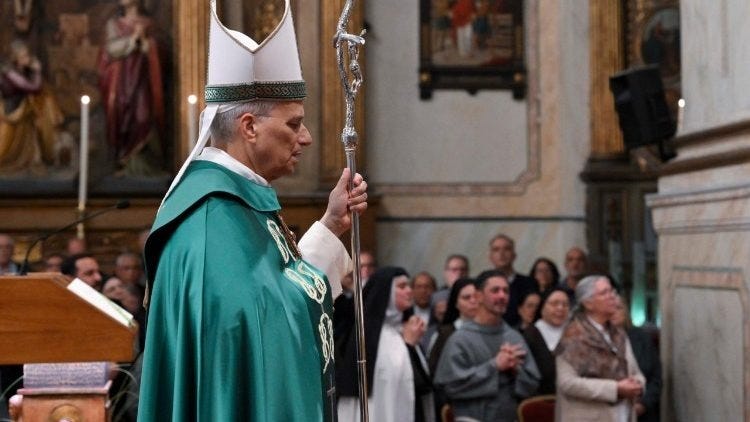
During Sunday Mass on Nov. 8, Pope Leo reflected on the role of Mary and the female saints of Uruguay. He also paused to reflect on the quiet role of women in passing on the faith from generation to generation.
“I think of the mothers who placed the first words of prayer on their children’s lips, who took them to be baptized, who prepared them to receive the sacraments, and who taught them to live out Christian charity,” he said. “I think of the grandmothers who kept an altar at home, who prayed for the living and the deceased and who made God present in the ordinary events of life.”
“When we wonder and ask where our faith comes from, the name of a specific woman often comes to mind: a mother, a grandmother, a godmother, a religious sister or a catechist. We may not remember every word they said to us, but we do remember how they prayed, how they spoke of the Lord and with what conviction they lived out what they taught us.”
“Today I would like to thank all of those women. Thank you for having believed and for having kept open a path to God in so many families,” Pope Leo continued. He also acknowledged the pain and sorrow that comes when a child or grandchild abandons the faith, and encouraged them to trust God as St. Monica did with her son, St. Augustine.
“Mothers and grandmothers: never tire of passing on the faith! Preach with your lives as well as with your words. Insist on prayer, love, and hope; insist on them in season and out of season. Do so with patience, without harshness or discouragement,” the pope said. “Even if your loved ones seem far from God, continue to place them before him. Do not stop blessing them, accompanying them, and simply reminding them of what they once received. There are doors that you cannot open, but God can.”
A tribute to mate
Yerba mate, a popular Latin American drink, got a papal shout out over the weekend. Pope Leo referenced the bitter herbal drink in his Nov. 7 homily, as he called on those present to seek unity with those around them.
“Mate is a sign of familiarity, friendship and encounter. It teaches us to share and to be together, strengthening the bonds that unite us as brothers and sisters. It is a sign of welcome, integration and shared values,” he said.
“Drinking mate is a ritual rich in symbolism, in which dialogue takes place without words and every detail holds its own meaning. I also think of those moments when one drinks mate alone, silently and prayerfully. In those moments of solitude, how often have so many of you entrusted to God your concerns and needs, your deepest desires and longings!”
An economy that serves the human person
Following his visit to Uruguay, Pope Leo traveled to Argentina on Sunday afternoon.
His first speech in Argentina, directed at civil authorities in the country, was widely interpreted as a thinly veiled critique of Argentine President Javier Milei, whose drastic cuts to social services have drawn objections from the country’s bishops.
In his speech, Leo emphasized the importance of human dignity and the common good as the building blocks of society. He called for a society that does not forget the poor, the elderly, and the unborn.
“The economy must be at the service of the person, and not the person at the service of the economy,” he stressed, adding that those in authority should seek to serve the people, and that democracy thrives “through willingness to listen, through careful use of words, through the patient search for agreement, and through the ability to see those who think differently as fellow citizens with whom we share a common future.”
‘Your lives are not a burden’
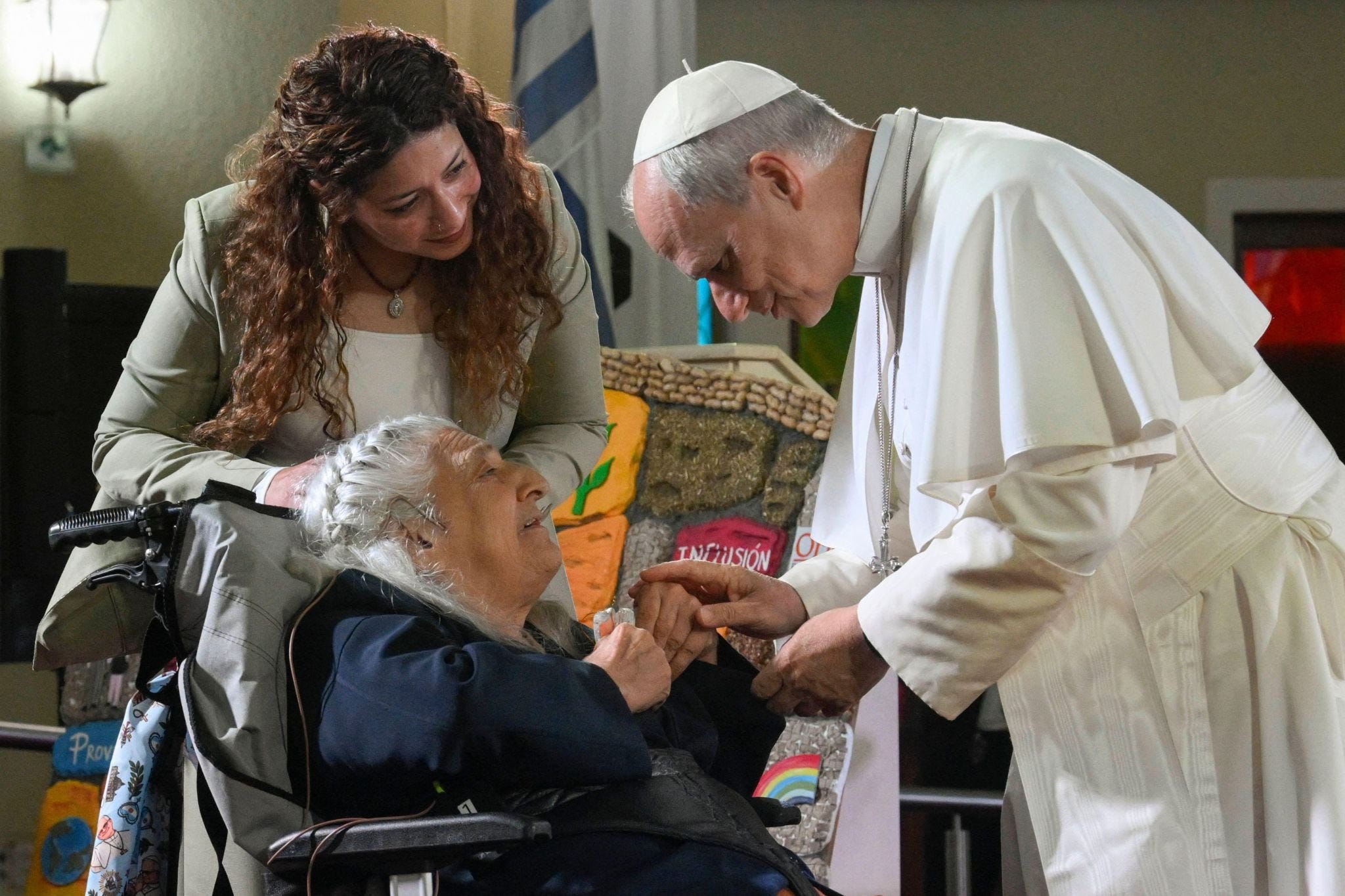
One of Pope Leo’s first stops in Argentina on Monday was a visit to the Don Orione Little Cottolengo, a center for people with disabilities. More than 400 residents live at the center, which was founded by St. Luigi Orione nearly 100 years ago.
The pope prayed before the heart of Don Orione, which is kept in a reliquary in a chapel on site. He also spoke to residents and staff at the center.
Pointing to the examples of Bethlehem, Nazareth, and Bethany, Pope Leo reflected that “Jesus lived in places where he could breathe the air of charity; where he experienced the love of a family, integration into a community, and fraternal friendship, sharing life with his loved ones.”
“The values of dignity, belonging, and fraternal friendship that distinguish places like this have much to say to our societies, which are often driven solely by the pursuit of economic success or the cult of outward appearance,” he continued. “Today I would like to affirm that your lives are not a burden on society. They are a blessing, because you can help us to remember the foundation of the dignity of every human being and what is truly important in life. A nation’s progress is also measured by how it welcomes all people with disabilities and particular needs.”
The pope also thanked those who work at the center, telling them, “The noble work that you carry out here every day, with such affection, effort and dedication, is building a solid foundation for a new city: a city of charity, of fellowship and of peace.”
The pope will remain in Argentina until Wednesday, when he will head to Peru for a highly anticipated homecoming to the country where he served for nearly 20 years as a missionary and bishop.
He will return to Rome Nov. 17.