Pope Leo XIV announced on Tuesday a series of major Vatican appointments, one of the largest curial shakeups of his pontificate to date.
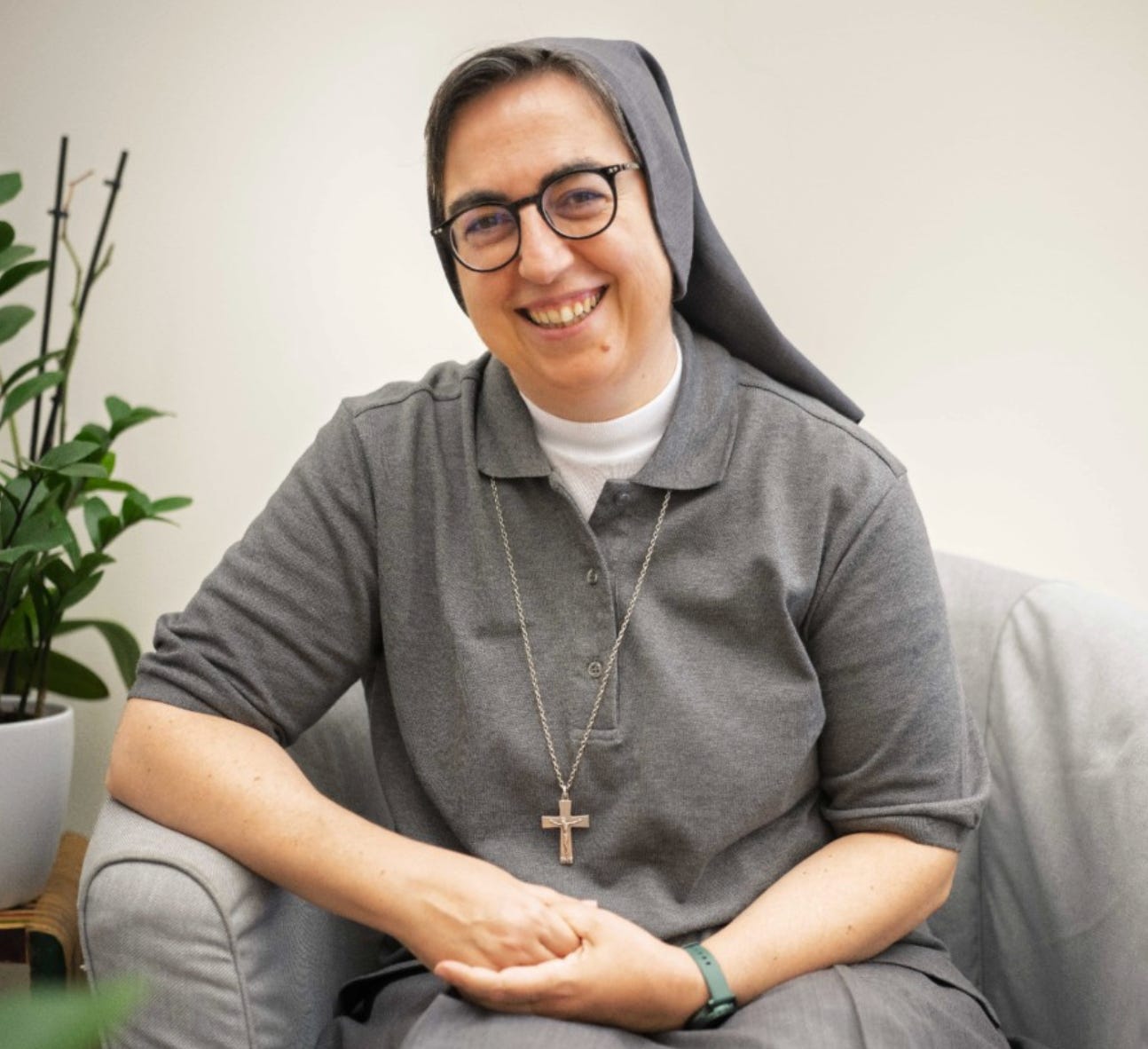
Changes at the top of four dicasteries, include the appointment of Sister Alessandra Smerilli, FMA, as prefect of the Dicastery for Promoting Integral Human Development and Cardinal Fabio Baggio, CS as pro-prefect, along with new changes to the Dicastery of Communications.
Dicastery for Integral Human Development
The pope appointed Sister Alessandra Smerilli to replace Cardinal Michael Czerny, SJ at the helm of the Dicastery for Promoting Integral Human Development. Czerny was made a cardinal by Pope Francis in 2019 and had led the dicastery since 2022.
Smerilli was born in Vasto, Italy in 1974. In 1997, she entered the Congregation of Daughters of Mary, Help of Christians, a female branch of the Salesian family. She earned a doctorate in political economy at the University of La Sapienza in Rome in 2006 and a PhD in economics from the University of East Anglia in the UK in 2014.
Smerilli was an auditor at the 2018 Synod on the Youth and a year later Pope Francis appointed her as councilor of the Vatican City State and a consultant to the general secretariat of the Synod of Bishops. In 2020, she coordinated the economic task force of the Vatican Covid-19 Commission.
In March 2021, she became the undersecretary of the Faith and Development section of the Dicastery for Promoting Human Development, and was named interim secretary in August that year. Her appointment became permanent in April 2022.
Smerilli’s appointment as prefect of a dicastery is likely to prove relatively uncontroversial from a canonical standpoint, because the dicastery doesn’t exercise governance relative to the power of sacred orders or related to the sacraments.
Even so, Pope Leo XIV decided to appoint Cardinal Fabio Baggio, CS, who was serving as undersecretary of the Dicastery, as pro-prefect — Smerilli’s deputy.
Baggio joined the minor seminary of the Scalabrian missionaries at just 11 years old in 1976, taking his perpetual vows in 1991 and being ordained a priest the following year.
He went on to serve as a missionary in several countries such as Argentina, Brazil, Chile, and The Philippines until he became a professor at the Pontifical Urbaniana University in Rome in 2013. Pope Francis appointed him as undersecretary of the dicastery in 2017, and in 2023 appointed him as director general of the Borgo Laudato si’, a Vatican project at Castel Gandolfo which turned part of the papal summer residency into a center for ecology, integral formation, sustainable agriculture, and care for creation. Pope Francis made him a cardinal in 2024.
The decision to appoint Baggio as pro-prefect might have something to do with dicastery’s exercise of a governance function over some administrative matters and other institutions of the Church, like as Caritas International – which is usually led by a cardinal – or the International Catholic Migration Commission, and any other charitable associations it established or that are established by the Holy See and put under the supervision of the dicastery.
This marks the second time a woman has been appointed prefect alongside a pro-prefect. When in 2025 Pope Francis appointed Sr. Simona Brambilla, ISMC, as prefect of the Dicastery for Institutes of Consecrated Life and Societies of Apostolic Life — a dicastery that does exercise spiritual and sacramental powers of governance — he also appointed Cardinal Ángel Fernández Artime, SDB, as pro-prefect.
However, Pope Leo did not appoint a pro-prefect when he named this month Montserrat Alvarado as incoming prefect of the Dicastery for Communications
Pope Leo also appointed Msgr. Jozef Barlas, currently serving as undersecretary at the same dicastery, as its new secretary, replacing Smerilli.
Barlas was born in Snina, Slovakia in 1985, and was ordained a priest for the Archdiocese of Kosice in 2010. He started working as an official at the section for general affairs of the Secretariat of State in 2020, and Pope Leo appointed him undersecretary of the Dicastery for Promoting Integral Human Development in November 2025.
Dicastery for Communications and Dicastery for the Service of Charity
Also on June 30, Pope Leo also appointed Msgr. Lucio Adrián Ruiz as Secretary for the Dicastery for the Service of Charity, also known as the papal almoner, transferring him from his post as Secretary of the Dicastery for Communication.
Ruiz’s appointment follows Montserrat Alvarado’s appointment as prefect of the Dicastery for Communication in June, and opens up another key position in the dicastery as Pope Leo shapes his vision for Vatican communications.
Ruiz, born in Santa Fe, Argentina in 1965, was ordained a priest in the Archdiocese of Santa Fe in 1990. After working in several positions in the Argentinian bishops’ conference and the Council of Latin American Bishops’ Conferences, Pope Francis appointed him as secretary of the newly-created Dicastery for Communications in 2015.
Pope Leo also appointed Dr. Massimo Ralli, an official at the Dicastery for the Service of Charity, as its undersecretary. Ralli is a medical doctor and obtained a PhD in neurophysiology of the head and neck from the Catholic University of the Sacred Heart in 2014. He currently works as the director of the Mother of Mercy outpatient clinic, run by the Dicastery of the Service of Charity.
Pope Leo had previously appointed Archbishop Luis Marín de San Martín, OSA, as the prefect of the dicastery back in March.
Before Pope Francis’ 2022 reform of the Roman Curia, the papal almoner was an office, but the pope elevated it to the status of a dicastery. However, he did not appoint a secretary or undersecretaries, making Ruiz and Ralli the first to hold those positions.
Dicastery for Legislative Texts
Pope Leo also appointed Tuesday Msgr. Marco Mellino as secretary of the Dicastery for Legislative Texts, the department charged with the authoritative interpretation of canon law.
The new prefect of the dicastery, Australian Archbishop Anthony Randazzo, was appointed in March to replace Archbishop Filippo Iannone, O. Carm., who became the prefect of the Dicastery for the Bishops.
Mellino, the new secretary, had been since November the adjunct secretary of the dicastery.
Mellino was the adjunct secretary of the Council of Cardinals, commonly known as C7 or C9 — depending on the number of cardinals serving in the council— between 2018 and 2020, when he became the council’s secretary. After Pope Leo’s election, the council was effectively dismantled.
Mellino also served as secretary of the Interdicasterial Commission for the Revision of the General Regulations of the Roman Curia, which were published in November 2025, after which the commission ceased to exist.
While the bolletino of the Holy See Press Office made no mention of the status of the incumbent secretary, Archbishop Juan Ignacio Arrieta, The Pillar understands from sources close to the dicastery that Arrieta’s resignation was accepted.
Arrieta was ordained a priest of the Prelature of Opus Dei in 1977 and was the dean of the faculty of canon law of the Pontifical University of the Holy Cross between 1984 and 1993 and then between 1995 and 1999.
He then served in several positions in the Roman curia, including working in the Apostolic Penitentiary, the Supreme Tribunal of the Apostolic Signatura, and consultant of several Vatican dicasteries, until he was appointed as secretary of the Pontifical Council, later Dicastery for Legislative Texts in 2007. He served in that position since then, an unusually long time for a curial secretary.

