Leo winds back Francis-era reforms to Diocese of Rome
Three years after Francis' apostolic constitution, Pope Leo has made significant changes to the diocese's governing structures.
Pope Leo XIV rolled back key parts of Pope Francis’ 2023 reform of the Diocese of Rome on Jun. 30, issuing a new motu proprio that re-centers diocesan governance around the Cardinal Vicar.
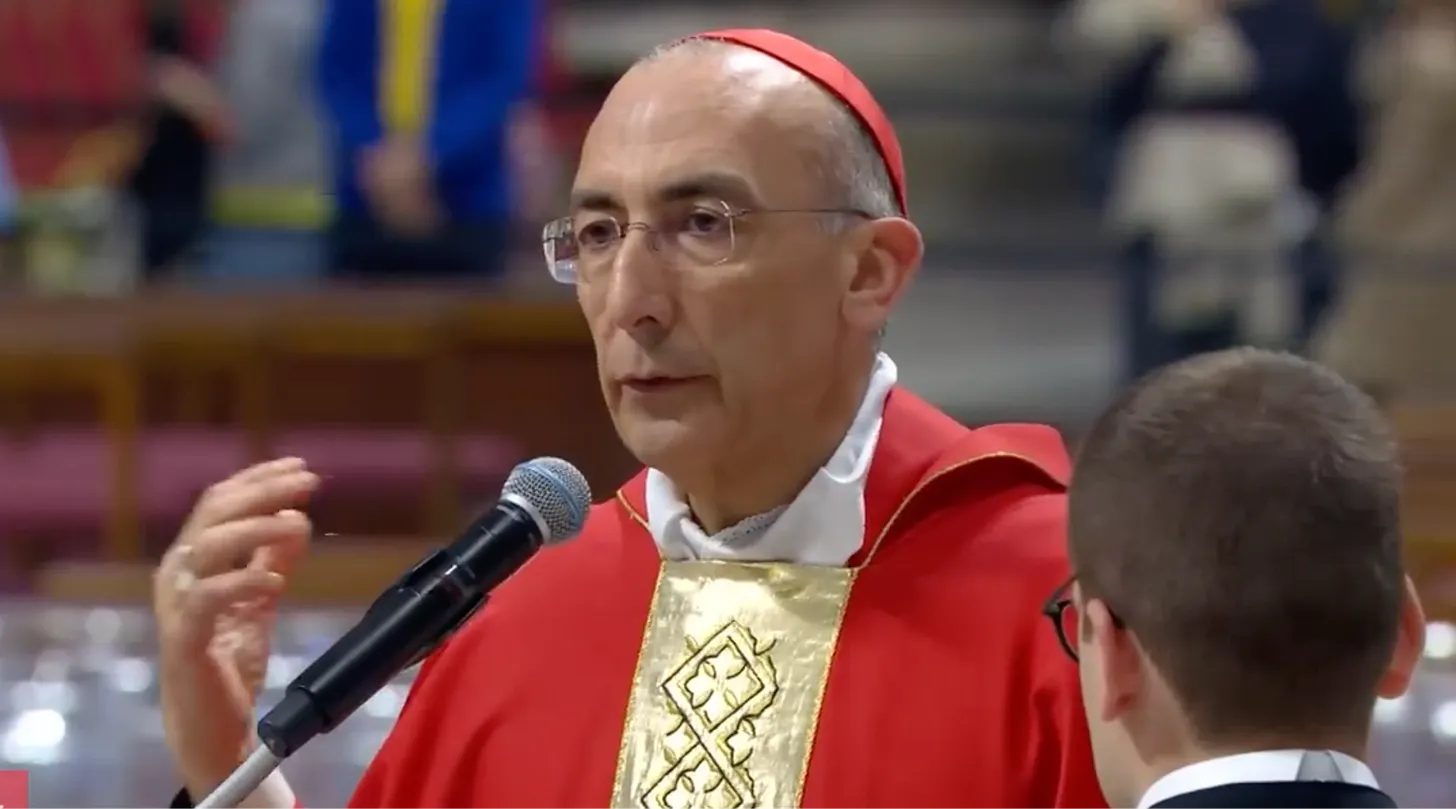
Three years after Francis promulgated the apostolic constitution In Ecclesiarum Communione, Leo published motu proprio Confirma Fratres Tuos, making major changes to the Vicariate’s governing structure and restoring the Cardinal Vicar as the principal authority in the day-to-day government of the pope’s diocese.
Local observers have interpreted the move as an implicit rebuke of Bishop Renato Tarantelli Baccari, the vicegerent of the Diocese of Rome, whose rapid rise under Francis culminated in his appointment as auxiliary bishop and vicegerent in 2024.
Tarantelli Baccari was widely seen in Rome as one of the key figures behind Francis’ reform of the Vicariate, which gave greater authority to the vicegerent and the Episcopal Council.
After announcing the consecration of the four new auxiliary bishops of Rome on Feb. 25, Pope Leo established a commission formed by all the auxiliary bishops of Rome and the cardinal vicar to review In Ecclesiarum Communione.
The Diocese of Rome is divided into five zones: north, south, east, west, and historic center - although the historic center zone was abolished by Francis in October 2024 and later reinstated by Pope Leo in November 2025.
Each zone is meant to be led by an auxiliary bishop of Rome as an episcopal vicar. The auxiliaries make up the episcopal council of the Vicariate, or Diocese, of Rome, along with the cardinal vicar of Rome — appointed by the pope to functionally lead the diocese — and the vicegerent, who are the second and third in command of the diocese, after the pope himself.
While the motu proprio is not an absolute reversal of Francis’ reform, it makes significant changes.
Before In Ecclesiarum Communione, the Cardinal Vicar exercised broad vicarious authority in the government of the Diocese of Rome. Although the pope remained the Bishop of Rome and retained full authority to intervene, the Cardinal Vicar could make most major diocesan decisions without the explicit approval of the Episcopal Council or the pope, meaning that, in practice, he operated as the diocese’s day-to-day local ordinary.
However, Francis’ reform significantly reduced the power of the cardinal vicar and increased the powers of the vicegerent and the episcopal council.
For example, Article 10 of In Ecclesiarum Communione as promulgated by Francis said that the cardinal vicar “is an auxiliary and vicar general [of the Diocese of Rome]... In my name and by my mandate, with the assistance of my other auxiliary bishops, from among whom I choose the vicegerent, he will exercise the episcopal ministry of teaching, sanctification, and pastoral governance for the Diocese of Rome with ordinary vicarious power under the terms established by me.”
The article is now simplified under Leo, eliminating the mention of the cardinal vicar as an “auxiliary and vicar general,” instead saying that the cardinal vicar has “the high and effective direction of the vicariate” and making brief mention to the vicegerent only at the end of the article.
Article 14.2 of the apostolic constitution used to say that the vicegerent “directs the offices that make up the vicariate’s General Secretariat Service… The vicegerent is responsible for supervising the vicariate’s offices in the exercise of their functions, convening a monthly meeting of the directors of all vicariate offices, establishing criteria for the correct application of the principle of single communication in relations between the vicariate and other authorities, and ensuring that vicariate employees faithfully carry out the tasks entrusted to them.”
That section of the article disappeared entirely in Leo’s reform.
Instead, Leo’s reform introduces the role of moderator of the curia, which now has some of the responsibilities previously assigned to the vicegerent.
The moderator is proposed by the cardinal vicar and appointed by the pope for a single, five-year term. According to Article 19, “the moderator of the curia assists the cardinal vicar in the exercise of his functions… He coordinates the activities of the vicariate in implementation of the directives of the cardinal vicar.”
Another significant limit placed on the cardinal vicar’s authority by In Ecclesiarum Communione was the Episcopal Council, which the constitution defined as the diocese’s “primary body of synodality” and its principal forum “for pastoral and administrative decisions.” The text also required the council to meet three times a month, with the pope either presiding personally or delegating the cardinal vicar to lead the sessions.
The constitution also said that the council should consent to the appointments of chaplains, rectors and heads of pastoral services. The cardinal vicar could only decide against the unanimous opinion of the council with the pope’s explicit consent.
Pope Leo’s reform eliminated the mention of the council as the “primary body of synodality” and its being the top institution for pastoral and administrative decisions in the Diocese of Rome.
Leo also reduced the role of the Episcopal Council, returning it to a strictly consultative body. The revised text eliminates the requirement that the council meet three times a month, removes the provision for the pope to preside over its sessions, and no longer requires its consent for the cardinal vicar to appoint chaplains, church rectors, and heads of pastoral services.
In Ecclesiarum Communione also required both papal authorization and the consent of the Episcopal Council before the cardinal vicar could confer additional administrative duties on the chancellor, the bursar, directors, or vice-directors of diocesan offices. That requirement has disappeared from the revised text.
Leo’s reform also removes the need for the council’s consent over the appointment of office directors and vice-directors: directors are now appointed by the cardinal vicar with papal approval, while vice-directors are appointed by the cardinal vicar after consulting the Episcopal Council without the need for approval.
In Ecclesiarum Communione also provided for a complex, multi-stage consultation process for the appointment of parish priests and assistant priests. Under the procedure, the auxiliary bishop responsible for the relevant sector first had to assess the needs of the parish and consult its parish pastoral council, before presenting the matter to the episcopal council. The process also required consultation with seminary formators in the case of younger candidates, as well as with bishops familiar with the priest.
Only after that process was completed would the cardinal vicar submit candidates for parish priests to the pope, while directly appointing assistant priests himself.
While the appointment of parish priests still requires papal approval, Leo’s reform eliminates the need to consult with seminary formators and other auxiliary bishops, streamlining the process.
Bishop Renato Tarantelli Baccari is the major loser of the new reforms of the Diocese of Rome. Tarantelli was the architect of In Ecclesiarum Communione and his rapid rise within the Roman clergy under Francis raised many eyebrows. He went from being ordained in 2018 at 40 years old to his appointment as bishop in 2024, just one year more than the minimum time required by canon law between priestly and episcopal consecration.
After working for years as a civil lawyer, upon his 2018 ordination,Tarantelli Baccari became the commissioner of several canonical foundations in the Diocese of Rome, worked in the diocesan child abuse commission, served as the director of the legal office and data protection officer of the Vicariate of Rome, and the episcopal vicar for legal and administrative affairs. After his episcopal consecration in November 2024, he was appointed as vicegerent of the Diocese of Rome.
Various sources in the diocese told The Pillar that Tarantelli Baccari could be on the way out to be appointed as bishop of a smaller Italian diocese; however, other sources predicted to The Pillar that Tarantelli Baccari could stay in Rome for the foreseeable future.
“It’s been said that he’s on the way out because he’s not well-liked, but it’s also true that Tarantelli has a lot of experience in administrative matters, which is a significant part of the vicegerent’s job, and also of the vicar for the historical center, as it’s mostly historical churches, and the most touristic part of Rome,” one source told The Pillar in February, when Pope Leo announced the appointment of new auxiliary bishops.
While non-Roman auxiliaries are not unheard of in the Diocese of Rome, sectors of the Roman clergy resented that all Roman auxiliaries were dismissed but Tarantelli, who was a recent vocation with a meteoric rise, several Roman priests told The Pillar.
Moreover, critics in Rome saw Tarantelli Baccari’s accumulation of diocesan roles, along with the new institutions created by In Ecclesiarum Communione, as contributing to an unnecessary bureaucratic expansion of the vicariate, at a time when the Diocese of Rome’s finances are far from ideal.
Francis’ relationship with the Roman clergy was increasingly contentious, particularly at the tail end of his pontificate, when he dismissed most of his auxiliary bishops and abolished the historic center pastoral sector of the Diocese of Rome.
The priests of the historic center only found out about the decision to abolish the sector in a meeting a few days before the decision was made public in October 2024 – the day before the start of the second session of the Synod on Synodality.
The news was met with dismay from sectors of the Roman clergy, with one priest telling Il Messaggero that “it is paradoxical that the Synod on Synodality should open just at this time. I wonder where the synodality is in this situation.”
The move was later reversed by Pope Leo in November 2025.
The dissolution of the historic center sector of Rome came amid a flurry of changes in auxiliary bishop appointments. These changes, which included the transfer of several bishops leading Rome’s pastoral sectors, led to claims of an episcopal “revolving door” within the diocese.
Meanwhile, the Diocese of Rome has experienced significant financial difficulties in recent years, while local outlets have reported that the Vicariate of Rome has rented out diocesan properties for below market price rates to private entities.
For example, the diocese reportedly leased the Cloisters of Bramante, a Renaissance building used for art expositions, to a private entity.
In 2022, the secretariat of the Vicariate of Rome commissioned a report on the property, which highlighted that the diocese could generate annual rental fees between 950,000 euros and 1.2 million euros, rather than the 373,000 euros it was then receiving.
Similar situations have allegedly occurred in properties rented out to entrepreneurs who have worked in projects of the vicariate. According to some reports, Dario Di Domenico, a Roman businessman, rented a property owned by the Vicariate for 3,600 euros, while the market price sat at 5,500 euros.


I think of all the things that are frustrating about the human dimension of the Church right now, I think I have the least patience for power-mongering ambitious types. Things that are objectively far more grave--for example the SSPX's schism, or the constant German headache--at these those come, ultimately, from earnest faith and the desire to do good, albeit misguided to some degree of gravity. But bs like the stuff around this guy I just am sick of.
Hi Edgar. Just to clarify , the Roman clergy were upset with Pope Leo’s appointments of four new auxiliary bishops in February ?