News came from Rome Tuesday that Pope Leo had appointed eight new members to the Council for the Economy. Of some interest was the fact that four were lay people; of greater interest was that two were millennial laywomen.
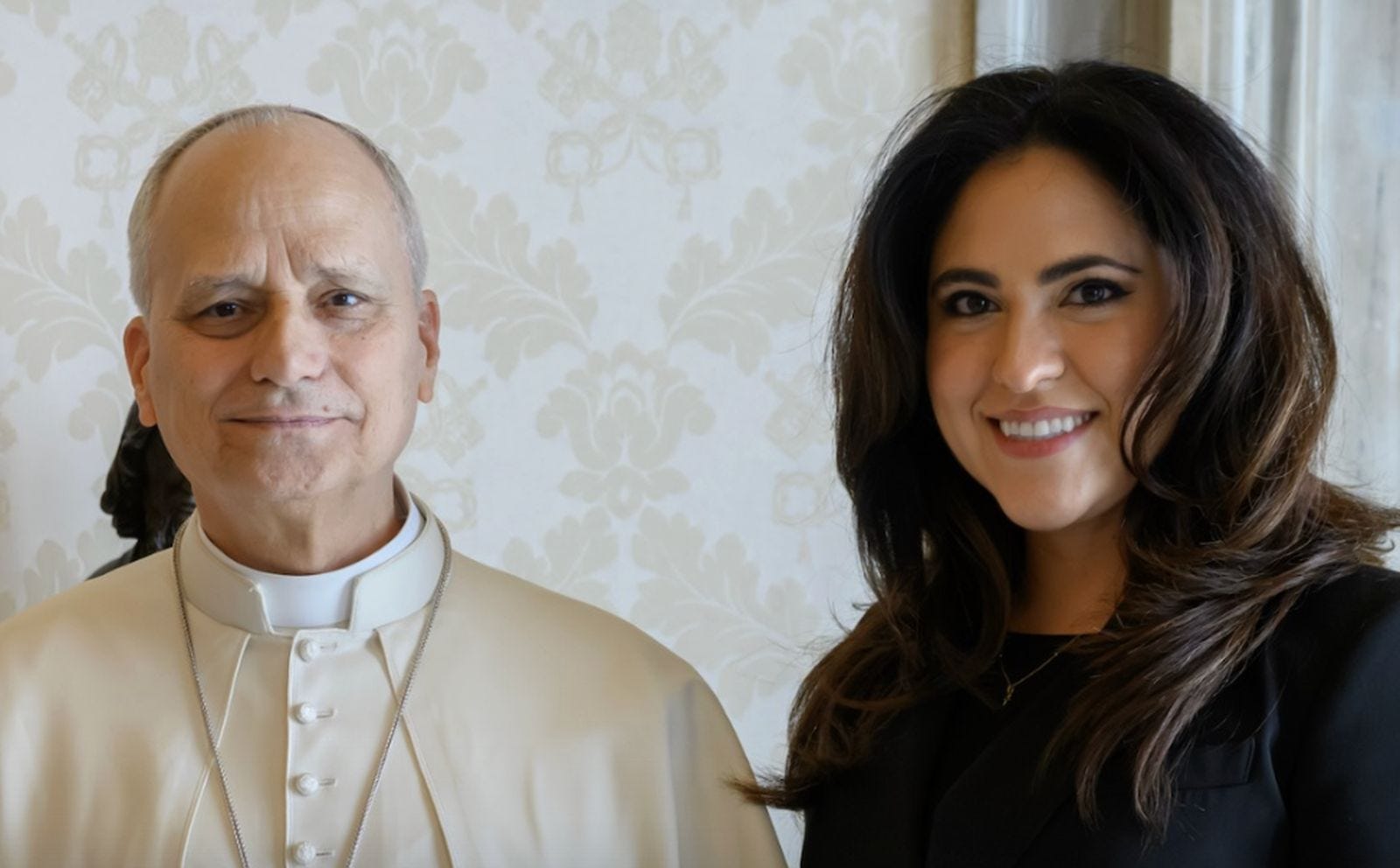
Only two months ago, Pope Leo XIV also made Montse Alvarado the prefect for the Dicastery of Communications, meaning a millennial lay woman is now in charge of one of the Holy See’s influential dicasteries and its largest or near-largest single administrative cost.
Like Montse, these two new council members are extraordinarily qualified and credentialed. Gisela Bergmann is a 36-year old princess — a real-life princess — who is trusted enough by her family, who have run Liechtenstein since just after the First Crusade, to be the CEO of one of their larger wealth preservation companies.
The other new member, Elena Principato-Wettstein, got an MBA, did post-grad work in accounting and business/management at the Sapienza Università di Roma and still found time to work as a head of sales management at UBS since she was 32. She is now also an executive director for them, having stayed at the company for 12 years — a very un-millenial thing to do.
These appointments remind the Church that millennial is not code language for “young adult” anymore. The millennial generation is coming of age, and increasingly leading the way to set the tone across the Church’s institutions: in chanceries, schools, parishes, apostolates, and, now, even the Vatican.
That news may terrify or encourage you.
Either way, as a member of this much-maligned-millennial generation myself, I thought I would share seven unique qualities of millennial leaders, pulled from my own conversations, to give Catholics a sense of what to expect with a growing cadre of Church leaders who at some point owned a Tamagotchi.
Orthodoxy is presumed table stakes.
Millennials might have different avocations, liturgical preferences, or highlight different aspects of the Church’s life and mission, but pitched doctrinal battles are almost non-existent in our generation. Because of that, we do not feel the need to prove our orthodoxy at all times. If we did not actually believe all this stuff, we would not be here at all.
Authenticity and sincerity are prioritized over polished appearances and status.
We are a generation which prefers courageous, authentic, and human (read: real and, at times, messy) leadership over perfectly polished external appearances. To us, that kind of sincere authenticity cues as integrity.
Our mistrust in institutions (driven largely by their complete moral failure in our lifetime) means we want to know that what is on the inside matches the outside. We would rather have a real conversation about the best way to achieve the mission God has given to us over a perfectly organized board meeting.
A curated, corporate-feeling Catholicism does not move us. We want the real thing, wounds and all.
We have less patience for “kingdom building,” and we value collaboration over competition.
Without criticizing any previous generations, millennials are more “We” and win-win oriented than has been typical in the last 25 years of Church life. We are less attached to advancing our own project or initiative at all costs — including, perhaps — by defeating others and more connected to seeing the Church, as a team, win in the mission Christ gave to it.
Our tone is more “apostolic mission” and missio ad gentes than “new evangelization.”
Our generation did not experience the pain of watching the culture around us lose a Christian worldview. We were raised in a secularized world. So, the primary lens with which we arrive to the work of the Church is not just evangelizing or re-evangelizing Catholics, but preaching the Gospel to the entire world. That dramatically reframes how we think and what we prioritize.
We are less inclined to maintain the institutional status quo, and more oriented to change management.
Older Church leaders often built and trusted structures and institutions because that is what they grew up with. Millennials tend to ask, “Is this working? Does it bear fruit?” before asking “Is this how we’ve always done it?”
We are loyal to the mission above all which means we are strikingly ready to say, both, “What is this structure/institution of the Church meant to be and do?” AND,“How do we repurpose it, without impacting that nature, that for the life of the Church and the world today?” We are very end-game and results-oriented.
Millennials lead collaboratively, not from the top down.
Shaped by flatter workplaces, and a culture of organizational health that has impacted secular/corporate workplaces, we are comfortable sharing responsibility, and credit, and less drawn to the lone-authority, Jack Welch, command and conquer model and the myth of the self-sufficient Strong Man.
We live by the principle, instead, that, “If you want to go fast, go alone. If you want to go far, go together.”
We are exhausted from polarization and have no desire to see more of it in the Church.
We came of age watching everything, in the Church and our culture, fracture into camps. We have seen the internal Catholic wars up close, and we are tired of them. This is not to say we lack conviction, simply that we are going to look for common ground before we draw lines of division. Many of the issues in the Church that plagued the debates of previous generations are real, and they persist. But we are looking for something deeper than the old divisions, something that looks like a Church living communion and mission.
Admittedly, I am not sure how we get there, but everyone I know wants it.
Thirty-three years ago, Pope St. John Paul II came to Denver, a trip he privately shared with some that he viewed as the inauguration of a “new evangelization” which would spread in the Americas and across the world. Twenty-seven years ago, he came back to St. Louis, right before the Great Jubilee, and issued Ecclesia in America as a sort of charter for that work.
Since those visits, we have seen a flowering of that New Evangelization, driven by trailblazers who heard the Holy Father’s call to coraggio and took off running. And, just as this work has come to full maturation and effectiveness (which I think is inarguable at this point) new generations of leaders are stepping in, with their faults, personal and generational, but also with renewed vitality and fresh perspective.
May we keep all of them in our prayers, that their work might be exactly what the Church needs at this time.

