Madrid archdiocese asks parishes for extra confession during papal vigil
The archdiocese previously faced criticism over a program for 'listening centers' staffed by lay people
The Archdiocese of Madrid said Monday that downtown churches will remain open and offer confession during and after a youth prayer vigil with Pope Leo.
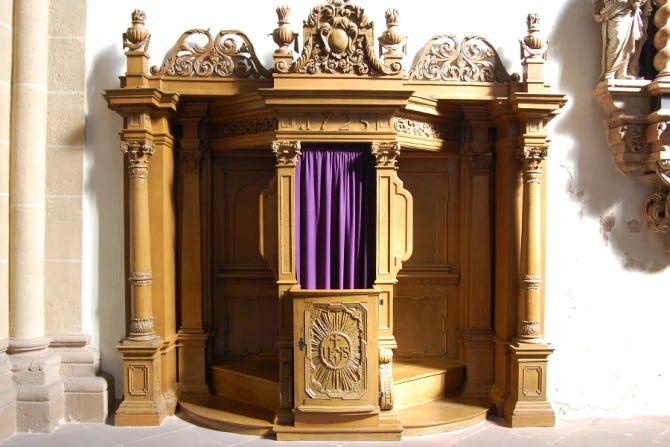
The announcement comes less than a week after the archdiocese faced criticism after announcing that “listening centers” would be established during a youth event with Pope Leo, without specific plans for sacramental confession at the event itself.
Several diocesan sources told The Pillar that until the announcement, no broader plan for confessions had been in place, beyond encouraging downtown parish priests and rectors to organize availability themselves.
But shortly after the archdiocese received media inquiries about the listening centers program, a Madrid auxiliary bishop sent priests a letter asking them to open their churches for confessions that evening, according to a letter obtained by The Pillar.
—
Sara de la Torre, communications director of the Archdiocese of Madrid, said May 25 that “no one should be afraid or think that confession won’t be offered” during the papal trip because “the diocese has worked hard for it so that [confession] is available in all parishes.”
“This is not a World Youth Day, we’ve had only four months to prepare for this visit, so we have the spaces we have… but [downtown] parishes will be open so that anyone who wants to receive the sacrament of reconciliation… can do it. There will be a lot of priests accompanying people and available for what’s needed.”
De la Torre criticized media reports that highlighted the lack of plans for confessions during the youth vigil beyond usual local parish schedules. Instead, specific spaces for “listening centers” had been established for young people who wish to speak with lay pastoral workers dispatched as “listening agents” during the papal visit.
“Sometimes we let ourselves be led by headlines, but parishes in Madrid’s downtown and nearby areas are opening their doors throughout the night of the vigil, until the [next day’s] Mass so that everyone who wants… can be accompanied and received.”
The Pillar obtained a May 20 letter sent by Bishop Vicente Martín Muñoz, an auxiliary bishop of Madrid, to several priests in the city, asking them to open their churches on the night of the June 6 youth prayer vigil for prayer and confession.
The letter was sent soon after The Pillar raised questions with diocesan leadership about plans for confession during the pope’s visit.
The letter says that “following the prayer gathering and vigil presided over by Pope Leo XIV on Saturday, June 6, we invite the churches and places of worship in the downtown area, as well as those that welcome pilgrims from other dioceses, to [keep] places of worship open so that young people and pilgrims may find a space for silence, prayer, and reflection.”
The letter then asks parishes, rectories and convents, “especially those located in the heart of Madrid,” to provide “spaces for reconciliation where pilgrims can celebrate the sacrament of forgiveness with priests available, spaces for prayer and silence, and spaces for listening and hospitality where those who come may feel welcomed by the Christian community.”
The letter also asks priests to send details of the hours during which their parishes or chapels will remain open that evening to two local priests coordinating the initiative.
De la Torre told The Pillar May 19 that the listening centers program did not diminish the need for the sacrament of confession, but are meant to serve as a complement.
“Thankfully in Madrid we have 476 parishes in which people can receive the sacrament of reconciliation and that will be available for all people who want to make a confession. There’s a church in Madrid in almost every other square.”
“The listening spaces don’t substitute for confessionals; they go hand in hand. Nothing is comparable to the sacrament of confession. It’s a different thing, the listening spaces are established for anyone who wants to be listened to, and wants to have a conversation,” she explained.
“It’s a different thing,” De la Torre emphasized.
Sources close to the organizing team said the absence of confessionals has been a point of contention among some organizers.
One organizer, who requested anonymity because he was not authorized to speak on the record, called the lack of a specific space set up for confessions during the vigil or other events a “missed opportunity.”
Several sources close to the trip’s organization told The Pillar that there had been a proposal to make the June 6 youth prayer vigil at Madrid’s Plaza de Lima a “day of reconciliation,” at which hundreds of priests would be available to hear confessions simultaneously.
The idea was later discarded, with sources saying that some members of the organizing committee argued confessionals were not necessary for events with young people, and others argued that confession would be more appropriately offered in local parish churches.
Some organizers argued, sources said, that it would be too much to ask priests to spend the evening hearing confessions when they would also take part the next day in a large Mass with Pope Leo on the feast of Corpus Christi.

