Meet the 21st-century Brazilians on the path to sainthood
From addiction ministry to child welfare, these figures left a lasting legacy
Brazil has more Catholics than any other country in the world. So it’s not surprising that it’s producing a striking number of potential 21st-century saints.
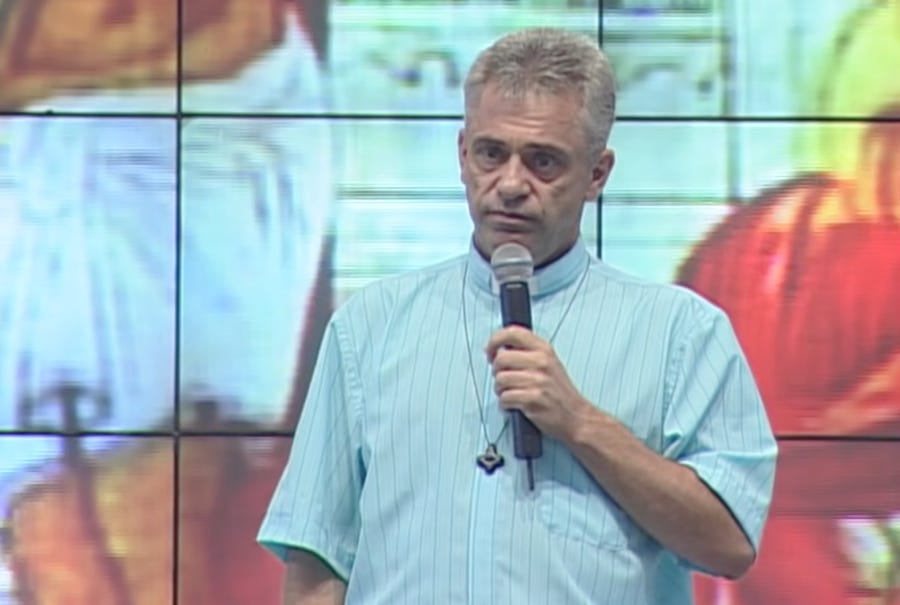
Among the figures whose causes are progressing is Padre Léo, who established a network of houses supporting people addicted to drugs and alcohol. The Dehonian priest died in 2007, at the age of 45. His reputation for holiness was so strong that his beatification cause opened in 2020.
This month, the Dicastery for the Causes of Saints recognized the validity of the diocesan phase of Padre Léo’s beatification cause — another step in the long journey toward canonization.
Padre Léo is joined on the path by several fellow countrymen, some better known than others. Here is a quick, though not exhaustive, rundown of the candidates. All died after 2000, meaning their reputations for holiness have emerged within living memory.
Many 21st-century sainthood candidates were born outside Brazil but made their homes there, often as missionaries. To keep this overview manageable, this article focuses solely on those who were Brazilian-born.
The Servants of God
Waldir Lopes de Castro (1931-2001) didn’t see much of the 21st century. He nevertheless left a powerful impression on his contemporaries in Marco, a municipality in the northeastern state of Ceará, where he served as pastor for the last 37 years of his life.
Locals were struck by the long line of people who would gather outside his parish house seeking help. Monsenhor Waldir, as he was popularly known, was especially devoted to the town’s poorest people. He died on Dec. 22, 2001, at the age of 70, after being struck by a car while on his morning walk.
Gilberto Maria Defina (1925-2004) also showed an exceptional sensitivity toward the needy, which he combined with a reputation for miracle-working. The son of Italian immigrants grew up in Ribeirão Preto, São Paulo. As a child, he had a dream of Christ on the Cross that stayed with him for the rest of his life. He entered the Claretians and was ordained a priest in 1950.
Defina’s greatest institutional legacy was founding the Fraternidade dos Salvistas in the Diocese of Santo Amaro, dedicated to nurturing new priestly vocations.
Luciano Pedro Mendes de Almeida (1930-2006) was an outspoken defender of human rights who also sought to enhance the lives of the elderly and people with disabilities. A Jesuit priest, he was named an auxiliary bishop of São Paulo at the age of 45. In 1988, he was appointed the Archbishop of Mariana, Minas Gerais, a role that he combined with serving as president of the Brazilian bishops’ conference. His cause opened in 2014.
Léo Tarcísio Gonçalves Pereira (1961-2007) was a member of the Catholic Charismatic Renewal who felt called to the priesthood and was ordained as a Dehonian in 1990. Padre Léo, as he came to be known throughout Brazil, founded the Bethânia Community in 1995. The community offered free shelter to people struggling with drug and alcohol addiction, those living with HIV, and abandoned children. A gifted and lively preacher, he began treatment for cancer in April 2006 and died months later.
Marcelo Henrique Câmara (1979-2008) also died well before his time. Marcelinho, as he was known, was a bright young man who embarked on a promising legal career. In 1997, he had a life-changing spiritual experience during a retreat organized by the Brazilian Movimento de Emaús. He was drawn to Opus Dei, attracted by its emphasis on the sanctification of work, and became a supernumerary member in 2006.
After concluding his legal studies, he became a public prosecutor in Santa Catarina, establishing a reputation for both charity and rigor. He was diagnosed with leukemia and died at the age of 28.
Zilda Arns Neumann (1934-2010) was an accomplished public figure whose life was cut short by an earthquake in Haiti, where she was on a humanitarian mission. She was the sister of Cardinal Paulo Evaristo Arns, the Archbishop of São Paulo from 1970 to 1998. Her best-known work was founding Pastoral da Criança, an organization that today operates one of the world’s largest community-based child health and nutrition programs.
Maria da Luz Teixeira de Carvalho (1922-2013) was a religious sister and reputed visionary from Brazil’s northeastern state of Pernambuco. After entering religious life, she dedicated herself to education and service to the poor, including work with Indigenous communities.
Irmã Adélia, as she was known, reported experiencing Marian apparitions as a child in 1936 but kept the experience private for decades. She spoke about it after being diagnosed with cancer in 1985 and later reported that she was cured after returning to the site of the apparitions. She died at the age of 90 after a long respiratory illness.
The Venerables
Maria Luiza Rezende Marques (1915-2005) was a Discalced Carmelite who is known in English as Tereza Margarida of the Heart of Mary. After joining the order, she helped to establish a new convent in Três Pontas, Minas Gerais, where she became a sought-after spiritual director. She was known affectionately as nossa mãe (“our mother”) to those who received her wise counsel. She died at the convent at the age of 89. She was recognized as Venerable in 2023.
Aloísio Sebastião Boeing (1913-2006) was born into a German Catholic family in Brazil’s southern Santa Catarina state. He entered the Dehonians and earned a reputation as a diligent novice master. Novices were not the only ones who sought out his advice. It was said that he would work through the night, offering spiritual guidance to individuals and families in person and over the phone. When he sensed he was close to death in 2006, he told those he loved: “You will find me in the Eucharist.” He was also recognized as Venerable in 2023.
Guido Schäffer (1974-2009) has arguably the highest profile of Brazil’s 21st-century canonization candidates. The doctor-turned-seminarian was known for his love of surfing, as well as his care for the poor of Rio de Janeiro. When he was seemingly in the prime of his life, he was struck in the back of the head by a surfboard while out in the waves and drowned. He was declared Venerable in 2023.

