Minn. appeals court sides with Catholic school in employment dispute
The court recognized the Church's 'mission to train young people to live the Catholic faith.'
The Minnesota Court of Appeals has ruled in favor of a local Catholic high school that declined to renew the contract of an employee who announced plans to undergo a gender transition.
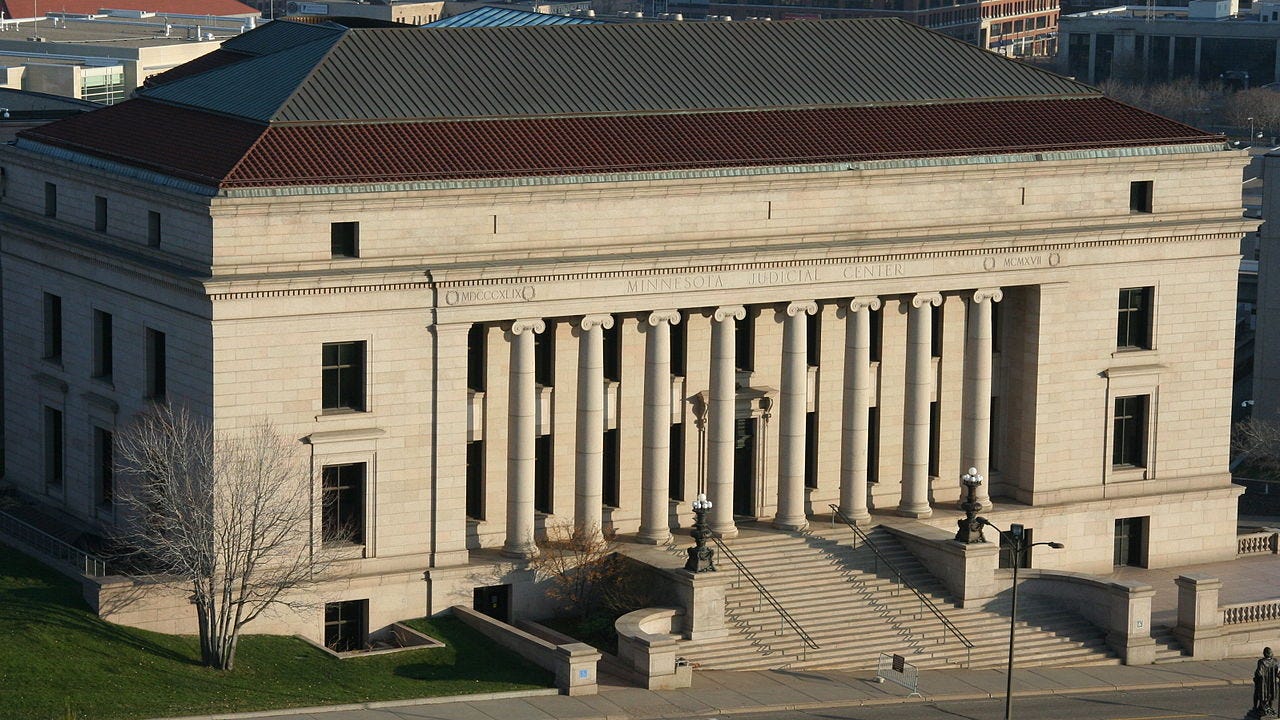
“Because the allegations in MoChridhe’s complaint would interfere with an internal church decision that affects the Archdiocese’s faith-based mission to educate young people in the Catholic faith and would foster excessive governmental entanglement with religion, the district court properly dismissed those claims,” the appeals court said in its Dec. 1 decision.
Reyzl Grace MoChridhe was the librarian and media specialist at the Academy of Holy Angels, in the Archdiocese of St. Paul and Minneapolis.
In the spring of 2022, MoChridhe, who is a biological male, announced to the school principal plans to start “the process of transitioning to live as her female self,” according to legal documents.
The principal then presented MoChridhe with a copy of the “Guiding Principles for Catholic Schools and Religious Education Concerning Human Sexuality and Sexual Identity,” to which all archdiocesan schools and employees are required to adhere. The guiding principles state, among other things, that the school will make decisions about students’ pronouns, facility usage, and single-sex extracurricular eligibility based on their biological sex.
According to legal documents, MoChridhe objected to the principles and expressed an inability to follow them. The principal said that as a result, MoChridhe’s employment contract would not be renewed.
In 2024, MoChridhe sued the Academy of Holy Angels and the Archdiocese of St. Paul and Minneapolis.
MoChridhe’s lawyers argued that the school had illegally discriminated in employment decisions based on MoChridhe’s gender identity.
They argued that the position of media specialist/librarian consisted of secular duties and did not include evangelization or leading students in prayer.
But the district court found that the school’s decision was protected under religious freedom provisions in both the U.S. and Minnesota constitutions.
MoChridhe then appealed the decision.
The appeals court agreed with the district court’s ruling in the case.
“In short, MoChridhe asks the judiciary to require the Archdiocese to employ a person who does not support and will not abide by the church’s faith-based Guiding Principles in the school setting, despite the Archdiocese’s internal decision to require adherence to those principles when executing its mission to educate students in the Catholic faith,” the appeals court said in its ruling.
“Given the significant role that the Catholic faith plays in Catholic education and the church’s mission to train young people to live the Catholic faith, requiring the Archdiocese to employ a person in its Catholic school who admittedly cannot abide by the church’s implementation of its Guiding Principles in that school would interfere with an internal church decision that affects the faith and mission of the church itself.”
The Archdiocese of Saint Paul and Minneapolis praised the appellate court’s decision in a Dec. 3 statement.
“The United States and Minnesota Constitutions recognize the right to practice our religion without government interference, which necessarily includes how we educate our youth in the faith,” the archdiocese said.
“Decades of precedent from the United States and Minnesota Supreme Courts, as well as other cases from around the country, have recognized the protections that the First Amendment provides to religious organizations. Monday’s decision from the Minnesota Court of Appeals confirms that constitutional promise.”


This is good news, and the court made the right and proper decision here. But it almost wasn’t: the 2024 Minnesota ERA (which would’ve changed the state constitution to protect MoChridie) almost passed, and only failed on a technicality of quorum. If it had quorum, it would’ve passed, and the school would have lost the case. And in Wisconsin, the state supreme court ruled that Catholic Charities cannot be considered protected as faith-based organizations. And in Washington state, the infamous bill that requires priests to violate the Seal of Confession is now the law by letter, unchanged, and the only consolation is that the state said “well we’ll just not enforce it on priests (for now).”
This MN case is a victory, but we still have a long uphill battle ahead. We are still hanging on the precipice.
I am once again shocked that lawyers and lay people alike keep challenging the local church in these matters. It is absolutely a waste of time. Firstly though, why hire this person in the first place? There must have been some concept of them not living in a manner according to the faith before they were hired. I get the don't ask, don't tell narrative, but still. It's not a hard situation to decipher.