
Oslo bishop to open Sigrid Undset canonization cause
‘She stood firm in the Catholic faith, challenged Nazism, and strove for Norwegian freedom’
Norway’s Bishop Fredrik Hansen announced Wednesday that he is taking the first steps toward opening the cause for canonization of Nobel Prize-winning author Sigrid Undset.
Hansen, the Bishop of Oslo, made the announcement July 8, while celebrating Mass during an annual pilgrimage to the island of Selja in honor of St. Sunniva, the 10th-century martyr revered as Norway’s first saint.
In his homily at the Mass — which coincided with the 100th anniversary of Undset’s visit to Selja, considered the cradle of Norwegian Christianity — Hansen said: “By the authority entrusted to me, I have therefore now initiated the work so that the cause for beatification may formally begin sometime this fall.”
If the cause reaches its conclusion, Undset would become Norway’s second female saint after Sunniva and the second Nobel Prize laureate to be canonized after Mother Teresa of Calcutta, who received the Nobel Peace Prize in 1979.
Before taking the decision to pursue the cause, Hansen examined Undset’s life and concluded there were clear signs of a reputation for holiness and piety.
The possibility of opening her cause was then presented to the Nordic bishops’ conference and experts on Undset’s life.
In a June 8 email to The Pillar, Bishop Hansen said: “Sigrid Undset lived a faithful Christian life in a world of turmoil. She stood firm in the Catholic faith. She challenged Nazism and strove for Norwegian freedom.”
“She was a friend of the poor and a defender of life. And of course, her deeply Catholic writings, which have fortified many — throughout the Church — in the faith.”
“She has so much to offer and has given us such a heroic example for discipleship.”
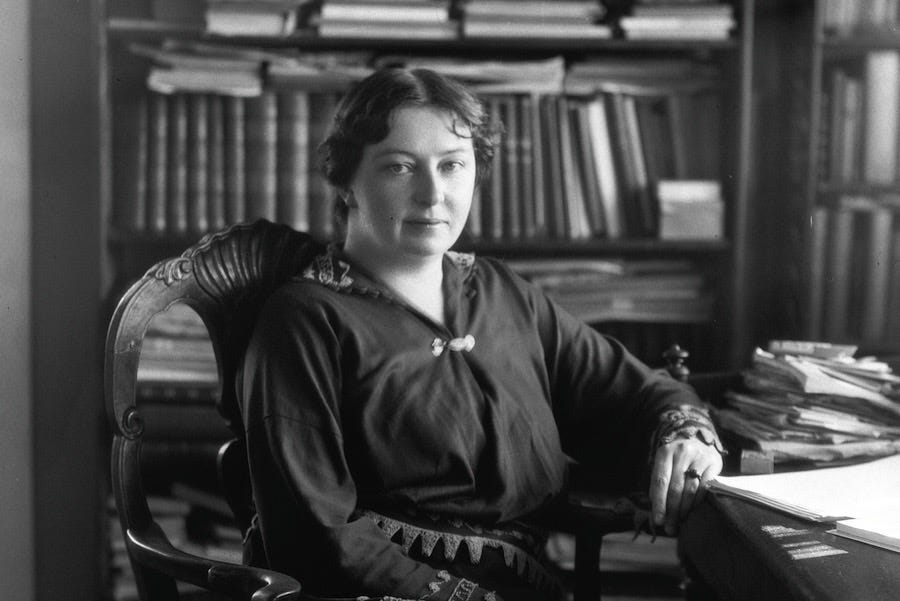
Sigrid Undset was born on May 20, 1882, in Kalundborg, Denmark. She grew up in Kristiania, the city now known as Oslo.
She gained fame through her literary work, making a decisive international breakthrough with the trilogy “Kristin Lavransdatter” in 1920-1922.
After a deep exploration of the Catholic faith and medieval Christianity, she was received into the Catholic Church at St. Torfinn’s Chapel in Hamar on Nov. 1, 1924.
In 1928, she became a lay Dominican and received the Nobel Prize in Literature.
Following the Nazi invasion of Norway in 1940, she went into exile in the U.S., where she campaigned energetically for a free and democratic Norway.
She died on June 10, 1949, in Lillehammer, at the age of 67.
Bishop Erik Varden, a Trappist monk and author who oversees Norway’s territorial prelatures of Trondheim and Tromsø, welcomed the announcement of the first steps toward the opening of her cause.
“One can imagine the response of Sigrid Undset, had she been told that the Church would one day consider her a possible subject for a cause of beatification. She would have chortled. She might even have permitted herself a well-chosen expletive,” he told The Pillar in a June 8 email.
“Certainly, she is no plaster-cast saint. Her Christian trajectory was marked by struggles. She knew the complexities of life and love. That is why she speaks to us the way she does. When we consider her life at a distance — she died in 1949 — we see that she did embody heroic virtue.”
“She was one of the 20th century’s foremost Catholic intellectuals, who used her creative gifts to proclaim Christ’s gracious truth. She was a fearless advocate of justice: this she showed to the full during World War II when, rushed into exile, she thundered against Nazism.”
Varden added: “She was an exemplary mother, not least in the way she cared for her handicapped daughter. And she was a woman of prayer. I have been struck for years by signs emerging here and there, all over the world, of spontaneous devotion to Sigrid Undset, devotion sprung not only from love of her literary work but from a sense that she truly was, and remains, a friend of God. Her witness of unsentimental devotion and intelligent integrity is just what we need, I’d say, here and now.”
Canonization causes are typically opened in the diocese where the candidate died. Lillehammer, Undset’s place of death, falls within the jurisdiction of the Oslo diocese.
Once a diocesan bishop formally opens an inquiry into whether a candidate meets the criteria for canonization, the candidate is designated as a “Servant of God.”
The diocesan inquiry closely examines the person’s life, writings, and reputation, ultimately sending its findings to the Vatican’s Dicastery for the Causes of Saints. The investigation’s results are further examined by historians, theologians, and other experts.
If the pope recognizes that a candidate displayed heroic virtue, the cause advances and the candidate is declared “Venerable.”
For the candidate to be proclaimed “Blessed,” they generally require a miracle attributed to their intercession. A further attested miracle is usually necessary for canonization.
Bishop Hansen out here cooking this week
Important: When you read Kristen Lavransdatter for the first time, read Tiina Nunelly’s translation. It is much more fluid, exact, and readable than the Archer, the first English translation, whose anachronisms make for some very clunky English.