
Two statements published this week highlighted stark differences between the past and present chairmen of the German bishops’ conference.
While the current conference president stressed the need for “full communion with the Holy Father and in fidelity to the Magisterium” in the bishops’ push for reform, his immediate predecessor took aim at Pope Leo XIV personally, calling the pope’s engagement with German conclusions in the wake of the sexual abuse crisis “inadequate and, in terms of its potential implications, deeply problematic.”
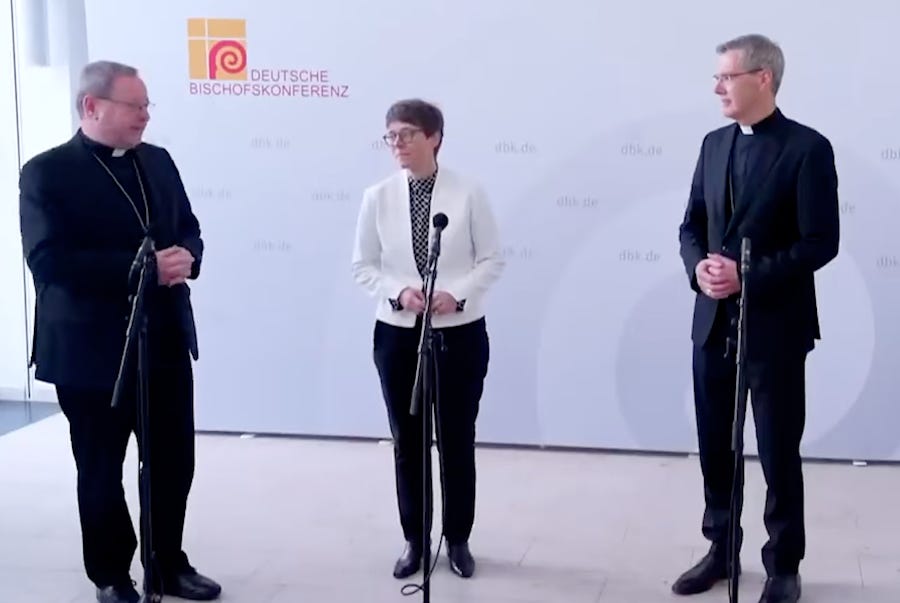
On a superficial level, Bishop Georg Bätzing and his successor as conference chairman, Bishop Heiner Wilmer, appear to have a lot in common. They are both theologically progressive German bishops born in April 1961.
But look more closely, and the contrasts appear. Bätzing is stocky, Wilmer thin. Bätzing speaks with a lilting western German accent, Wilmer with a nasal northern German twang.
Beyond the physical differences, there are dissimilarities in their backgrounds. Bätzing was a diocesan priest, Wilmer a religious. Bätzing was shaped predominantly by German ecclesiastical culture. Wilmer studied in Paris and Rome, and taught in the Bronx.
But the two men’s latest comments suggest that the biggest contrast of all is not to be found in their physiques or formation, but in their leadership styles. Wilmer emerges as a painstaking mediator between the German Church and the wider Catholic world, Bätzing as a fiery defender of Germany’s singular “synodal way.”
Let’s take a look at the two statements, then consider what they tell us about the transition from Bätzing’s leadership to Wilmer’s that took place in February 2026.