Pennsylvania Ukrainian Catholic church sues local government over new restrictions
“The restrictions hurt. Faith is not a hobby for us. It’s the center of our life.”
A Ukrainian Catholic parish has filed a federal suit over new municipal restrictions, which prohibit construction of a new chapel and regulate the celebration of memorial services. The pastor at the parish told The Pillar that the restrictions are “shocking beyond belief.”
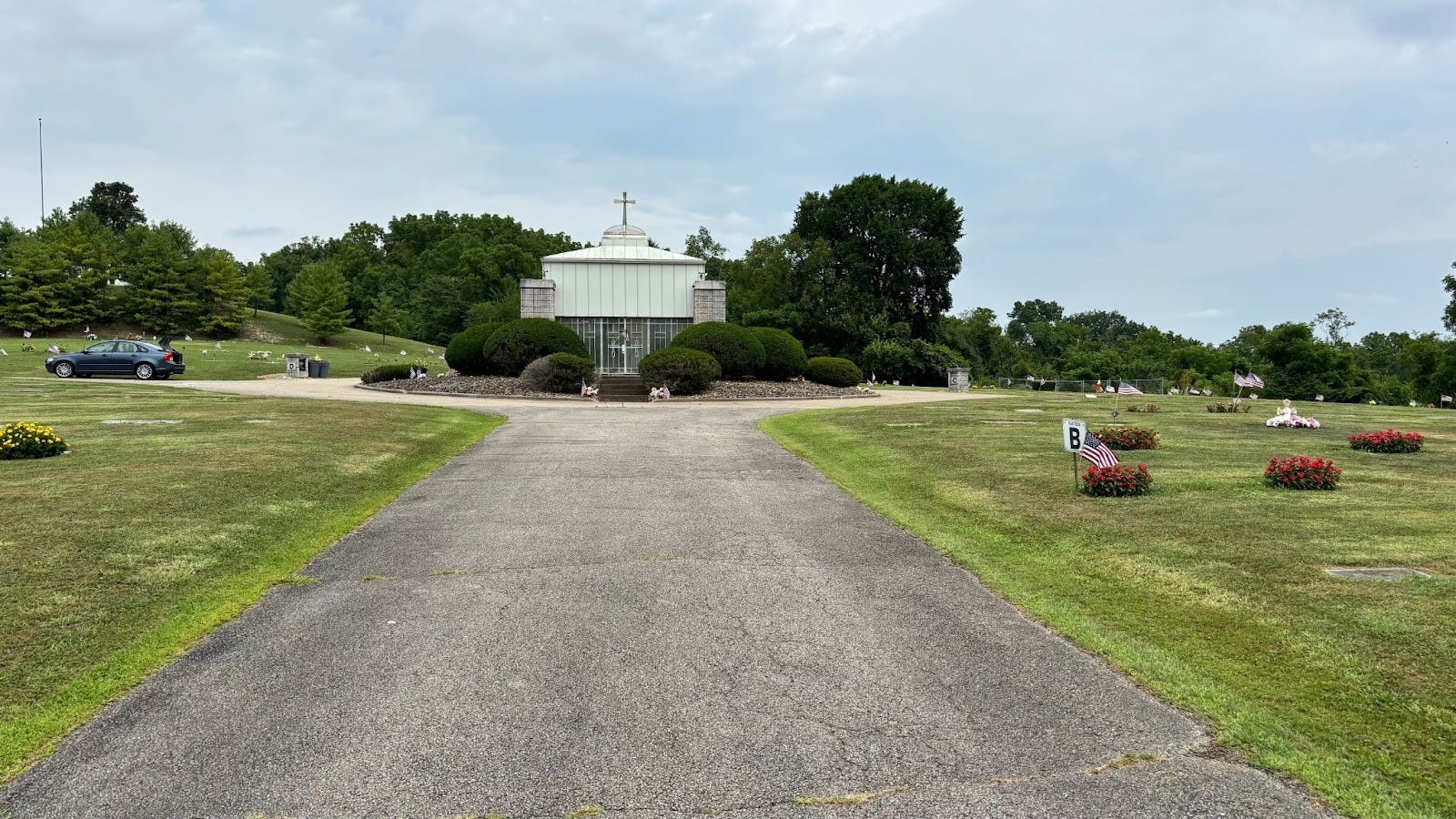
Holy Trinity Ukrainian Catholic Church, in Carnegie, Pennsylvania, filed a complaint in federal court against Collier Township on Jan. 7.
The suit alleges that the town violated the parish’s First Amendment rights to free exercise of religion by placing restrictions on the its cemetery property following a years-long discussion around construction of a proposed shrine and retreat center on the property.
“The Township has blatantly violated the U.S. Constitution here. First, the Township’s zoning ordinances facially discriminate against religious land use by denying the Church the right to construct a church building anywhere within the Township as of right,” the lawsuit claimed.
“Next, in rejecting the Church’s proposals and attaching strict conditions to the Church’s use of its Property, the Township has used zoning ordinances to impose a substantial burden on the Church’s religious exercise.”
Founded in 1903 by Ukrainian refugees fleeing Communist regimes, Holy Trinity became an important site for the local Ukrainian community. Initially, Ukrainian Catholics worshiped at the nearby Latin Catholic parish church, but in 1951, the Ukrainians purchased land in Carnegie, building a church in town and a cemetery on a 40-acre plot outside of town.
The parish, according to its pastor, Father Jason Charron, is an important cultural base for the Ukrainian community.
“We’re a community that has historically experienced persecution, whether under Czarist Russia, whether under the Soviet Union, so that’s kind of our history,” Charron told The Pillar.
“But we’ve been here for 75 years, and we’ve had nothing but positive experiences with local townships. We’ve never had any difficulties at all with local government or state government in any sense. We are pretty content, you know, worshiping in our tradition and contributing to the betterment of our small corner of the world.”
Collier township is located outside of Pittsburgh and has 9,000 residents.
In 2023, Holy Trinity began discussions about developing the cemetery property, with plans to construct a 13,000 square foot chapel that included a bell tower and a small retreat center with 18 guest rooms. The church spent $160,000 to design and survey the land with the hopes of placing the chapel on top of a prominent hill that overlooks a nearby interstate.
“The salvation of our own generation is to erect something that is visible, tangible, and it’s an enduring sign of God’s forgiveness and His mercy. And that’s what our world needs,” Charron said. “Given the 40 acres is butted against a freeway on top of a hill, it’s screaming for a church with a cross on top. So yeah, it was declarative, it was a billboard of mercy waiting to happen.”
Local ordinances require township approval for major construction projects. So in October 2023, church leaders met with the township’s Director of Planning, Zoning & Land Development who, they said, provided some feedback but did not express any opposition to the initial proposal.
That December, the parish submitted a formal application, and over the next four months, met regularly with the town to discuss the project. During that time, residents living near the cemetery wrote to the town expressing concerns about the proposed project.
For the next nine months, church leaders met frequently with the town, negotiating various aspects of the project including traffic impact, noise regulations and other local concerns.
“The shrine was to be a place of pilgrimage and this was a little complicated in that the property is owned by the church, so it was more of this procedural matter, that before we get to the point of building a shrine, that’s a place of devotion, retreat, pilgrimage, our church, we had to jump through the local administrative hurdles of doing what we needed to do,” Charron said. “It was at that point that we were given a list of restrictions.”
In September 2024, right before a town vote on the project, a petition began circulating among local residents opposing the parish’s plan. According to court documents, several residents at the hearing voiced opposition to the religious nature of the shrine. The town eventually ceded to the residents complaints, said Jeremy Dys, senior counsel for First Liberty Institute, which is representing Holy Trinity Church.
“Some local residents just overwhelmed the township with complaints for reasons I don’t quite fully understand rather than trying to find a way to work with the Church to build the chapel. The town started putting just completely unreasonable regulations on them,” Dys told The Pillar.
“That left the Church feeling very helpless. What person wouldn’t feel helpless, when they have to go up against the town hall? What can you do when the neighbors complain loud enough and get politicians to do their bidding? How do you fight city hall?”
The parish went back and forth with city hall for over a year, negotiating the construction of the proposed chapel.
On June 10, 2025, the town approved the construction – but only with restrictions. Specifically, the structure would be considered an accessory structure and the size of the chapel must be less than or equal to 5,000 square feet and not more than 35 feet in height, the size of the current largest structure on the property, a mausoleum.
Dys believes these restrictions are unfair. He noted that a mile down the road from the cemetery sits the Carpenter’s Union Hall, which boasts a large complex with two large buildings that have multiple stories.
“When we heard the restrictions, we got to thinking, maybe the township just doesn’t like big buildings,” Dys said. “But that’s not true either because a property really close to it, the local carpenter’s union, has a huge facility with a conference center that seats up to like 400 people, a 60 or 70 foot tall training center. They’ve got a large cafeteria where they have hosted huge events including a speech by former president Joe Biden.”
“These are essentially small chapels built on the union’s property that the township has no problem with when those chapels are dedicated to union activities,” Dys added. “But as soon as you take those same rooms and convert them into religious worship, the township says you can’t do that.”
“You are not permitted to do that,” he said. “That’s religious discrimination.”
In addition to the building restrictions, the town placed new regulations upon the property including that the “Ringing of bells / chimes shall be limited to 3-1/2 minutes in duration and shall not be before 9:00AM and shall be limited to funerals and/or memorial services only; Memorial Services shall be held only for those persons deceased after June 9, 2025; The chapel/mausoleum shall only be used for funeral and/or memorial services, no other functions or gatherings shall be permitted. The Township reserves the right to audit usage with 30-days’ notice.”

The town cited noise concerns as reasons for the restrictions upon the bells and services. However, the church has countered, the cemetery is 12 miles from Pittsburgh International Airport, and it sits under a flight path and backs up to Interstate 376, a major highway — both of which contribute significant noise pollution.
“There’s a lot of stuff here that’s just frankly silly, especially the three-and-a-half minutes for bells which you can’t ring before 9 a.m.,” Dys said. “I have landed at Pittsburgh International Airport before 9 a.m. and I bet you I flew over top of that hill when I did so. Quiet bells ringing versus the roar of a (Boeing) 757 overhead seems to be a little silly.”
Legal counsel for Collier township declined The Pillar’s request for comment but referred to arguments made in a pending state case brought forth by Holy Trinity last summer contesting the local building restrictions to the state.
In its defense for the state case, filed in July 2025, the township argued that since the proposed site for the chapel is a cemetery, it must abide by local land ordinances which stipulate strict building codes for cemetery properties.
“Funeral home or church is not a permitted principal or accessory conditional use for a PEDD property. A chapel or mausoleum would only be permissible as an accessory that is incidental and subordinate to the approved conditional principal purpose, a cemetery,” the township argued.
Parishioners hoped that the proposed shrine would be a benefit for the broader community, welcoming more people into their town and as a sign of hope.
“Prayer alters, influences and impacts the course of a nation’s history. We believe that at the international level all the way down to the local level at the family dinner table,” Charron said.
“We believe that having a place of prayer multiplies God’s grace in that place and at that time and with those people. By inviting him into their communities through places of prayer and reparation and pilgrimage, like the proposed shrine, those locales, those people are going to have increased grace in their lives.”
Now, the parish will wait as the court sorts through the case, deciding whether the township’s restrictions violate the parish’s right to free exercise of religion.
It’s been a painful process for the community, Charron said.
“The restrictions hurt. Faith is not a hobby for us. It’s the center of our life,” he said. “It was shocking to myself and my parishioners that in America, you would find the government restricting when, how, and for whom we could pray. It was shocking beyond belief. And honestly, it was heavy.”
“You pour your life into serving God and his people, and then to have the local government shut out the core essence of who we are, it really stung.”


I always love the small local stories. Prayers that our Ukrainian brothers will triumph over the town of Carnegie.
RLUIPA prohibits that. They should have competent counsel review these sorts of things before they send them. The elected officials should at least read the pamphlet from the DOJ about the Religious Lands ...Act. https://www.justice.gov/crt/page/file/1070736/dl?inline