‘Please turn back’: Pope Leo gives final warning to SSPX
In a letter to Rev. Davide Pagliarani, Leo warned that 'to tear the seamless garment of Christ is a sin of extreme gravity.'
Pope Leo XIV issued a letter to the leader of the Society of St. Pius X, June 29, making a personal appeal for the society to abandon its plans for a slate of illicit episcopal consecrations set to take place July 1 in Switzerland.
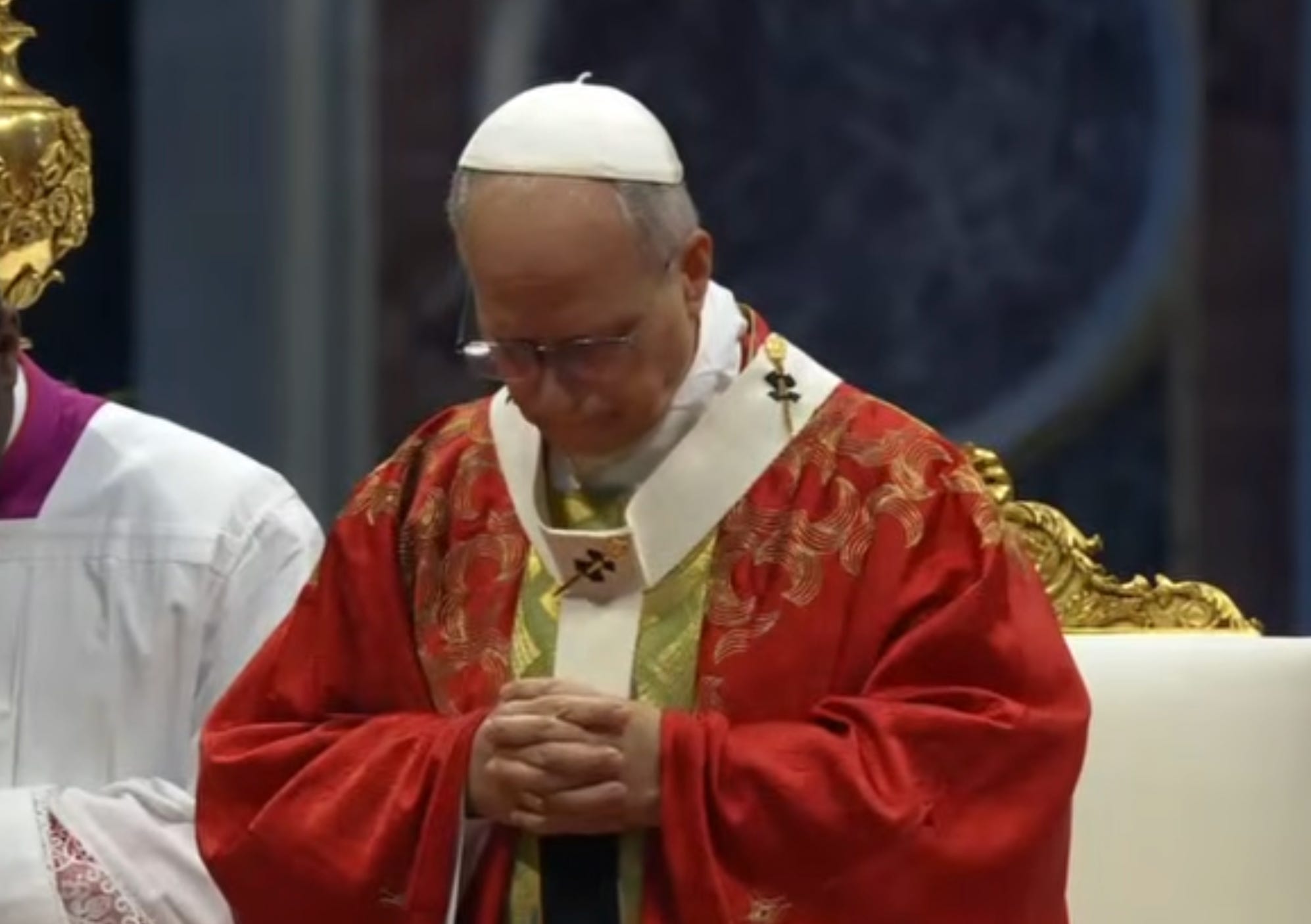
Writing to Rev. Davide Pagliarani on the Feast of Sts. Peter and Paul, the pope addressed the leader of the traditionalist group “and, through you, the bishops, priests, seminarians and faithful connected to the Priestly Fraternity of Saint Pius X.”
“I plead with you and ask you with all my heart: please turn back!” Leo wrote. “I urge you to consider carefully the spiritual good of the faithful, because the schismatic act you are about to undertake would deprive them of the licit and, in some cases, even valid reception of the sacraments, which they love and seek for their sanctification.”
The pope noted that “the Church recognizes the devotion to liturgical life, commitment to priestly formation, apostolic zeal and desire for fidelity to Tradition that characterize many people and communities connected to your fraternity,” and said that “this has motivated the attentive and generous attitude that my predecessors have consistently shown to you.”
“I pray for you,” Leo wrote, “because to tear the seamless garment of Christ is a sin of extreme gravity.”
The papal letter is likely to prove the final Vatican effort to halt the consecrations, which were announced in February. Pagliarani has insisted that the society needs to consecrate new bishops in order to ensure a sufficient number of priests to sustain the society’s self-assigned pastoral work.
Founded by Archbishop Marcel Lefebvre in 1970 in response to the reforms of Vatican Council II, Lefebvre was excommunicated by Pope St. John Paul II in 1988 for schism, after consecrating four bishops without a papal mandate.
The group has only two bishops of the four consecrated by the group’s founder in 1988: Bishop Bernard Fellay, 67, and Bishop Alfonso de Galarreta, 69. Bishop Bernard Tissier de Mallerais died in 2024, and Bishop Richard Williamson was expelled from the group in 2012 and died last year. Archbishop Lefebvre died in 1991.
In recent decades, the Vatican has described the society as having “institutional irregularity” with the Church, rather than describing it as a schismatic sect. In 2009, Pope Benedict XVI lifted the penalty of excommunication incurred by the society’s bishops through their illicit episcopal consecrations. At the same time, Benedict clarified that the SSPX has no canonical status in the Church, and said its priests could not exercise legitimate ministry.
The society has had ongoing discussions with Vatican officials over the years about normalizing its status in the Church, and Pope Francis granted its priests faculties to hear confessions in 2015 and allowed bishops to grant the SSPX the faculty to witness marriages according to canonical form in 2017.
However, as its small cadre of bishops continued to age, the society has insisted on the need to secure a new generation of episcopal ministry, leading to tensions with Rome. The announcement to proceed with the July 1 consecrations without a papal mandate was made by Pagliarani, who complained that the Vatican had repeatedly refused to meet their demands for a private papal audience.
Although the Vatican offered a renewed process of dialogue with the SSPX leadership, following meetings with Cardinal Fernandez at the Dicastery for the Doctrine of the Faith in February — talks the Holy See said it hoped might persuade the SSPX to pause their plans for illicit consecrations — the society’s leadership essentially closed off any future for the negotiations.
According to a statement from Pagliarani at the time, serious disputes of doctrine related to the Second Vatican Council remained between the society and the Church, and no real substantive progress was possible because while only the Church can pronounce on such matters authoritatively, the SSPX leadership believes the Church to be in error.
If the consecrations proceed on July 1 as planned, the Vatican has made clear that, in addition to incurring the penalty for illicit consecration of a bishop without a papal mandate, those participating will also incur the same penalty for the crime of schism.
Additionally, canonical legal advice shared by Dicastery for the Doctrine of the Faith has suggested that the excommunication for schism will extend to those who “formally adhere” to the schismatic act. According to a legal opinion from the Dicastery for Legislative Texts, this would include all the clergy of the society, though not necessarily all the laity who frequent their liturgies.
During the extraordinary consistory of the College of Cardinals conveyed last week by Pope Leo, the former precept of the DDF, Cardinal Gerhard Müller called for the creation of a special commission to help accommodate those lay people and clerics affiliated with the SSPX who wish to return to full communion with the Church in the event of schismatic acts by the society’s leadership.
In his intervention at the consistory, Müller noted that the SSPX had sent an open letter to Pope Leo XIV and the world’s cardinals on the eve of the June 26-27 extraordinary consistory.
The letter was accompanied by a 154-point “Profession of Catholic Faith.” The letter expressed hopes that the document could one day serve “as a basis for an honest discussion with the Holy See.”
Referring to the letter, Müller said: “It is our duty by virtue of our office, both individually and as a college, to reject the scandalous accusation that the Roman Church has departed from the Catholic faith.”
“In the face of the schismatic act of episcopal consecration carried out without the prior grant of communio [communion] with the pope, there must be no ambiguity,” said Müller.

Blessed as The Pillar is with competent canonists, would it be possible for you to comment on the last part of the sentence you cite:
"… because the schismatic act you are about to undertake would deprive them of the licit and, in some cases, even valid reception of the Sacraments, …"
It would seem that the issues of "schism" and "liceity" are now clear. But what about invalid reception of the sacraments? Strong words! Any thoughts? Many thanks!