Polish archdiocese trials new priest appointment model
An archbishop has invited priests to apply for vacant parishes by submitting a résumé and proposed pastoral program tailored to the respective parish.
In a possible first in Poland, an archbishop has invited priests to apply to lead vacant parishes by submitting a résumé and a proposed pastoral program tailored to the needs of the respective parish.
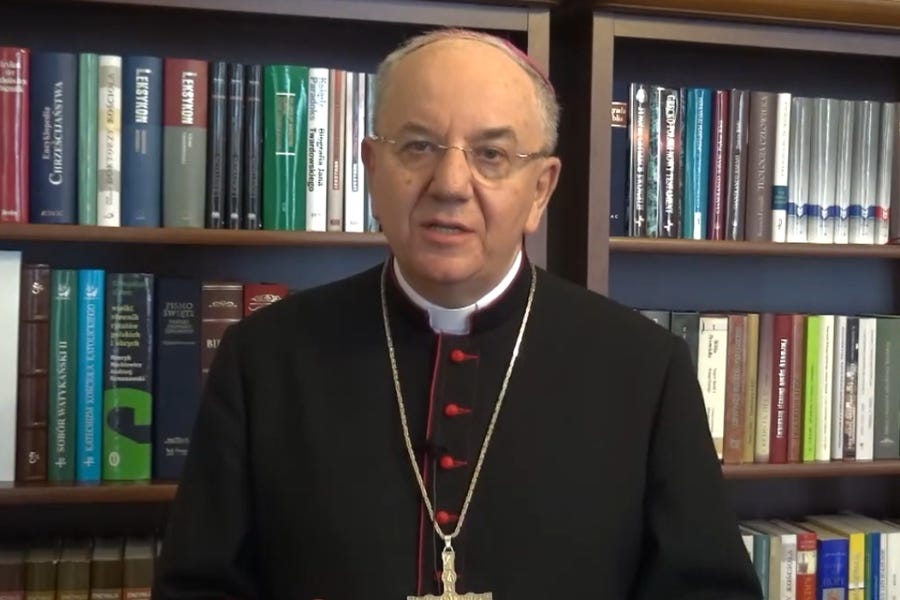
Archbishop Stanisław Budzik of Lublin, southeastern Poland, took the step following an archdiocesan synod that called for a new way of filling vacant parish posts.
The new approach is a marked departure from the traditional Polish model, in which priest assignments are made by the bishop with input from the diocesan curia but no formal application process.
Budzik, who has led the Lublin archdiocese since 2011, has invited priests to apply by May 20 to lead one of 16 vacant parishes, in the first test of the new process.
Fr. Adam Jaszcz, chancellor of the archdiocesan curia, told media that “there’s no shortage of applicants.”
“There is a great deal of interest; applications are constantly being received by the curia and will be reviewed by the bishops’ council,” he said, referring to an advisory body composed of auxiliary bishops and senior clergy.
Jaszcz has previously said the change was inspired by practices in U.S. dioceses.
For example, the Los Angeles archdiocese — the most populous U.S. diocese — invites priests to submit applications to the archbishop to oversee vacant parishes, while also sending a profile to the priest personnel board that “includes a self-evaluation of the priest’s pastoral gifts, abilities, and skills.”
But it is unclear how widespread such practices are in the U.S.
The new procedure for parish appointments was set out in a synod document published by the Lublin archdiocese in November 2025.
The text said that when a parish vacancy arises, “the archbishop may publicly announce his intention to make an appointment and invite interested priests with at least 15 years’ experience to submit their candidacy.”
The archbishop is required to inform priests about which parishes are becoming vacant and set an application deadline.
In response, “each candidate submits a letter addressed to the archbishop requesting assignment to a specific parish, containing a justification for his candidacy as well as a description of his ministry and achievements in previous pastoral assignments.”
The candidate should also include “a proposed pastoral plan for the parish to which he is applying, and a recommendation from the current dean (or the vice-dean if the candidate is the dean), a certificate of passing the parish priest examination, a certificate of fulfillment of financial obligations to the archdiocese, and certificates of any completed studies, postgraduate courses, and other achievements.”
Before taking charge of a parish, Polish clergy are required to pass a parish priest examination, which covers both practical aspects of parish ministry and relevant principles in canon law.
The synod document also said that experienced priests incardinated in the Lublin archdiocese can submit a request to serve as a pastor without specifying a particular parish.
After receiving the applications, the archbishop freely selects the candidate he believes is best suited to each parish, “after consulting with the dean, considering all the circumstances, and gathering any additional opinions.”
As of 2023, the Lublin archdiocese served 1 million Catholics in 271 parishes with 969 priests. Lublin has seen a steady decline in the number of priests in the 21st century, as have other Polish dioceses.
Polish media have widely described the pilot project in Lublin as introducing a “competition” among priests for parish assignments. But some Catholic commentators have objected to the term.
In a May 14 article for Aleteia, Dariusz Dudek wrote: “Although the media sometimes refer to it as a ‘parish priest competition,’ this is not an election or a popular vote. The faithful do not vote for candidates, and the procedure itself does not deprive the bishop of the right to appoint a parish priest.”
According to the Code of Canon Law, “a diocesan bishop is to entrust a vacant parish to the one whom he considers suited to fulfill its parochial care, after weighing all the circumstances and without any favoritism.”
“To make a judgment about suitability, he is to hear the vicar forane [dean] and conduct appropriate investigations, having heard certain presbyters and lay members of the Christian faithful, if it is warranted.”
Dudek said the Lublin process adhered to canon law while offering “an additional tool for discernment.”
“As a result, the curia gains a more detailed understanding of the candidates and their vision for leading the parish,” he wrote.
Dudek argued that the innovation reflected changes in the Catholic Church in Poland.
“With fewer priests, a declining number of practicing believers, and growing expectations of pastors, an administrative appointment alone may no longer be sufficient today,” he said.
“The new model is intended to encourage priests to take on greater responsibility and initiative. A priest does not simply wait for the curia’s decision, but instead outlines his own vision for his future ministry and what he hopes to accomplish in the parish.”
“It is no coincidence that candidates must prepare a pastoral plan. This signals that today’s parish priest is expected not only to manage effectively, but also to have a concrete vision for working with people.”
He concluded that the change was not revolutionary, as the archbishop’s decision remained final and the procedure was only being applied to a small number of parishes.
Nevertheless, he said, “in the Polish context, this is undoubtedly one of the most interesting organizational changes in recent years.”
Fr. Paweł Kaleta, a canon law professor at the John Paul II Catholic University of Lublin, expressed support for the new approach.
He said: “This method of selecting candidates grants the priest the status of an active participant in his own vocational journey, which significantly increases his motivation for pastoral work, while providing the bishop with an effective tool for precisely tailoring the candidate’s pastoral plan to the specific needs of a given parish.”

