
Pope Leo announces October gathering for ‘synodal discernment’ on Amoris laetitia
Leo’s letter does not explicitly mention the question of sacramental access by those in irregular unions.
Pope Leo XIV has invited the presidents of the world’s episcopal conferences to meet in Rome in October 2026 “to proceed, in mutual listening, to a synodal discernment on the steps to be taken in order to proclaim the Gospel to families today.”
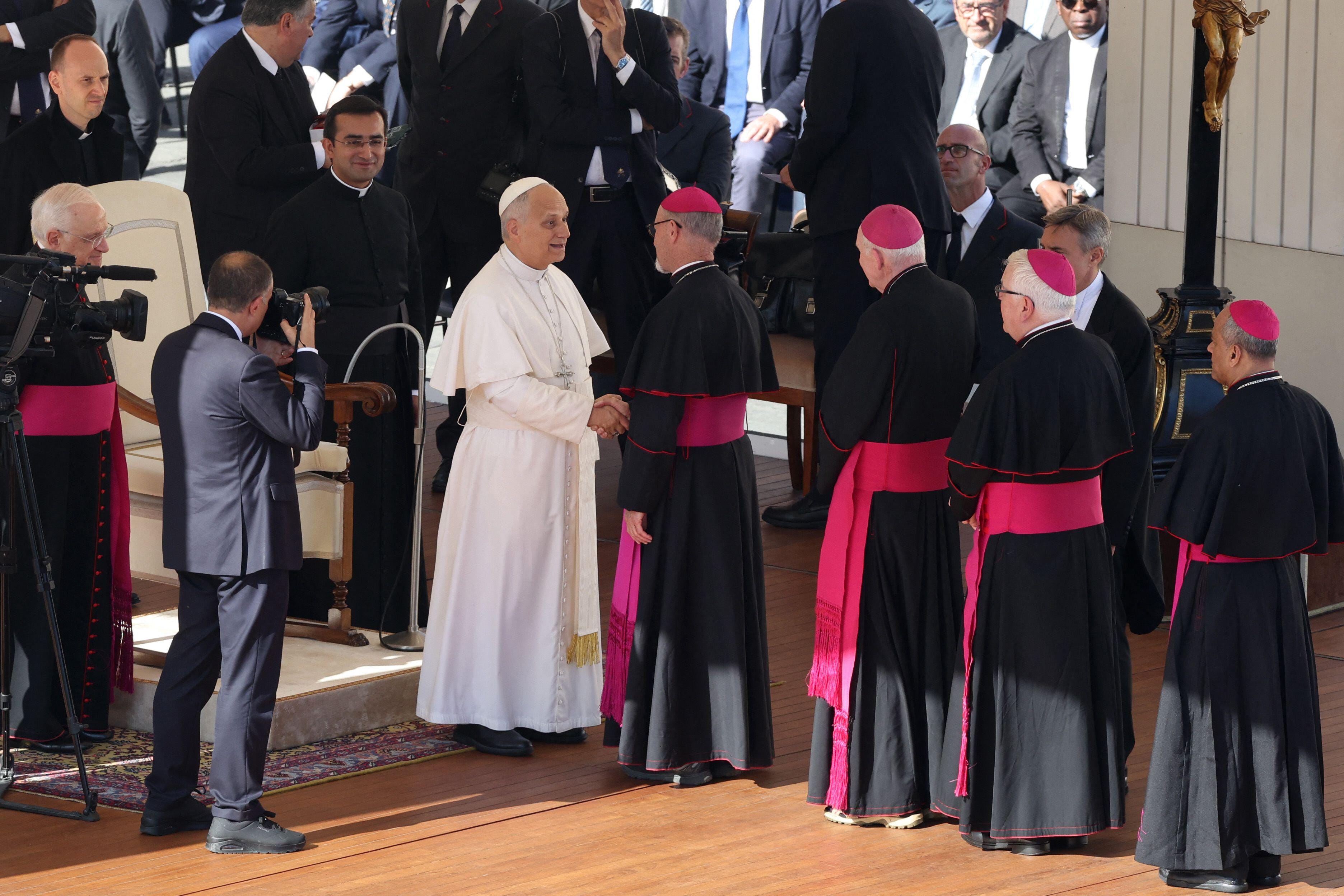
He announced the gathering in a March 19 letter commemorating the 10th anniversary of Pope Francis’ apostolic exhortation Amoris laetitia, saying the meeting should take place “in light of Amoris laetitia and taking into account what is currently being done in the local Churches.”
The letter does not specify whether the October meeting will be a Synod of Bishops or instead a special gathering. It mentions only the presidents of bishops’ conferences, so for now it remains unclear whether other participants, such as cardinals, theologians, or lay people, will be included, as happened in several major synodal assemblies and Vatican meetings during Francis’ pontificate.
Amoris laetitia was the result of the two-year Synod on the Family, celebrated between 2014 and 2015. While it deals with a range of issues on spiritual accompaniment and evangelization of families, it sparked significant controversy for its discussion of the possible reception of communion by divorced and civilly remarried individuals or couples in irregular situations.
The apostolic exhortation says in paragraph 305 that “a pastor cannot feel that it is enough simply to apply moral laws to those living in ‘irregular’ situations, as if they were stones to throw at people’s lives.”
The paragraph adds that “because of forms of conditioning and mitigating factors, it is possible that in an objective situation of sin – which may not be subjectively culpable, or fully such – a person can be living in God’s grace, can love and can also grow in the life of grace and charity, while receiving the Church’s help to this end.”
A footnote to this paragraph says that such help “can include the help of the sacraments” and adds that the Eucharist “is not a prize for the perfect, but a powerful medicine and nourishment for the weak.”
Later, the bishops of the Buenos Aires region in Argentina published an instruction for their priests in which they called for mutual discernment of a couple in an irregular union on whether they can receive communion and go to confession if “it is acknowledged, in a concrete case, that there are limitations that diminish responsibility and culpability.”
“Amoris laetitia opens the door to access to the sacraments of reconciliation and the Eucharist,” the bishops of Buenos Aires said.
Pope Francis later said that there was no alternative interpretation of the document, and the Dicastery for the Doctrine of the Faith said in a 2023 response to a dubia sent by Cardinal Dominik Duka OP, that the pope had included the Buenos Aires bishops’ instruction in the Acta Apostolicae Sedis and it therefore was considered “authentic Magisterium.”
But while most of the discussion surrounding Amoris laetitiae focused on reception of communion by people in irregular unions, Pope Leo’s letter doesn’t mention the subject at all.
The pope called Amoris laetitia “a luminous message of hope regarding conjugal love and family life, which was the fruit of three years of synodal discernment enriched by the Jubilee Year of Mercy,” and said that both Saint John Paul II’s 1981 apostolic exhortation Familiaris consortio and Amoris laetitia had “strengthened the Church’s doctrinal and pastoral commitment to the service of young people, married couples and families.”
The letter mentions a number of “valuable teachings that we must continue to examine today” in Amoris laetitia:
“The biblical hope of God’s loving and merciful presence, which allows us to live ‘love stories’ even when navigating ‘family crises’ (AL 8); the invitation to adopt ‘the gaze of Jesus’ (AL 60) and tirelessly to encourage ‘the growth, strengthening and deepening of conjugal and family love’ (AL 89); the call to appreciate that love in marriage ‘always gives life’ (AL 165).”
“Pope Francis affirmed the need ‘for new pastoral methods’ (AL 199) and for a better education of children (cf. AL chap. VII), while inviting the Church to accompany, discern and integrate fragility (cf. AL chap. VIII), overcoming a reductive conception of the norm, and to promote ‘the spirituality that unfolds in family life’ (AL 313),” it adds.
The letter also highlights Amoris laetitia’s recognition of human fragility.
“We must learn to evoke the beauty of the vocation to marriage precisely in the recognition of fragility, so as to reawaken ‘trust in God’s grace’ (AL 36) and the Christian desire for holiness.”
Leo’s letter does not explicitly mention the possibility of access to the sacraments by those in irregular unions.
The pope says that pastoral attention to families is even more important now than when Amoris laetitia was written because the current era is one “marked by rapid changes.”
“There are, in fact, places and circumstances in which the Church ‘can become the salt of the earth’ only through the lay faithful and, in particular, through families. For this reason, the Church’s commitment in this area must be renewed and deepened, so that those whom the Lord calls to marriage and family life can, in Christ, fully live out their conjugal love, and that young people may feel attracted, within the Church, to the beauty of the vocation to marriage,” the letter concludes.
Maybe this is what should have happened instead of the fiasco that ensued initially.
This is interesting. It would be pretty odd for His Holiness to tell tribunals not to fall into the false mercy of granting annulments too easily, only to then double down on his predecessor's efforts to make the indissolubility of marriage irrelevant.