A demonstrator threw a Molotov cocktail at participants in a pro-life march in Lisbon, Portugal on Saturday.
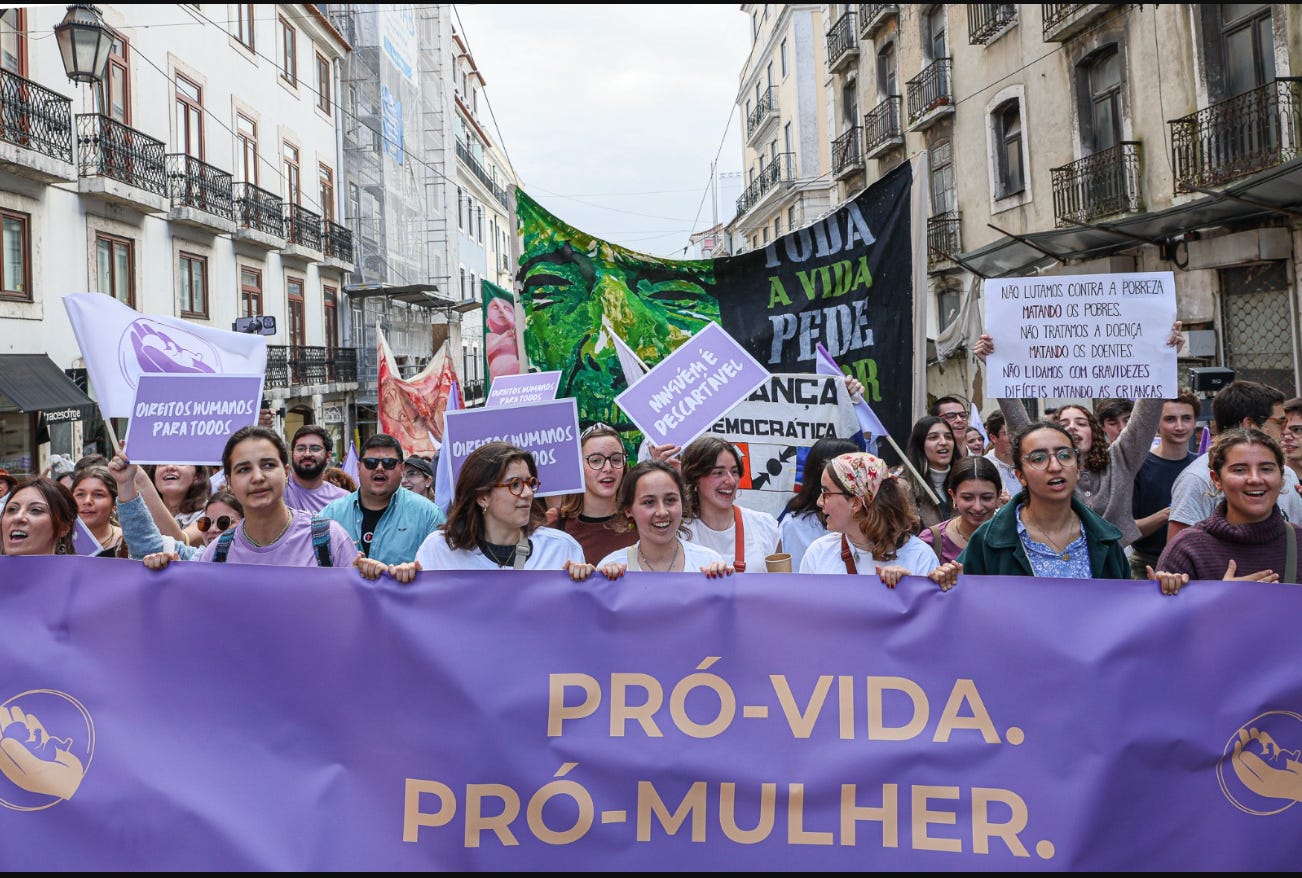
The device failed to ignite when it landed among the crowd, but caused widespread fear and shock among the men, women and children who had just finished listening to speeches outside the nation’s Parliament building, as the event drew to an end.
There are no reported injuries from the attack.
The suspect was spotted by pro-life demonstrators and immobilized before on-duty officers who were present at the scene intervened and placed him under arrest. He was taken to the hospital for examination, and remains in custody, according to a police statement
Police told organizers of the March for Life that the suspect, 39, belongs to a group of activists who are known to have caused similar disturbances at other demonstrations in the past.
This is the first time a pro-life event in Portugal has been met with violence. No motive was presented for the failed attack.
The coordinator of the march, Nuno Marques Afonso, said Saturday that such behavior was “unacceptable in a democratic society,” highlighting the number of families, including many children, who might have been badly hurt had the bottle exploded.
In a statement sent to The Pillar, the Patriarch of Lisbon, Archbishop Rui Rui Valério decried the violence.
“It was with concern that the Patriarch of Lisbon received news of an act of violence that took place during the March for Life, in a context which included families and Rui Valério’s statement said.
“Such occurrences are gravely unacceptable. Violence is never the way. It does not build up, it does not dignify, it does not serve the truth. And it is all the more painful when it threatens the more fragile among us, especially children, who should always be a sign of hope, and not exposed to fear.”
“The March for Life is born precisely from the belief that all human life is an inviolable gift, from conception to natural death. Therefore, any act of violence, especially against a peaceful demonstration, must be firmly condemned,” the archbishop added.
Valério had previously recorded a video calling on people to participate in the March for Life, and in Saturday’s statement reaffirmed his closeness “to all who participated in the initiative, in particular families and children who may have felt afraid or unsafe. The Church is close to all, and accompanies and prays for each one of you. No act of violence can erase the good that has been done, the witness given and the hope sown” by the pro-life movement.
Portugal’s March 21 March for Life took place in several cities around the country, with the main event in Lisbon drawing roughly 4,000 participants, who carried banners calling for respect for life in the womb and denouncing euthanasia.
Abortion is legal in Portugal on demand during the first 10 weeks of pregnancy, and until later in cases of rape, incest, risk to the health of the mother or fetal disability.
A law legalizing euthanasia was approved in 2023, under a socialist government with a majority left-wing parliament, but has still not been regulated, meaning it has not gone into effect.
The Constitutional Court meanwhile judged there to be flaws in at least six of the law’s provisions, meaning it would have to be re-drafted before regulation, but the latest parliamentary elections in Portugal resulted in a sharp turn to the right, with the center-right Social Democrats forming government in coalition with the Christian Democrats, and the hard-right Chega party coming second, ahead of the Socialist Party.
The current government has made it clear that it has no intention of revisiting the euthanasia bill, giving it little chance of becoming operative law in the near future.


