Priest arrested in Mozambique bishop killing; Catholics skeptical
Reports seemingly conflict about the killing of Bishop Osório Citara Afonso
Investigators in Mozambique have arrested three people in connection to the June 6 killing of Bishop Osório Citara Afonso, leader of the Quelimane diocese.
One of the arrested suspects is a Catholic priest. The others are a guard and a gardener who worked in the bishop’s residence.
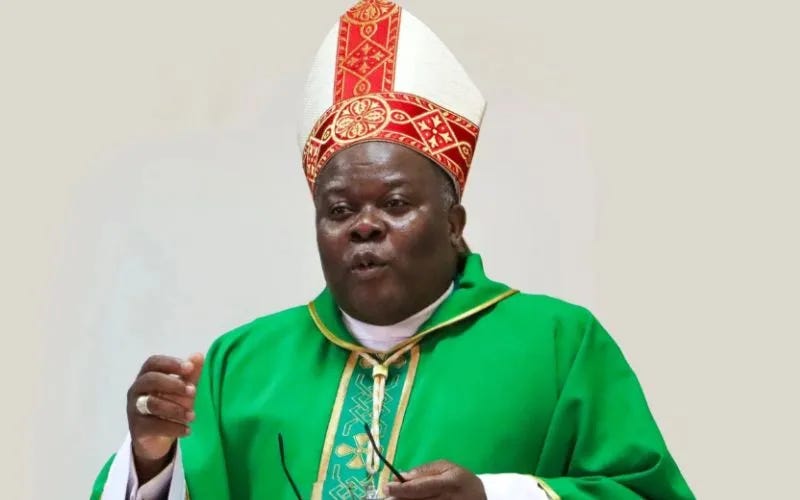
The priest is incardinated in the Quelimane diocese, according to local media reports, but has not been named in the press statement issued by SERNIC, the country’s national investigative force.
The prospect that the killing was perpetrated by insiders at the bishop’s residence is a new turn in the case. Statements made on the day of Afonso’s killing detailed that suspects had reportedly scaled the walls of the building to disable the security system — which would not appear necessary if the culprits had easy access to the bishops’ residence.
Initial statements also said that Afonso had been shot in the chest with a modernized Kalashnikov (AK-M), an assault rifle widely used by government forces in the country.
In light of those reports, the arrest of the priest has been met with skepticism by local Catholics, according to a source close to the diocese, who spoke on condition of anonymity for the sake of safety.
The source — employed by a charity which works closely ecclesial leaders in Mozambique — said there is strong local suspicion that if the arrested priest is involved, a plot to kill the bishop might have involved a larger group of collaborators.
“The bishop had been restructuring the diocese, and that may have rubbed some people the wrong way, but to murder him? And in this way? According to initial reports, this was clearly the work of a death squad,” the source told The Pillar, referring to groups of well-organized criminals who have carried out dozens of assassinations in Mozambique, including of opposition politicians.
According to the source, there is widespread local perception that if the initial reports about the crime are true, “this murder could not have taken place, in this way, without the involvement of somebody at a government level.”
“Even if the order didn’t come from the top, somebody at the local level would have been involved. And this points to the increasing fragmentation of the state in Mozambique, which has led to a spike in criminality.”
“The murder of a bishop was very bad press for the government. There may well have been pressure to solve the case quickly, deflecting attention away from the state,” the source added.
The Church in Mozambique has been critical of the country’s government in recent years, especially after 2024 elections saw widespread claims of ballot-stuffing. Crackdowns on political protests killed dozens.
Church leaders have also complained about the government’s inability to solve the Jihadist insurgency in Cabo Delgado, in the country’s northern region.
In 2021 Bishop Fernando Luiz Lisboa, then serving in the country, was moved back to his native Brazil following threats to his life. He later admitted that the threats had come from government figures.
“Arresting a priest is a perfect way of deflecting the negative attention back at the Church,” said the charity worker.
Afraid to speak
The Pillar also spoke with a former lay missionary who spent years in Mozambique and remains in contact with friends there.
Requesting anonymity for safety, he told The Pillar: “Mozambicans are used to keeping quiet, because of the persecution they suffered during the civil war. It is difficult to get them to speak openly on the phone or in text messages. For the past two years or so, they have been afraid that their communications are being monitored.”
The local Catholic bishops have been guarded in their statements about the murder of Osório Citara Afonso, but have described it as “an attempt to silence the voice of faith, justice and peace,” in a June 8 pastoral note
The bishops called for a swift and thorough investigation, saying that failure to do so on the part of the government “would amount to complicity in violence and a further assault on the nation’s moral conscience.”
Osório’s funeral was being held Friday in Quelimane.
Pope Leo has named the bishop of Upper Molócuè as apostolic administrator of Quelimane.
Bishop António Manuel Bogaio Constantino, of Caia, was named apostolic administrator of Beira, a diocese that was also being overseen by Bishop Osório at the time of his death.

