
Pope Leo XIV appointed Msgr. Mario León Dorado, OMI as coadjutor Archbishop of Rabat on Sept. 12, following sexual misconduct allegations against the current archbishop, Cardinal Cristóbal López Romero, SDB.
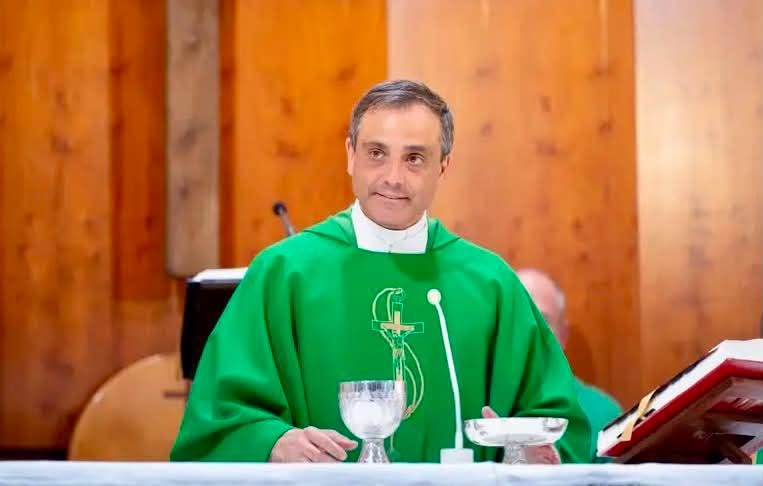
López Romero announced in July that he had temporarily stepped down while a Vatican investigation against him was underway and that León - already serving as the apostolic prefect of Western Sahara - would serve as apostolic administrator sede plena of the Archdiocese of Rabat in August.
In a Sept. 12 letter to the clergy and members of the Archdiocese of Rabat, López Romero announced León Dorado’s appointment by Pope Leo XIV as coadjutor. López Romero added that he had made a request for the appointment of a coadjutor to both Pope Francis and Leo.
“At the end of 2024 I had already raised the appointment of a coadjutor bishop with Pope Francis, who had accepted the idea. Following his death, I repeated the same request to Pope Leo in October 2025, who has thus [now] welcomed and responded to the request I had presented to him,” he said.
“Let us give thanks to the Lord for this gift given to us in the person of Father Mario… whom I thank for having accepted this mission; I know how attached he is to the Sahara, where he has served for more than 20 years, nearly his entire priestly life,” López Romero added.
While López Romero did not mention the allegations against him in the letter, he said that he still waited “to be heard by the Dicastery for the Evangelization of Peoples, on which our diocese depends, so that I may explain myself in the investigation concerning me, which is the reason I had stepped back from diocesan life.”
In a subsequent letter the same day, León Dorado said he received the news “with joy, but also with “fear and trembling”... I accept it with confidence in the Lord who has called me and with a sense of humility.”
“If I have accepted this appointment, it is because I firmly believe that it is God and his Church who are asking this service and this ministry of me,” he added.
León Dorado was born in Madrid in 1974. He took his perpetual vows as a member of the Missionary Oblates of Mary in 1996 and was ordained a priest for the same congregation in 2001. He started working as a priest in the Spanish Diocese of Jaén, and has served as a missionary in Western Sahara since 2004.
In 2009, he became the administrator of the apostolic prefecture of Western Sahara. In 2013, Pope Francis appointed him as apostolic prefect but he was not ordained a bishop. The territory has around 350 Catholics spread throughout 165,000 miles, served by four priests in two parishes.
In an article published in the magazine of the Spanish bishops’ conference commission for migrants in Sept. 2022, León Dorado reflected on friendship with Muslims, saying that “It is hard for someone who cares about us — who is our friend — to later look down on who we are: Christians, people of faith, followers of the Messiah… even if they do not understand that we believe that this Jesus-Messiah is, for us, the Son of the Most High God.”
In the article, while praising interreligious dialogue, León Dorado criticized the structure of many interreligious meetings.
“When large-scale ‘interfaith’ gatherings are organized, I am… the most skeptical of the attendees… I’m referring to meetings of ‘experts’ organized to discuss tolerance, which are often tools of the current political agenda,” he said.
“The imams I know see no need for dialogue because they have received divine revelation. On the other hand, ordinary people see no need to theorize, nor do they feel capable of doing so. Another ‘handicap’ is the way the Quran or religion is learned—by ‘memorization’—so not even a comma can be changed; so, what are we going to discuss?”
In the article he also spoke of reciprocity in religious freedom, saying that “Christian leaders in Muslim countries are calling for religious freedom and freedom of conscience. Dialogue seems to require that both parties listen to one another as equals. At present, this is neither evident nor a reality in our Muslim societies. How should we respond? Should I renounce my evangelical principles and values simply because this reciprocity does not exist?”
“Learning to live on a small scale, with simplicity and humility. Living a life of selflessness. A Mass with just a few parishioners—and often just me. Catechesis for a single catechumen. And it takes effort: traveling 330 miles for a catechumen, to find a Christian community of five parishioners, to visit one or two Muslim friends. Is it worth it?... Absolutely!” he added.
Shortly after his appointment as apostolic administrator earlier this summer, León Dorado announced on Aug. 4 an apostolic visitation to the Archdiocese of Rabat, just two days after his appointment as apostolic administrator.
“The Dicastery for the Evangelization of Peoples has decided to conduct an Apostolic Visitation of the diocese beginning this Wednesday, August 5, in order to take the time to investigate the allegations made against Archbishop Cristóbal, our archbishop, as well as to assess the proper management of the diocese in economic, pastoral, and liturgical matters.”
The visitation was conducted by Msgr. Hyacinthe Dione and Fr. Augustin Chako-Yodi, officials of the Dicastery for Evangelization.
“Members of the bishop’s advisory councils, as well as priests, religious, and laypeople involved in the management of the diocese, may be interviewed. Please make yourself available if you are called upon by the Visitors. However, you may also take the initiative to be heard, in which case we will inform them,” León Dorado added in his statement.
—
While Cardinal López Romero has said he made requests for a coadjutor prior to the publication of allegations against him earlier this summer, León Dorado’s appointment as administrator and now coadjutor was timed to coincide with the Holy See’s investigation of allegations of sexual misconduct against the cardinal.
Five women have made allegations about López Romero’s conduct during his tenure in the archdiocese, including accusations that three women experienced inappropriate behavior from the cardinal during the sacrament of penance.
The complaints against López Romero were first filed before the summer in the Moroccan nunciature by a retired diocesan collaborator and another woman offering written testimony, AFP has reported.
The woman reportedly accused the cardinal of “physical gestures” such as “particularly insisting and prolonged hugs” and “something similar to an attempt at kissing her,” from which the woman “escaped.”
AFP said that according to diocesan sources, three other women had also experienced “similar episodes” during confession.
Using the sacrament of penance to incite a penitent into sins against the sixth commandment is known canonically as solicitation. As a canonical crime, it is reserved to the Dicastery for the Doctrine of the Faith.
The Spanish outlet Religión Digital reported that sources at the DDF said they were unaware of any investigation involving the cardinal currently before the dicastery. However, it is possible that the investigation has not arrived at the dicastery yet, since it is still in its preliminary stages as the first stage of the apostolic visitation was conducted five weeks ago.
If found guilty, López Romero could lose his ecclesiastical offices, be suspended from exercising his priestly ministry, or be laicized.
López Romero told AFP on July 6 that he had “answered to his ecclesiastical superiors,” and that he had not “committed any acts of sexual aggression, violence or harassment” and would “fully cooperate with the investigation.”
Spanish publication La Razón said that López Romero is in Spain while he awaits the results of the investigation.
López Romero, 74, was born in Almería, Spain and ordained a priest for the Salesian order in 1979, serving as a missionary and provincial superior for decades in Latin America.
He was a missionary in Morocco between 2003 and 2010, and Salesian provincial in Bolivia from 2011 to 2014. He briefly returned to Spain before Pope Francis appointed him to lead the Rabat archdiocese in Morocco.
His 2019 elevation as cardinal surprised Church watchers, given that the Archdiocese of Rabat serves just 20,000 Catholics in 18 parishes, and that Morocco had not previously had a cardinal.
The cardinal was known as a strong advocate of the synod on synodality. Days after the synod had ended, he said that Catholics disagreeing with the synod’s decisions are “morally obligated” to support it, and that synodality is a “prophetic sign that may illuminate the world, because it’s not just about bringing democracy to the Church… but goes much further.”
As then-president of the Northern Africa bishops’ conference, López Romero defended Fiducia supplicans, publishing a short essay called “Is homophobia the issue?”
In an interview during the general congregations before last year’s conclave, López Romero also said that “respecting the norms of canon law” was a “peripheral” issue in the life of the Church. “It’s important, but it’s always in the service of the mission [of the Church],” he added.
Hours after the investigation against the cardinal was made public, Fr. Alfons Gea, a Catalonian priest claiming to be the cardinal’s cousin, published a column entitled “My Cousin Cristóbal, the cardinal with feet of clay” in which he seemed to suggest that there was at least some truth to claims of sexual misconduct by the cardinal.
“Nor him, nor me, nor the family, will try to hide from the truth. It is what it is. He’s not the first nor the last to fall short of the sixth commandment,” Gea wrote.
Gea argued that the allegations against the cardinal “should spark a debate about celibacy.”
“Sacrifice, self-giving, austerity, living the Gospel naturally, being a neighbor and a voice for the weak—all of this is going to be blown apart over a romantic entanglement,” he said.
A day later, Gea published a second column which appeared to backtrack some of his comments.
“What were merely my own biases or interpretations regarding the ‘scandal’ have been used by some media outlets as a preliminary accusation. I must say that what was intended to be an apology… has turned into a conviction without a trial,” he said.
At the risk of revealing my poor geography skills, I’d suggest an indication of what/where “Rabat” is maybe within first two paragraphs for other provincials like me. Probably the first paragraph.