Religious liberty case involves suppressed canonical association
In a complicated case, a suppressed canonical association aims to build a Marian grotto on property used by a Kentucky parish
The attorneys general of 20 states are asking the U.S. Supreme Court to hear a case involving a suppressed public association of the faithful in Kentucky caught up in a zoning dispute over the construction of a proposed Marian grotto.
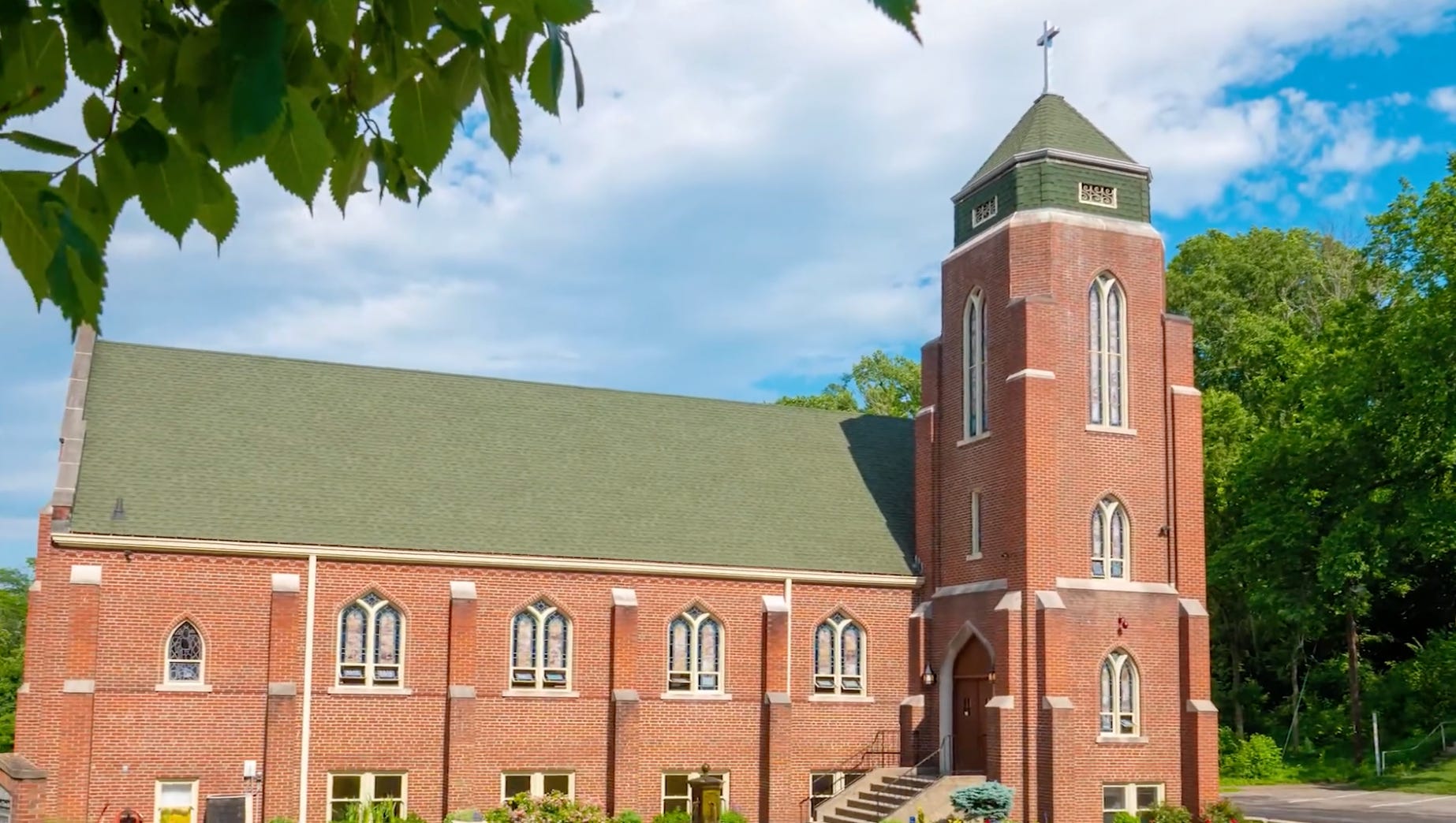
The Missionaries of St. John the Baptist are seeking to build a Marian grotto on the grounds of Our Lady of Lourdes Parish in the Diocese of Covington, Kentucky.
The Missionaries ran the parish before the group was canonically suppressed two years ago. Now, as a civil corporation, the group stills own the parish church and the land it sits on, and has a licensing agreement allowing the parish to use the church building.
But the proposal for a new grotto failed to adhere to zoning ordinances. And while the local board of adjustments granted an initial variance, that decision is now the subject of a court challenge — in a case that could see its way to the Supreme Court.
The unusual case includes a number of legal questions, one of which involves the Religious Land Use and Institutionalized Persons Act, which says that government land use ordinances may not impose a “substantial burden” on the free exercise of religion, unless there is a compelling government interest in doing so, and it is done in the least restrictive way possible.
The attorney general of Kentucky says the case could have significant nationwide implications for religious freedom.
Meanwhile, the local Catholic diocese says it is not involved in the lawsuit and does not have a comment on it.
—
At the center of the case is a group called the Missionaries of St. John the Baptist, erected in 2019 as a public association of the faithful in the Covington diocese, with the goal of ministering to Catholics drawn to the Traditional Latin Mass. The Missionaries were entrusted with the care of Our Lady of Lourdes, a personal parish in Park Hills, Kentucky where the Latin Mass is celebrated.
The Missionaries intended to eventually be established as a religious institute dedicated to the celebration of the pre-conciliar liturgy. But that goal was never realized, because Bishop John Iffert of Covington suppressed the Missionaries of St. John the Baptist in 2024.
In announcing the suppression, Iffert cited Pope Francis’ 2021 apostolic letter Traditionis custodes, which severely restricted the use of the preconciliar liturgy, as well as “consistent disparagement of the current form of the Roman Rite by members of the association.”
The suppression came months after Iffert had removed most of the faculties of the only two priest members of the Missionaries.
After being suppressed as a public association of the faithful, the Missionaries of St. John the Baptist was established as a non-profit civil corporation.
Though the group no longer administers Our Lady of Lourdes Parish, the Missionaries continue to own the church building and surrounding property. The parish, which is part of the Diocese of Covington, has a license agreement with the Missionaries to use the church building.
—
In 2021, when the Missionaries were still a canonically recognized public association of the faithful, they proposed plans to build a 16x39-foot grotto on the church property, consisting of a shrine, plaza, walking path, and retaining wall.
The proposal would require a conditional use permit and variance. Local ordinances require church buildings to be located on an “arterial street,” a major public street designed for significant traffic. However, the proposed location of the grotto was not along the correct type of street.
Some residents of the neighborhood voiced concerns that the new construction might affect local traffic and parking. But after holding a public hearing on the matter, the Park Hills Board of Adjustment granted the conditional use permit and variance for the project in April 2021.
A local couple, who lives across the street from the proposed grotto, challenged the board’s decision in a circuit court, which sided with the Missionaries and the board of adjustment.
The circuit court ruling was appealed. In 2023, the Kentucky Court of Appeals reversed the decision, finding that the board of adjustment had exceeded its statutory authority in approving the project.
In its ruling, the appeals court rejected the claim that the zoning ordinance imposed a substantial burden on the free exercise of religion.
“The application of the ordinance to prohibit construction of the grotto may make practice of religion somewhat more difficult for the church’s congregation or the adherents of the Catholic faith broadly, but the Zoning Ordinance is not inherently inconsistent with their religious beliefs,” the ruling said.
That ruling was also appealed, and the Kentucky Supreme Court heard the case, issuing a December 2025 ruling agreeing with the appeals court’s decision.
On the religious freedom question, the state supreme court said the local zoning ordinance was not unfairly singling out religious groups with its “arterial street” requirement, because the same requirement also applies to institutions of higher education, nursing homes, police stations, and fire stations.
However, attorneys for the Missionaries argue that numerous other nonreligious facilities do not have to meet the “arterial street” requirement, including parks, golf courses, rec centers, country clubs and libraries.
Supporters of the Missionaries have asked the U.S. Supreme Court to weigh in on the case. Among these supporters is a coalition of 20 state attorneys general, led by Kentucky Attorney General Russell Coleman.
“In this country, we cannot allow a heckler’s veto to trump religious liberty,” Coleman said in an April 28 statement.
“We’re asking the U.S. Supreme Court to provide nationwide clarity and stand with people of faith who simply want to worship without unlawful government interference.”
—
The Diocese of Covington, meanwhile, told The Pillar that it does not have a comment on the court case.
A spokesperson for the diocese emphasized that the Missionaries of St. John the Baptist were canonically suppressed as a public association of the faithful, and that the civilly incorporated entity bearing that name is “separate and distinct from the Catholic Church and the Diocese of Covington and is not part of any structures of the Catholic Church.”
“With respect to the grotto lawsuit, the Corporation [the Missionaries of St. John the Baptist] is acting independently in the exercise of its own religious rights as a private entity,” the spokesperson said. “The Diocese of Covington, Our Lady of Lourdes Parish, and the Catholic Church are not parties to the lawsuit.”


I find this really interesting; thank you for laying out the legal case and history so clearly. I see that the diocese didn't have a comment on the case, but did the Missionaries want to comment?