Rome diocese to hold collection for Venezuela earthquake victims
Caritas has become one of the primary vehicles for international aid into the country.
Cardinal Baldassare Reina, vicar of the Diocese of Rome, has announced that the pope’s diocese will join an Italian bishops’ conference initiative to hold a national collection for Venezuelan earthquake victims.
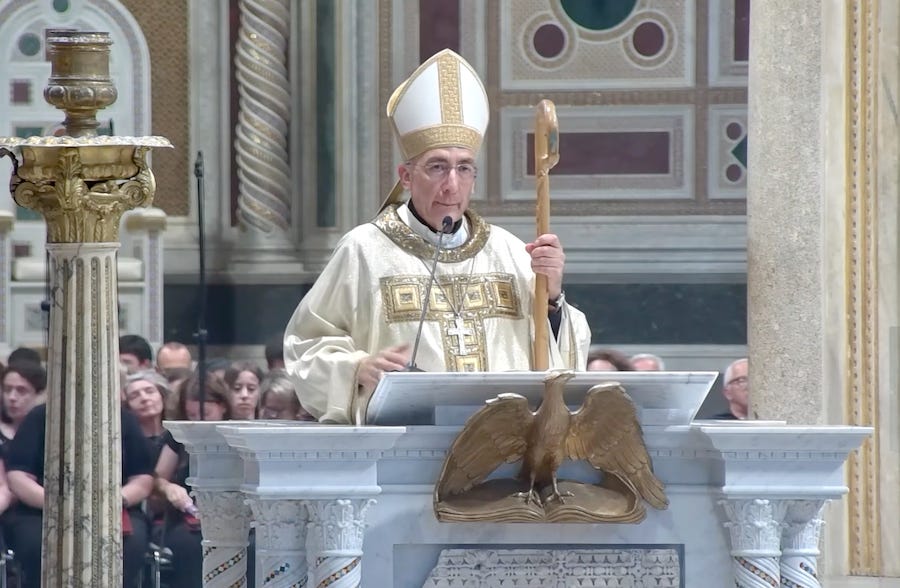
Reina said in a July 13 letter to priests that the Roman Church “wishes to join in this gesture of communion and charity, so that Christian communities may tangibly demonstrate their solidarity with their brothers and sisters who have seen their homes destroyed, lost their loved ones, and are forced to live in conditions of extreme precariousness.”
The earthquakes have so far left 4,734 dead, 16,740 injured, almost 1,000 buildings partially or fully destroyed, and 17,907 homeless, with numbers being updated almost daily. Diplomatic and Church sources told The Pillar they fear the final death toll could be around 20,000 to 30,000, or even higher, with nearly 30,000 people still missing.
Reina’s letter came after the Italian bishops’ conference announced July 9 that a nationwide collection would be held at Sunday Masses across Italy July 26.
In the announcement, Cardinal Matteo Zuppi, president of the Italian bishops’ conference said the collection was “a concrete way to show solidarity with those who have lost everything… It will also be an opportunity to express, through communal prayer, our solidarity with those affected by the tragedy.”
Reina added in his letter that he wanted Roman priests to “promote the collection of donations during the Masses on Sunday, July 26, raising awareness among the faithful about the importance of this sign of ecclesial solidarity and accompanying it with a prayer intention for the victims, the wounded, the displaced, and all those involved in relief efforts.”
“The Vicariate [of Rome] will then be responsible for forwarding the entire amount to Caritas Italiana, which, in close collaboration with Caritas Venezuela, coordinates humanitarian efforts and ensures that aid reaches the hardest-hit populations, avoiding fragmented initiatives and promoting a unified response from the Italian Church,” the letter said.
Reina also acknowledged in his letter that many parishes in Rome would see lower than usual attendance because many residents had already left the city for their summer holidays.
He said that for this reason, “this coming Fall, the Diocese of Rome, together with the diocesan Caritas, will organize another collection of donations to support one of the local Church’s projects in aid of the Venezuelan communities affected by the earthquake. It will be another opportunity to live out charity as an expression of our faith and of the communion that unites the Churches.”
Concluding the letter, he said: “I thank you for your continued willingness to help and for the dedication with which you will involve your communities in this gesture of brotherhood.”
In his July 9 statement, Zuppi added that in the affected areas, “many homes have been destroyed, damaged, or rendered unsafe. Infrastructure, schools, health facilities, and essential services have also been damaged. In several areas, access to drinking water, sanitation, food, and medical care remains difficult… [the emergency] occurs within a context already marked by economic and social fragility, with widespread humanitarian needs and a public service network that is often under strain.”
Fr. Marco Pagniello, director of Caritas Italy, the humanitarian arm of the Italian bishops’ conference said in a statement that they are in constant communication with Caritas Venezuela “for the humanitarian response and the coordination of aid,” and added that a delegation of Caritas Italy would travel to Venezuela to “strengthen all forms of collaboration that have already been initiated.”
Zuppi’s statement added that Caritas Italy’s efforts focus particularly on the distribution of water, food, hygiene kits, medicines, and health, psychological, and spiritual support.
“The funds raised will be used to address current and future emergencies. And it will be a unified gesture expressing the Italian Church’s embrace of the Venezuelan Church,” the statement added.
—
More than two weeks after twin earthquakes struck Caracas, the country’s capital, and the nearby city of La Guaira, relief efforts have shifted from search-and-rescue to recovery and care for those affected, with Caritas Venezuela at the helm of much of that response.
In a July 7 report, its first accounting of the humanitarian response, Caritas Venezuela said it had already distributed 61% of the aid it has received, with the remainder still in stock.
Water made up the largest share of the distribution, at 4,031 tons, followed by 3,247 tons of food. The organization also distributed 73,356 kits containing medical supplies and medicines, according to the report.
Caritas has deployed 3,360 volunteers throughout the affected areas, including members of Caritas Spain, Caritas Germany, and Caritas Puerto Rico.
Venezuela has been largely cut off from the international banking system since 2003, when the government imposed currency exchange controls, a restriction that complicates donations from abroad. Meanwhile, official state institutions are widely distrusted amid rampant corruption and even the Venezuelan Red Cross has been intervened by the Venezuelan regime and has been embroiled in corruption scandals.
That has left Caritas, which holds several international bank accounts and is broadly regarded as a reputable, transparent institution in Venezuela, to serve as one of the primary channels for international aid.
And after two weeks of rescue operations, most international specialized teams have left the country as hopes of finding survivors in the rubble have dwindled to almost nothing.
Several rescue teams complained of delays in obtaining authorization to enter the country or begin operations, harassment by local authorities, and the denial of entry to medical teams—particularly during the first days after the earthquake, widely regarded as the most critical period for finding survivors.
Local media reported that several people have taken to renting cranes and heavy machinery – at rates ranging from $3,000 a day to $5,000 a week, depending on the equipment – to clear rubble from collapsed buildings themselves and recover the bodies of loved ones, saying state-led efforts have been slow and insufficient.
