Save our Catholic colleges
Having spent a lifetime in politics and higher education, too many Catholics value the former more than the latter.
It is the end of the school year at most colleges and universities. Having spent many, many years as a student and as a professor, I know that this is an exciting time on campus. But not everywhere.
We already know the doors of at least eight schools are closing permanently, while six others are merging. This continues a trend which has already seen more than 130 private non-profit institutions closed or merged between 2020 and 2025.
This course is certain to continue since the number of Americans graduating from high school is expected to decrease 13% in the next fifteen years according to one analysis. Huron Consulting Group projects that this plunge puts over 25% of private non-profit four-year colleges and universities at risk of closing or merging in the next ten years. Nearly one-third of these schools already posted deficits in 2024.
This probably brings a slight bit of glee to some, who may think college is a waste, or perhaps don’t like what has been happening on some campuses in recent years. While I may understand these feelings, they may wish to reconsider for a number of reasons.
First, the importance of a college degree is not about to go away. We are a society of credentials. And for many good reasons — I would assume many if not most readers here have a college degree and are not shy about having achieved it. And few indeed are the people who would actually sit their children down and tell them “whatever you do, don’t go to college.”
Second, while they might reasonably attract the lion’s share of the attention and criticism, it is not the Harvards and Penns which are in danger. They are here to stay. These elite schools will never suffer from a dearth of applicants and they have huge endowments.
The most vulnerable schools are the ones which faithful Catholics should treasure most, the ones which provide an exemplary Catholic education through their curriculum, faculty, and student life.
And these schools do exist — while every list has its critics, the Newman Guide is often considered the authoritative source for which schools these are.
It is exactly these schools, however, that face even greater financial pressures than similar institutions.
One reason is their commitment to educating students from families who struggle to pay bills. Added to that, most of these schools have small student bodies owing to a commitment to seminar classes and classical education. John M. Grondelski – former associate academic dean of the School of Theology at Seton Hall University – addressed this recently when he stated, “I really doubt any Catholic college or university today with fewer than 2,250-2,500 students will survive; the sheer costs of running a college just impose that.”
But some question the extent to which Catholics really need these institutions, pointing instead to faithful and vibrant Newman Centers on some elite campuses or to Focus missionaries who do often-heroic evangelization on college campuses. These Catholic lifelines might be enough for some, maybe many students, but not for all.
I recently spoke with friends who recounted a call from their daughter soon after they had gotten her settled into her dorm at one the country’s most prestigious universities. She told them that as soon as all the parents were gone, the dorm RA gathered the students to tell them, “now that your parents are gone, you need to know that college is a time to explore your sexuality and the university is going to help you do that ‘safely’.”
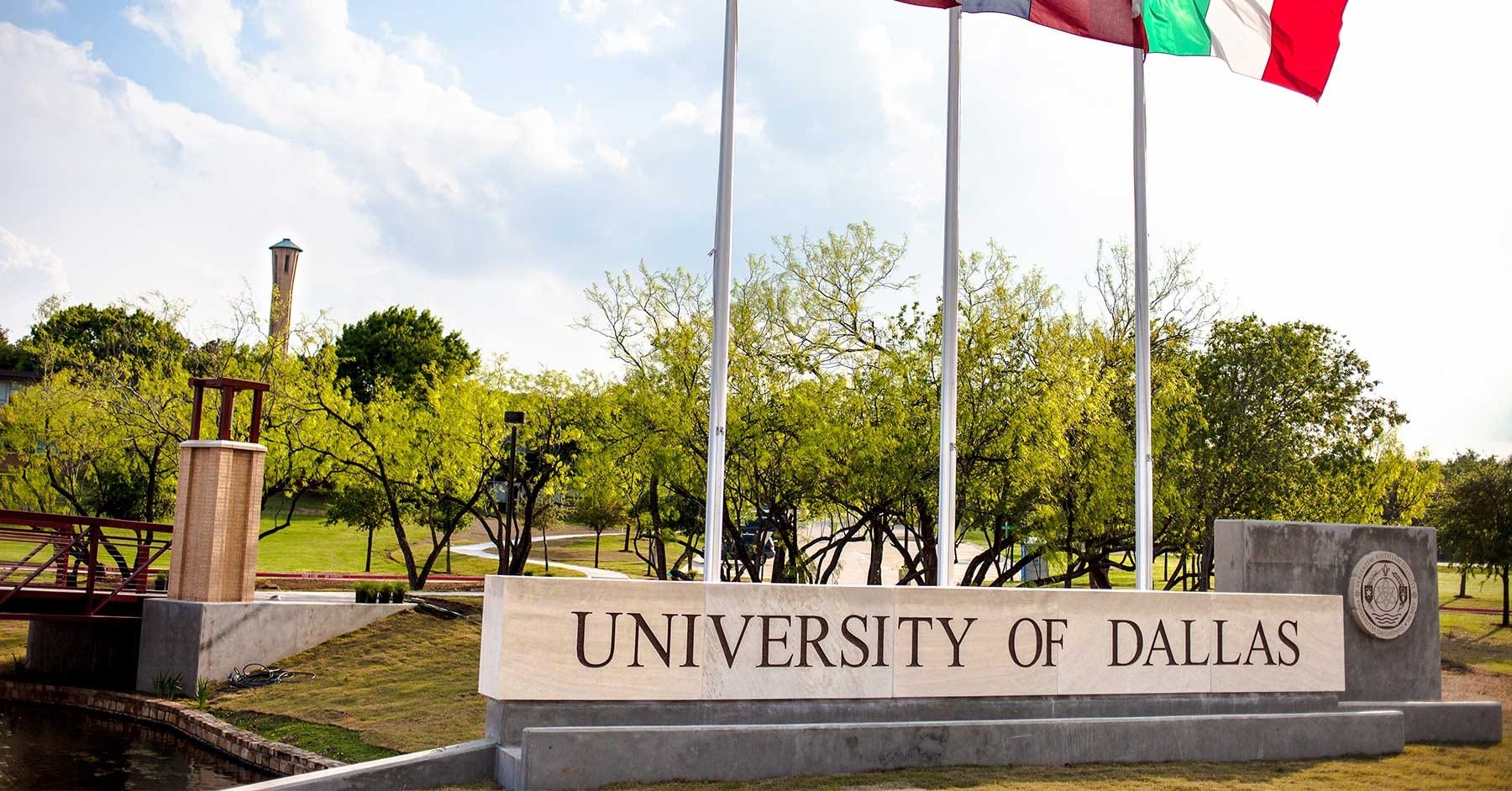
I attended Northwestern, Stanford, and Duke. Though these schools each have problems, they are valuable institutions in many ways and it is possible for a faithful Catholic to find a good path within them. But when I became a fellow at the University of Dallas, I saw up close how a committed Catholic university can shape the lives and characters of students in phenomenal ways.
I witnessed the extraordinary value of such institutions to individuals, to the Church, and to our broader society and culture. Their graduates punch far above their weight in their contributions to the common good of our country because they can think, write, and speak much better than most in their generation. That is why they are serving as members of Congress, ambassadors, NASA flight surgeons, and in other high level roles throughout the private and public sectors, along with numerous Church vocations.
Maybe these schools are not for every Catholic student – and in any event, their capacity falls far short right now –but they are largely underappreciated treasures of the Catholic Church which we all benefit from.
And which we all need to support.
Having spent most of my life in the worlds of politics and higher education – both of which rely on fundraising – I get the sense that many Catholics value the former more than the latter. There certainly seems to be more (and ever more) Catholic money sloshing around in politics.
Don’t get me wrong. I was a politician and I know good political causes usually require money to succeed. But most of us have seen how politicians and political organizations appeal to Catholics – as they do to others – by promising that a contribution will enable the recipient to thwart the triumph of a grave evil. I very rarely see such promises fulfilled. But I have seen the intellectual and moral lives of Catholic students blossom and their faith ignite from their experiences at faithful Catholic colleges.
There is a common misconception, especially among some who have carved out successful careers in business and finance, that if these schools just tightened their belts they would not have financial problems. This just is simply not the case. Most of these schools have made cuts as times have gotten tougher. These certainly are not bloated, gold-plated institutions.
Others believe that if these institutions were more entrepreneurial they would not be struggling. But there is only so much money-saving innovation to be had in a real education. It’s a labor-intensive endeavor.
Finally, there is a growing movement questioning whether a traditional college degree is the right path for every eighteen-year-old. I agree that there are better choices for some young people — a growing number of Catholic trade schools present students with career paths other than those offered by traditional colleges, often very stable and highly lucrative ones. This is good, and these schools need support also.
So as graduation bells ring, think about these faithful Catholic colleges and universities. Perhaps the next time you get a text or a phone call asking you to give $5 – or $5 million – to a politician or political organization who is going to save the soul of the nation and restore its greatness, consider instead these institutions which are helping young Catholics develop into the men and women who will be at the vanguard of bringing about real change in the culture.
After all, we do need to stop looking to politics to fix our culture and save us. But that’s a subject for a different day.


Proud University of Mary graduate
Forever grateful for the formation I received at UMary
Especially the Catholic Studies degree. I put that degree to use more than I put my Psychology degree to use when I went to get my Master's in School Counseling at a Public University.