Spanish judicial police have arrested two nuns of the excommunicated Poor Clares of Belorado for alleged illegal sales of artwork.
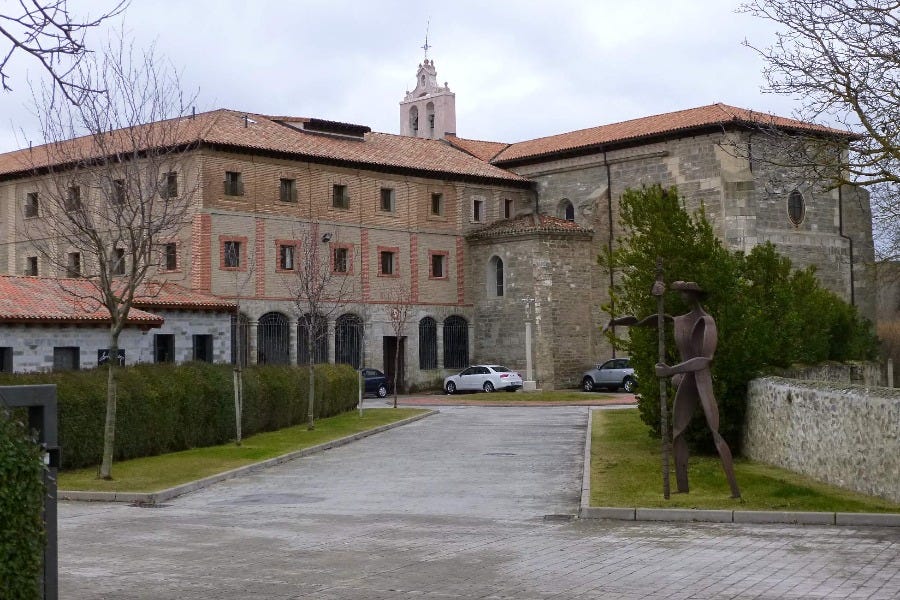
According to local media, agents of the judicial police of Burgos and the Spanish civil guard entered the excommunicated nuns’ convent in the early morning of Nov. 27 with a warrant due to a potential crime of misappropriation of assets classified as historical heritage.
The police arrested former abbess Laura García de Viedma, known as Sr. Isabel, and a woman identified as Sr. Paloma. They were later released while the investigation continues.
The Monastery of St. Clare of Belorado is officially recognized by UNESCO as part of the Camino Francés and routes of northern Spain to Santiago de Compostela. The sale, manipulation, or transfer of assets from the monastery is subject to strict rules and approval from relevant authorities, which the sisters allegedly did not seek.
The arrests are the latest chapter in a dispute that erupted when 10 members of the Poor Clare community signed a 70-page “Catholic Manifesto” in May 2024 describing the post-Vatican II Catholic Church as illegitimate.
A month later, the nuns’ local bishop, Archbishop Mario Iceta of Burgos, sent a decree of excommunication to the nuns who signed the document, after they declined to appear before a Church tribunal.
Five other members of the community, who are reportedly elderly and in delicate health, did not incur excommunication as they did not endorse the schismatic declaration.
Schism is defined by canon law as the “refusal of submission to the Supreme Pontiff or of communion with the members of the Church subject to him.” The penalty attached to the canonical crime of schism is excommunication.
The excommunicated nuns refused to leave the convent of Belorado, arguing they were its rightful owners, prompting the Burgos archdiocese to take legal action.
A Spanish court ordered the excommunicated nuns’ eviction from the monastery in August. The women lost a series of court appeals against the decision. While the authorities have not set a date for their eviction, it is likely to happen in the coming months.
Police appeared at the Belorado convent in the early morning of Nov. 27, but the residents did not grant them access to the property. Officers had to unscrew the outer gate of the property to gain entry to the convent.
At nearly the same time, officers moved to arrest the community’s de facto leader, while another group of agents attempted to remove five nuns from the convent in Orduña and place them under the care of another community of Poor Clares.
But police were unable to take custody of the sisters, for reasons that have not been disclosed.
According to the local authorities, the investigation began after they found works of art that are considered historical patrimony in an online antiques market.
Media reports indicate that police also found several works belonging to the monastery of Belorado in the monastery of Orduña, where the breakaway sisters are now based. The works had been transferred without authorization from the competent authorities.
As well as arresting Sr. Isabel and Sr. Paloma, police also seized an antiques dealer on suspicion of involvement in the deals.
As part of the investigation, the civil guard recovered a 17th-century figurine of St. Anthony of Padua in an antiques store in Madrid that belonged to the monastery.
The monastery in Orduña is part of a separate legal dispute, as the Poor Clares of Belorado never finished paying for the property after they acquired it in 2020.
The breakaway nuns also face another investigation after Archbishop Iceta, the Vatican-appointed commissary to the community, filed a criminal complaint for three crimes of aggravated fraud.
In July 2024, it was reported that the nuns owed more than 42,000 euros (roughly $49,000) in unpaid invoices and almost 10,000 euros ($11,600) in unpaid salaries to convent staff. The archdiocese said it had not accessed all of the sisters’ financial information and that the monastery might have had additional debt.
According to local reports, the sisters bought items such as high-quality dry-cured ham, silk sheets, laptops, and cell phones, and even a fighting bull that had to be sold after it could not be tamed.
Local media also reported that the Spanish social security institute ordered the community to return thousands of euros in pension money claimed on behalf of a nun who died in April 2022.
Despite the sister’s death, the community allegedly continued to collect the monthly payments of 400 euros (around $465) until January 2024.


I've said before that these nuns should be made the subject of an opera. Now I think it needs to be made into a whole opera cycle, à la the Ring Cycle.
Perhaps this is a modern example of the "two swords" metaphor for Church-State relations. Once you come out from under the shelter of mercy in the Church, you're at the mercy of the State.