
Pillar paid subscribers can listen to JD read this Pillar Post here: The Pillar TL;DR
Hey everybody,
Today’s the feast of St. Joseph Calsanz, and you’re reading The Tuesday Pillar Post.
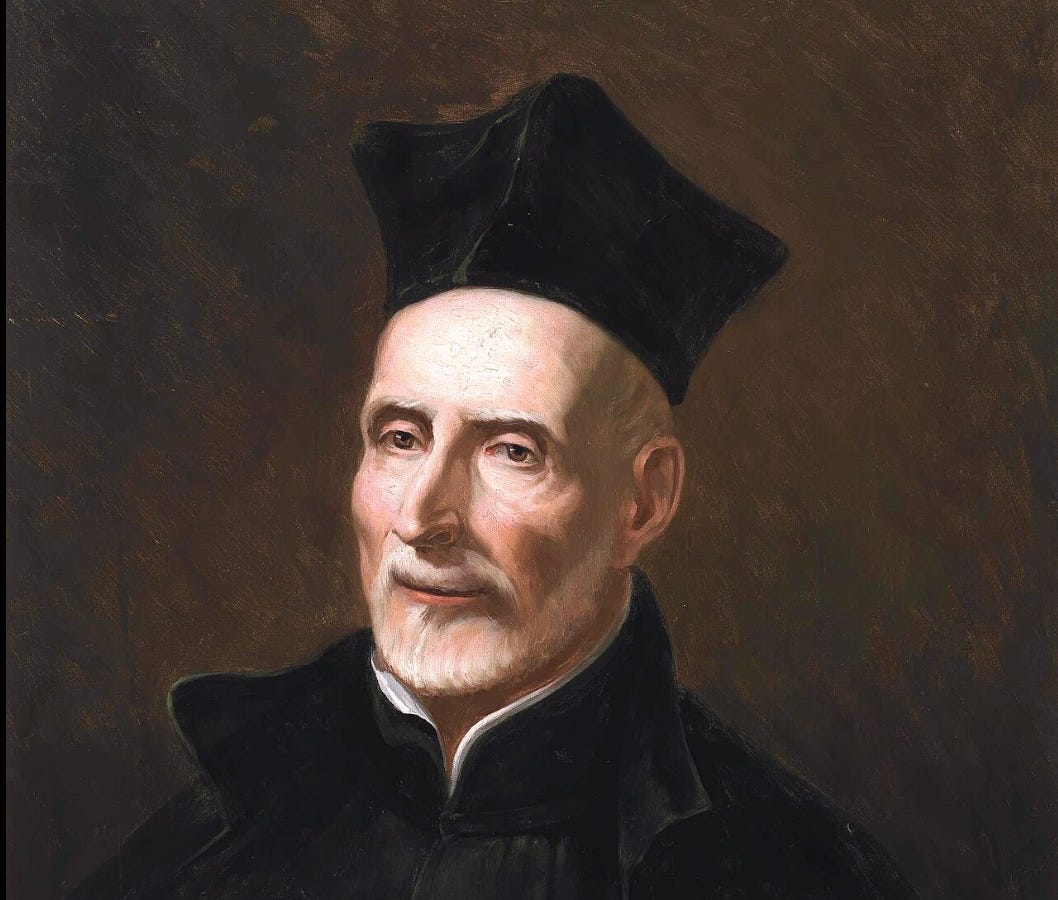
Joseph is not well remembered today, probably because the religious order he founded, the Piarists, is relatively tiny — about one-tenth the size of the Jesuits.
If history belongs to the victors, protracted pious devotion usually belongs to the saint with a big family tree of spiritual descendents ready to tell his story.
And besides that, Calasanz is a man with a very difficult story.
On the one hand, he was one of the great creative minds of the counter-reformation, and one of the Church’s great teachers.
In the late 1590s, he organized free public schools when education was mostly the privilege of only the very rich. He also found himself on the wrong side of ecclesiastical politics, largely because of his support for his friend Galileo Galilei, who had a habit of picking fights with the ecclesiastical authorities most inclined to support his work on heliocentrism and atomism.
But the Calsanz schools, when under Calsanz’ leadership, were transformative up-and-down Italy, and seemed genuinely rooted in the mission of the Gospel. For that, he was eventually declared by Pius XII a universal patron of Catholic education.
On the other hand, it is the case that one of Calasanz’ schools, in Naples, was administered by Fr. Stefano Cherubini, a priest who sexually abused his students. The priest was from an extremely powerful Roman family, and would never have been criminally convicted for his actions.
So when he discovered the abuse, Calasanz made a choice — he removed the priest from the school by appointing him to a higher administrative position in their fledgling religious order. Calasanz apparently believed that would protect students from abuse, and keep the order and its works from being destroyed by the retributive Cherubini family.
In fact, he even ordered some records attesting to the abuse, and correspondence on the subject, destroyed.
It was only years later, when Cherubini was made the superior general of the order and the founder was pushed aside, that Calasanz came forward with what he knew. For a lot of people, in the order and in the Vatican, the revelations hardly made a difference; they continued to support Cherubini’s leadership.
And while the order was suppressed a few years later (and then restored a decade thereafter), it’s not clear how much the abuse revelations were a part of the pope’s decision to suppress it.
When Calasanz died at 90, his community was still suppressed, and though he was greatly admired in some corners, he was also ostracized by many of the people who had been closest to him.
By modern standards, he mishandled the case against Cherubini. He ought to have come forward immediately, made public the allegations, helped to provide care for victims. And because he didn’t do those things, some contemporary historians and advocates say he covered up the abuse.
By the standards and circumstances of his time, well, I’m honestly not sure what he could have done that might have been more effective. If he’d come forward sooner, Cherubini would not likely have faced any temporal justice, in fact, he might have been given charge of the order sooner. The schools might have been shut down. And of course, institutional self-protection should never prevent anyone from doing the right thing, but if I were Calasanz, living in his time and with his knowledge, and in his circumstances, I’m not sure I’d know exactly what to do.
I don’t know exactly how to judge Joseph Calasanz. I know that by the standards we rightly expect today, he failed victims in some important ways. But I know enough about his circumstances to doubt seriously whether the alternative — immediate public exposure — would have brought them justice, or anything close to it.
I’m grateful we have more ecclesiastical policy and better developed civil law than did Joseph Calasanz. I pray the Church will always use those tools to effect justice, whenever she can. And I suspect St. Joseph Calasanz will intercede for that.
—
Meanwhile, since he’s the universal patron of Catholic education, let me briefly mention my mom Linda, whose birthday is tomorrow, and who retired from our parish school in May after spending decades teaching in school classrooms.
Everywhere I go around here, families stop me to say what a difference my mom made in the lives of their children. When she’s at school these days, mostly to pick up my kids, she’s mobbed for attention by kids who were once her students.
That’s a legacy to be proud of. She was, and is, a great teacher. And I’m grateful to have been among her favorite three students of all time. (With due respect to my sisters, I presume I’m actually in the top spot.)
Happy birthday, Mom.
The news
“We are appalled and deeply distressed by these additional charges and continue to pray for anyone affected by this profoundly troubling situation,” the Diocese of Madison said Friday.
Catholic schools in Australia receive public funding. And ousted schools CEO Dallas McInerney was accused of using some of that funding, in a variety of ways, to influence party politics.
And while he wiped his devices amid investigations into that claim, he says he did so because a password had been compromised, and not to destroy critical evidence.

Are you looking for a flexible, online degree to deepen your faith and advance your career? The University of Mary offers Pillar subscribers scholarships of up to $10,000 toward qualifying programs, including the MBA, Master of Organizational Leadership, MBA/MA in Philosophy, and MA in Applied Catholic Theology. Learn more and apply at pillar.umary.edu.
Addressing the media after the Aug. 25 meeting with Sergey Lavrov, Archbishop Paul Richard Gallagher noted that the conflict continued to expand more than four years after Russia’s full-scale invasion of Ukraine, harming millions of people both materially and psychologically.
Gallagher, the Vatican’s Secretary for Relations with States, said: “Let us be clear, this war must end.”
—
Parish theft expert Rob Warren called it one of the worst cases he’s ever seen. He also says that a lot of red flags were missed along the way, and the case points to the importance of paying attention to financial matters which don’t quite pass the sniff test — and reporting them appropriately.
Now, Warren said the case also suggests a number of diocesan policy changes, including some which have proven unpopular with our readers, and perhaps for good reason — it’s not my place to weigh in on them, I don’t think.
But give this story a read, for the whole picture.
—
Finally in the news, most of America is talking this week about Lindsay Clancy, who is on trial right now for the murder of her three children.
Clancy concedes killing the children, along with an attempt at suicide which left her partially paralyzed, but says that she was acting under post-partum psychosis. Prosecutors and their expert witnesses have called that claim into question, and suggested her alleged experience differs from their clinical expectations.
Clancy seems to have asked for help multiple times — she sought out experts, she was hospitalized. She told her husband she was afraid of what she might do, and told her doctors that she experienced intrusive thoughts.
A jury will determine whether Clancy can be judged legally culpable for the deaths, and if so, what the punishment should be.
I want to make a couple of obvious observations:
— Post-partum psychosis is real, and can have profound effect on a person’s behavior. So can psychiatric medications, some of which seem to have side-effects nearly as severe as the condition they treat.
— Part of being pro-life means supporting women who experience difficulty raising their children. Whatever the outcome of her trial, this was a woman in obvious need of help. If there’s a takeaway for the Church, it’s to be on the lookout for women struggling — psychologically, and otherwise — after childbirth, and to support them. To “love them both,” as the cliche goes.
So to that effect, Michelle La Rosa talked with a Catholic mental health professional about how parishes, and their pastors, can support women in the vulnerability of postpartum struggles.
—
On a personal level, readers know that Mrs. Flynn and I have three children, two adopted and one born naturally, and quite miraculously. As we get older, I find myself more often wondering whether God will bless us with another baby, and if so, whether he’ll do it soon, before we get much deeper into our 40s. If a baby comes, it could well come through adoption again, or naturally, and either way, I’m certain we’d be both moved to immense gratitude — as are most parents.
But while gratitude is the natural response to the gift of life, it doesn’t diminish psychiatric and biological realities. I mention that because in the national furor over the Clancy case, I’ve heard several times that a person with postpartum depression is in some way ungrateful for the gift God’s given them.
That’s an obviously flawed way to assess the situation. Gratitude and depression are not foils of one another; one is a virtue, the other a psychiatric condition. We tend to moralize mental health in some Catholic circles, or even to spiritualize it — to suggest that a person experiencing a mental health crisis failed in some way, morally or spiritually.
This is a mistake. Of course, it’s a very natural one — it’s why people in Christ’s day thought that the man born blind must have meant that someone had sinned, whether him or his parents. But we do well to rebuke that way of thinking, should we find ourselves experiencing it.
The problem of evil, and the suffering of body and mind, are mysteries whose rationale can’t be fully plumbed or solved in this world.
Far better to respond with love, however we can, than with any fixation on the cause of suffering. The Lord knows the cause, and the way in which suffering might be redeemed. In this world, we can only know the call to respond as did Simon of Cyrene, by sharing in the suffering, however we can, for love of Christ.
GodGPT?
A friend of mine sent me an essay this week — a blog post, really — from a person who explained how their relationship with ChatGPT was changing them. I won’t share the essay; it wasn’t meant to be widely disseminated.
But the author explained how much ChatGPT has learned about them in recent years, through snippets of conversation or one-off questions, and how ChatGPT had developed a kind of synthesis of them — that ChatGPT saw things in them they didn’t see, and gave them a framework to better understand themselves, and thus to grow.
In some ways, the author was describing a kind of therapeutic relationship with the chatbot — and many people report using ChatGPT as a form of cheap therapy.
But in other ways, the relationship seemed almost religious.
I was reminded of a report I read a few months ago about the emergence of a religious movement called “spiralism,” a nascent and tiny movement of people who claim that AI chatbots have revealed to them new insights on consciousness and metaphysics, and indeed the “shape of existence,” from which flow a set of prescriptive ethical and spiritual norms for living.
In other words, the chat has given them a religion.
Now, trend stories tend to be overstated, so I don’t expect to see spiralist consciousness temples popping up at the same speed as cold plunge studios and hipster chicken salad places, but I do think that a growing number of people are finding themselves with an organically religious relationship to AI chatbots.
Back in January, I watched a commercial for a Catholic AI chat app, and it stayed with me.
A young girl was at a large Catholic conference, at which her friends seemed to have powerful religious experiences. She did not. We saw her alone in her hotel room, thinking things over.
Then she opened an app.