
The Church celebrates in 2026 the 800th anniversary of the death of Saint Francis of Assisi, which has been commemorated with exposition of the saint’s relics, plenary indulgences in Franciscan churches or churches dedicated to his name, and several conferences in Rome and beyond.
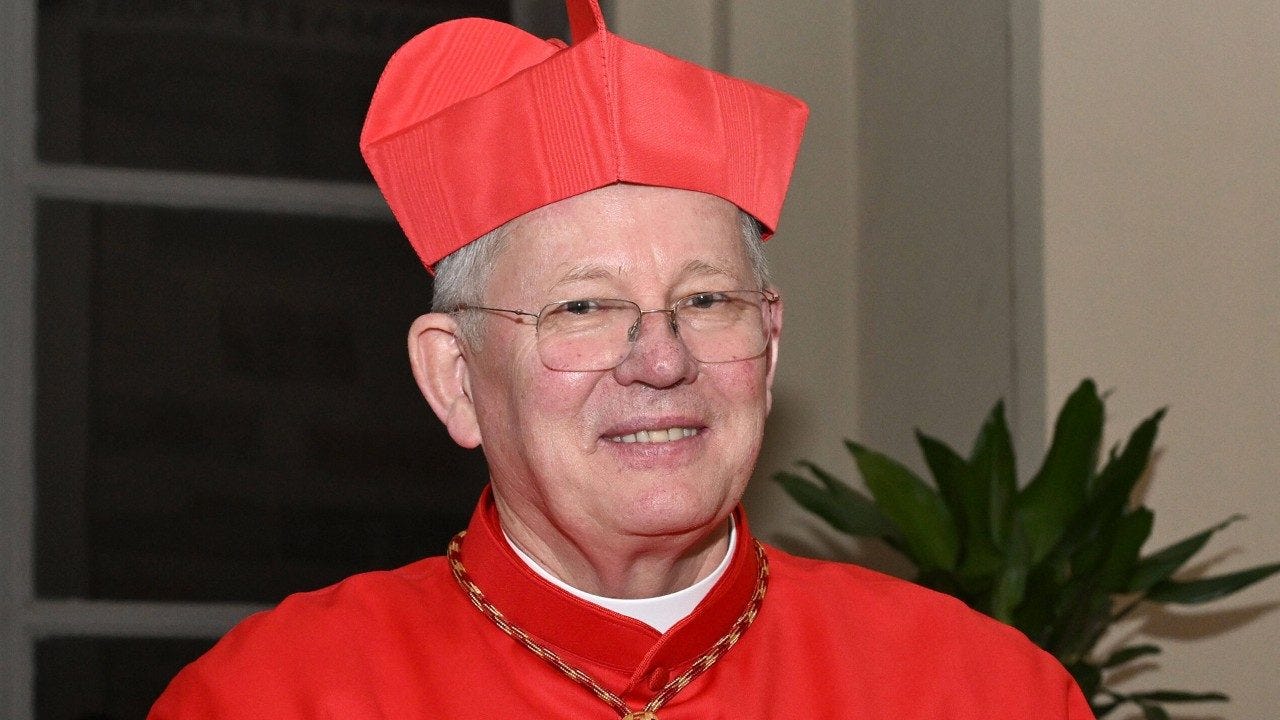
But why is a friar who lived 800 years ago still one of the Church’s most beloved saints and how does his message still resonate with Catholics today? The Pillar spoke with Cardinal Jaime Spengler, OFM, Archbishop of Porto Alegre, Brazil, about Saint Francis of Assisi, Franciscan spirituality and philosophy.
Spengler, who also serves as the president of the National Conference of Bishops of Brazil and the Latin American Episcopal Council, joined the Franciscans in 1982, made his solemn profession in 1985 and, after studies in the Holy Land, was ordained a priest in 1990. He then worked as a seminary and novice formator and teacher and completed a doctorate in philosophy in the Antonianum in Rome in 1998.
After working in several leadership positions and Franciscan-ran parishes in Brazil, he became the auxiliary bishop of Porto Alegre in 2010, later becoming its archbishop in 2013. In 2023 he became both the president of the Brazilian bishops’ conference and the Council of Latin American and Caribbean bishops’ conference.
The interview was conducted in Portuguese and has been edited for clarity and length.
It seems that today that Catholics are responding with great devotion to contemporary saints. It’s no accident that the devotion for figures such as Saint Carlo Acutis, Mother Teresa, Saint John Paul II has spread far a wide.
But why hasn’t St. Francis of Assisi lost his relevance?
Every age has its saints that are proper to their times. St. Francis was indeed a saint of the 13th century, but he’s also, I’d say, a human archetype, and that’s why he remains alive.
Marking this moment of anthropological crises that we’re experiencing, I believe, is an opportunity to bring to the center of the debate the importance of the human being. Francis of Assisi is a profoundly human saint, and certainly what he passed down to us as the promotion of the work of care – of the human person and of creation – remains more than current: it’s a pressing demand.
In what sense is he a human archetype?
It’s because Francis goes beyond the boundaries of the Franciscan world, of the Catholic Church, and even of Christianity. Francis is, without doubt, a universal man.
How did St. Francis come to be the saint of ecology?
Isn’t that a way of domesticating him or would that rather make him a rebuttal against the de-Christianized ecologism that Pope Francis so often criticized?
Francis was a prophet in his time. What is a prophet? Not someone who foresees the future, as if a kind of fortune-teller or something similar, but someone who, out of what animates him inwardly, is able to read the present — and that reading endures through time. He brought something that perhaps we had to wait almost eight centuries to recover again. Here I’m referring to something that Pascal, for instance, had already grasped in his own time, or Pope Francis with Laudato si’. Saint Francis in a very simple way, reminded us of that famous expression that marks Pope Francis’s reflection on the so-called ecological question, when he said that everything is interconnected, what Pope Francis called “integral ecology.”
Saint Francis, already in his own time, said “we are all brothers and sisters” — different language, but underneath it carries the same principle: Brother Sun, Sister Water, Sister Light, Sister Earth, Brother Wind, Sister Death. Everything truly is interconnected. We are part of a much greater whole, which we might call creation, or, if we prefer, the family of God.
Chesterton said that “ each generation is converted by the saint who contradicts it most.”
I don’t know. It could be, but I wouldn’t necessarily say that he contradicts it, but he certainly knew how to read his own time through God’s eyes.
Although St. Francis is best known for the poverty, for the radical humility he lived — but if we read his letters, a good part of them are devoted to worship, to prayer, especially to the Eucharist — in a Church so divided over disputes over the liturgy, how can St. Francis help us better understand the Eucharist, the liturgy?
Saint Francis’s greatest reference point in all his writings is the Gospel. The Gospel is at the center of Francis’s entire search. It was, so to speak, the desire to live the Gospel in its radicalness — radicalness understood as the fact the Gospel is incarnate. It is not a text: the Gospel is a person. And so this striving of Francis’s is to live the Gospel in its radicalness.
That may seem frightening at first, perhaps, but on the other hand, it brings to the surface a dream that is present, I believe, in the soul of every true Christian, every true Catholic: to respond to the Gospel at the height of its distinctive demand.
Today we do have this question of the liturgy, which stirs up various groups. But the main issue isn’t the liturgy. The main issue is the sense of belonging to the ecclesial community. That’s where the real question lies: the sense of belonging to the ecclesial community, to the Church as a community, and fidelity to the Gospel. I’d say the liturgy question has been, or is being, used ideologically for other interests that seem to me not to be authentically motivated by the Gospel, and even less by a sense of belonging and shared responsibility for the ecclesial community.
St. Francis tends to be associated with interreligious dialogue because of his meeting with the sultan. But his intention wasn’t interreligious dialogue — it was to preach the Gospel and convert the sultan.
How can St. Francis teach us to respect other religions without compromising our own beliefs and our task of evangelization?
What the Franciscan sources preserve is that Francis’s intention in this regard was to proclaim the Gospel to his neighbor, in response to Jesus’s mandate: go into all the world and proclaim the Gospel. And we’re still called to do that within the context of the religious diversity in which we find ourselves.
Better put: our responsibility is, starting from our own belief, to go out and meet the other, not in order to “proselitize” them, but to show what animates me, what guides me, what sustains me. And if that is expressed in a way that is objective, clear, attractive, and profoundly human, then it can convert.
It’s interesting that, at this moment in history that we’re living through, there is news, there is data, of many conversions in the West. Sometimes it’s lapsed Catholics who return to the faith, or people who grew up with no religion, or were part of other Christian denominations. But also of people from other faiths who, through encounter, through dialogue, without confrontation, convert.
Saint Francis wasn’t a philosopher, but the Franciscans produced a philosophical school, with St. Bonaventure, Duns Scotus, and other philosophers — even if it’s less well known than the Thomistic school.
Is this Franciscan philosophical-theological school still relevant today?
I’d say it is extremely relevant. And today I believe Franciscan philosophy has its own distinct contribution to make to philosophical reflection itself. Also, speaking internally, at the level of clergy formation, in a special way, I believe we need to recover what we call Franciscan intuition, namely, this particular way that Francis discovered for radically living the Gospel and that animates Franciscan philosophy.
It’s true that Thomas Aquinas was brilliant in his time, just as Bonaventure, Scotus, and so many others were brilliant. It’s true that Thomas Aquinas came to prevail, even through an institutional endorsement of sorts, but these great Franciscan minds also need to be rediscovered — and not only internally. I believe we need an ever broader, more open dialogue with all the currents or philosophical schools that mark, above all, the history of the West.
There’s a tendency in some circles to think philosophy ended in the Middle Ages, which isn’t true. The moderns, the contemporaries, aren’t sufficiently studied and I think the Franciscan school also equips us better for this dialogue.
I believe every school, every thinker, brings a specific contribution; and if a critique is raised regarding our own core convictions, it’s because we need to think even more intensely, and not close ourselves off within our own positions. Bonaventure, Scotus, and others brought to reflection what is proper to philosophy: the intuition of Francis of Assisi. What an extraordinary thing! Scotus’s intuition regarding the fullness of the mystery of Our Lady — potuit, decuit, ergo fecit [He could do it, it was fitting, therefore He did it] — was something extraordinary.
Such a simple intuition, but at the same time carrying an evidence, a clarity, all its own — and that’s exactly what intellectual reflection is really about. When we speak of philosophy, we sometimes imagine a complex, difficult discourse, sometimes incomprehensible. It’s the opposite.
In that era there wasn’t really a distinction made between what we today call theology and philosophy; it was a reflection moving within a single dynamic. Bonaventure, in his works — the six days of creation, for instance, the Journey of the Mind into God — is, in truth, a reading rooted either in philosophy or in theology, whichever you prefer, drawing from the founder’s intuition.
I think that is part of what the Franciscan intuition can teach us today in philosophical reflection, to see things as an integrated whole during disintegrated times.
What drew you to the Franciscan order in your vocational discernment?
Why did you become a Franciscan, and not a member of another order, or a diocesan priest?
It’s very simple. In the region where my parents lived, we knew two religious families: one were the Dehonians, the other the Franciscans. The Franciscans led the parish in Gaspar, in southern Brazil where I was born. And we had contact with the Dehonias through my father’s friendship with two families who lived in the same area and had sons who were with them. So priests would come, when they were on holiday or during their free day, to our house to play cards — my father liked to play cards, never for money, just for friendship’s sake.
And when I decided I wanted to become a priest, I wasn’t so much thinking about consecrated life, because I didn’t know that distinction. I sought out the parish priest, who was a Franciscan, and naturally he pointed me toward the Franciscans [laughs].
Later, during formation, I came to understand the distinction between being a diocesan priest, a religious priest, and particularly a Franciscan. And something that marked me deeply was my experience, still during my formation, in Israel, when I was asked to pursue theological studies in the Holy Land.
There I had a quite particular contact with Franciscan history, tied not only to the holy places but also to reflection on the Gospel. Because Francis is nothing more than a return to the Gospel and you see it very practically in the Holy Land. So, having been able to live alongside the friars in the Holy Land, and on the Holy Land, studying there, gave me the elements for an even more convinced decision toward the Franciscan life as a way of life.
What is the main gift that St. Francis and his order can offer the Church and the world?
I would highlight its fidelity to the Church. The Franciscan movement had every chance to go its own separate way, and yet Francis of Assisi never wanted to walk outside ecclesial communion. Respect and reverence for the figure of the Successor of Peter, but also reverence for priests — I believe that has a relevance all its own today. But it also reminds the priest of the dignity that constitutes him.
This is very important today, in the ecclesial context we live in, with all these currents that sometimes seek to impose themselves beyond the radical need to walk in ecclesial communion. I believe that this insight, which comes from Francis’s intuition and from the Franciscan tradition, is an element that today needs to be highlighted again and again, always in a new way.
Another element that I believe speaks to the relevance of Francis is that he saw the identity of each thing as entirely his own — how that identity of each thing was expressed in what he called brother, sister: everything is a divine work; everything is born out of God’s love. And so everything, down to the simplest element of nature, needs respect and promotion. At this tremendous moment we’re living through, there are crises on every side: ecological crisis, anthropological crisis.
Returning to Francis is drawing from a well where we can find fresh water, capable of quenching our thirst today. So, to rediscover the dignity and the need to care for our common home is more than an urgency: it is a matter of survival, and of recognizing that this doesn’t belong to us — it was given to us by God not simply to enjoy, but to care for and promote it for the benefit of every human being.
Thanks for this most relevant and insightful interview with Cardinal Jaime Spengler!