
Steeped in history, Shrine of St. Joseph endures
The Missouri shrine has a mostly quiet existence -- and a reputation for miraculous occurrences.
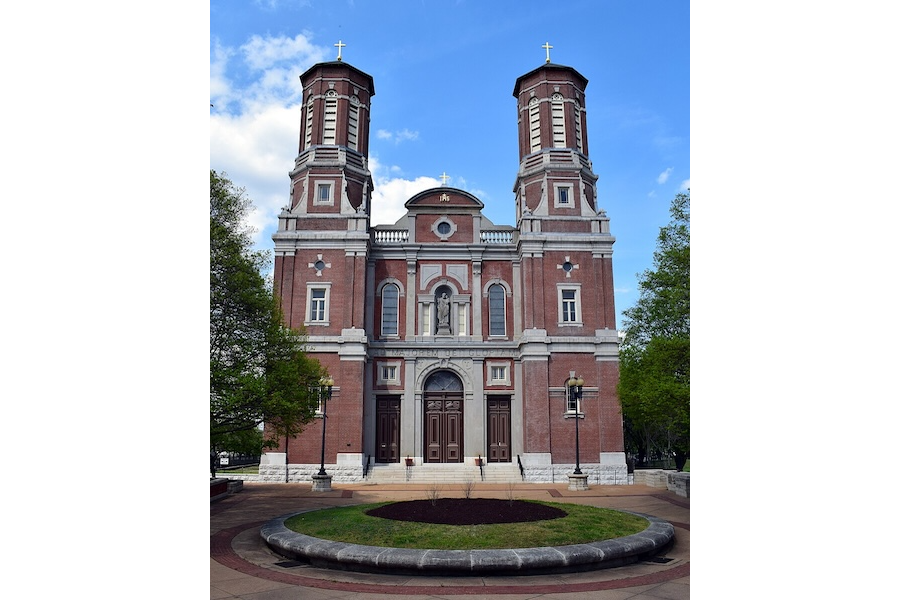
Tucked away on an unassuming street in downtown St. Louis stands the Shrine of St. Joseph.
It’s not far from the city’s famous arch, the National Blues Museum, and the Mississippi River.
Founded by the Jesuits to serve the local German immigrant community in the 1840s, St. Joseph Parish at first resembled many other Catholic parish communities at the time.
But in the decades that followed, it gained a local reputation for miraculous occurrences.
Surviving a cholera epidemic
In 1866, the city of St. Louis suffered a severe cholera epidemic, stemming from polluted well water.
The months-long epidemic was not the first time cholera had hit the city, but it was a particularly severe outbreak, killing more than 3,500 people in just a few months – almost one out of every 50 residents in St. Louis at the time.
For the people of that time, cholera was a nightmare – easily transmitted and frequently fatal, sometimes within hours.
At its peak, the 1866 epidemic killed more than 200 people daily in St. Louis.
St. Joseph’s Parish was not exempt from the devastation. Records of the parish’s history recount up to 25 funerals a day at St. Joseph’s Church during the height of the outbreak.
Then, Fr. Joseph Weber, the pastor and Jesuit superior, decided to lead his congregation in a prayer to St. Joseph, asking for the saint’s protection. They made a vow that if the parish made it through the outbreak without any more deaths, they would build a monument to St. Joseph in thanksgiving.
According to records of the parish’s history, parishioners pledged $4,000 to building the monument – the equivalent of more than $80,000 today.
And parishioners say something miraculous actually happened: From that day forward, not a single parishioner who had participated in the vow died from cholera, according to the parish’s account of its history.
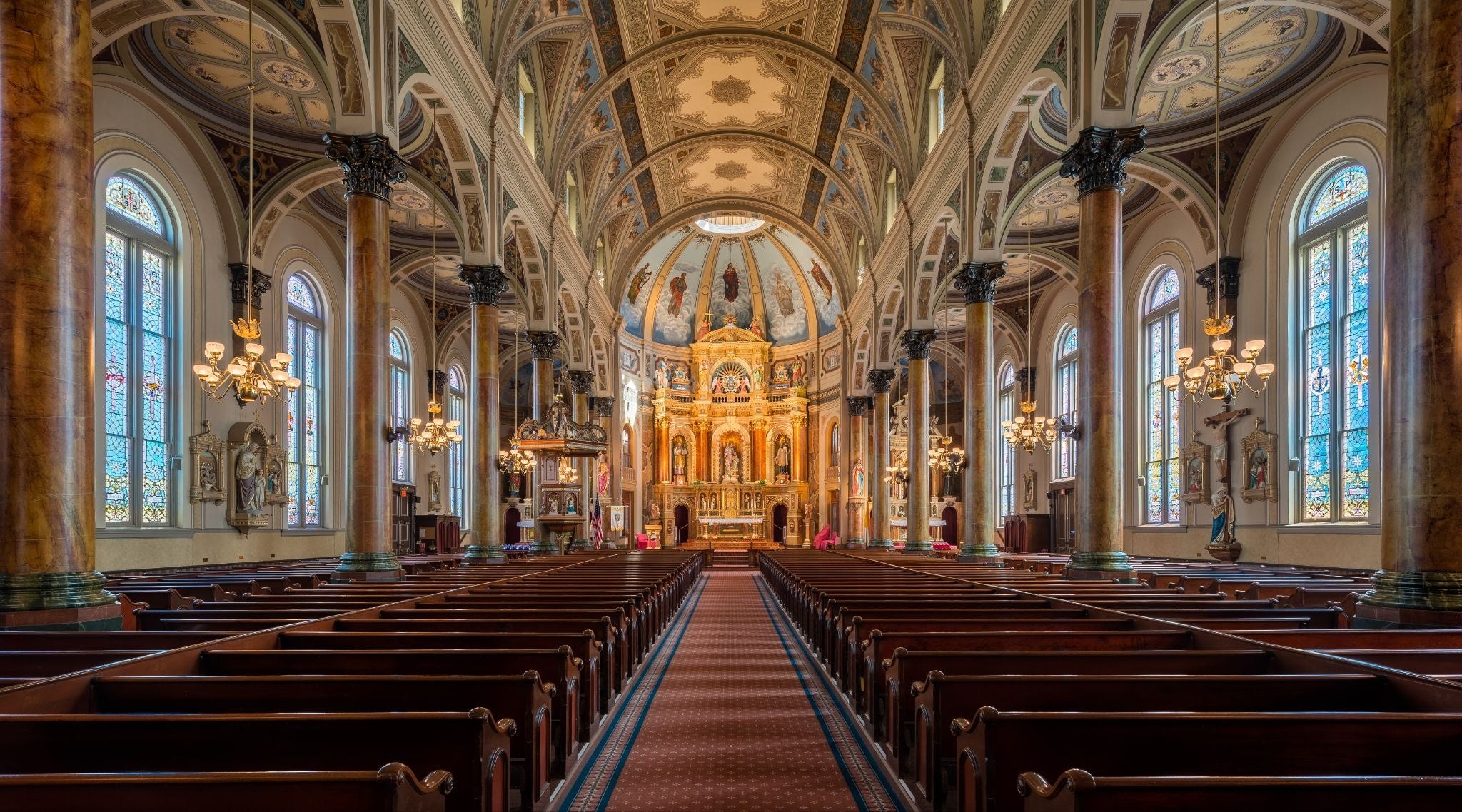
When the outbreak had ended, parishioners worked to make good on their promise. The following year, the ornate Altar of Answered Prayers was erected inside the newly renovated church. It depicts St. Joseph standing next to the Child Jesus, with the words Ite ad Joseph, Latin for “Go to Joseph.”
A Vatican-approved miracle
The cholera epidemic of 1866 was not the first time a miraculous occurrence had been reported at St. Joseph’s Parish.
In 1864, an immigrant named Ignatius Strecker injured himself while working at the local soap factory, hitting himself in the chest with a piece of iron.
The wound caused swelling and developed serious complications over the following weeks, including what the parish described as “tumor-like inflammation,” a violent cough, fever, and signs of tuberculosis.
Unable to eat and struggling to breathe, Strecker became bedridden. He sought treatment with multiple doctors in the months that followed. None were able to help him.
After nine months, a specialist doctor declared that he could not be cured and had only about two weeks to live.
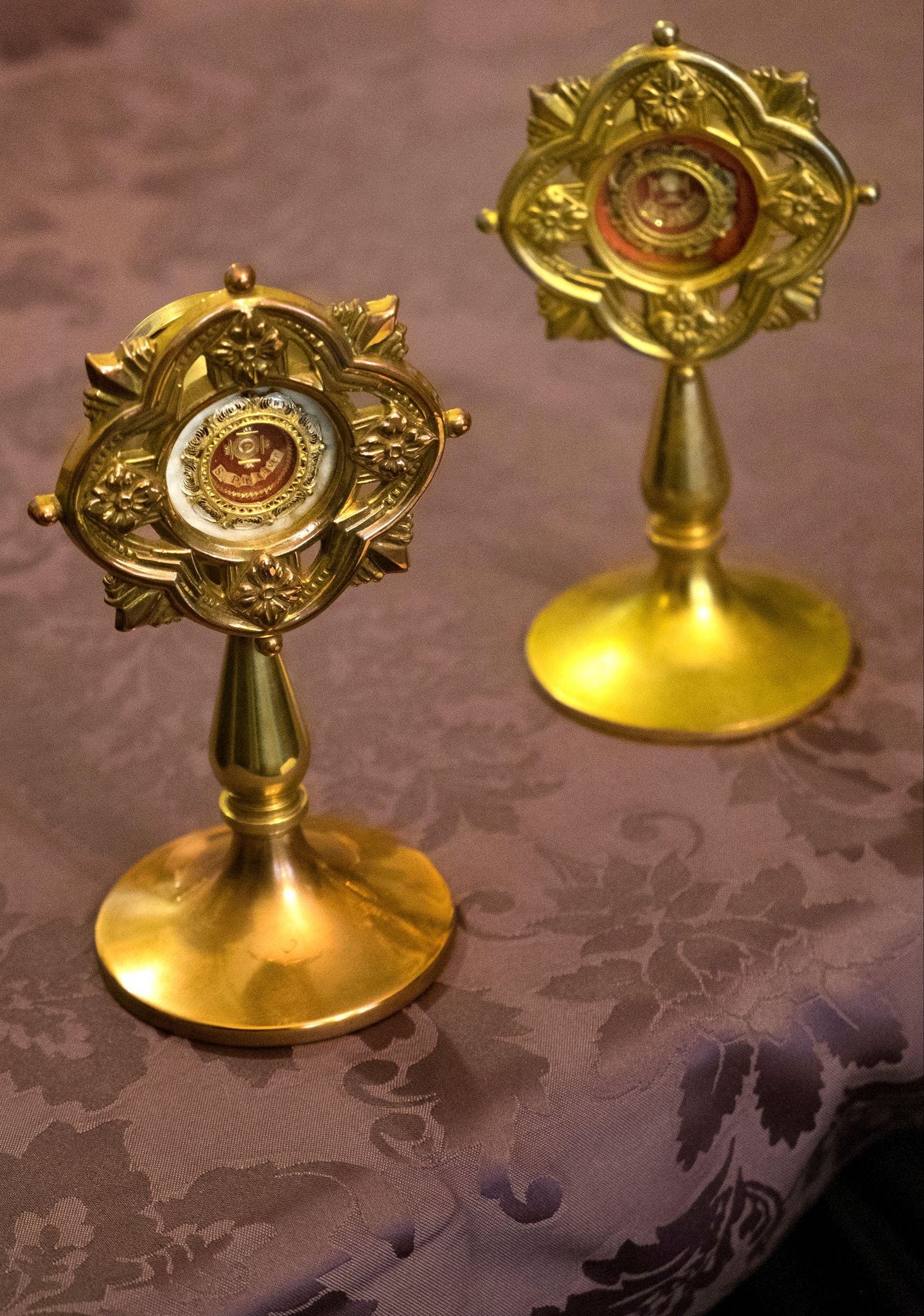
Shortly after, Strecker’s wife brought him to St. Joseph’s Church, where a visiting priest was giving a parish mission. Strecker arrived in time for the priest to offer him a blessing with a relic of then-Blessed Peter Claver, the Spanish priest and missionary who served slaves in Colombia in the 1600s.
Strecker said he felt a sense of peace at the moment of the blessing and immediately began to feel better. The next day, he returned to work, and in the days that followed, his symptoms completely resolved. He lived for nearly 20 more years, completely cured of the injury that had nearly taken his life.
The cure of Stecker was investigated and eventually approved by the Vatican. It became the miracle needed for St. Peter Claver’s canonization in 1888.
A historical shrine
Despite being the site of these extraordinary events, the St. Joseph church building was nearly demolished in the 1970s. By that time, it had become run down and fallen into disrepair. Changes in the demographics of surrounding neighborhoods meant that Sunday Masses often attracted fewer than two dozen people. The archdiocese was considering tearing it down.
Then, in 1979, the priest who served as administrator of the shrine was murdered when three teenagers broke in to rob the rectory.
The priest, 79-year-old Fr. Edward Filipiak, had been campaigning to save the church from demolition. His death sent shock waves through the community, and local Catholics rallied to take up his cause.
As a result, the building was placed on the historic register, and in 1982, it was designated as a shrine. Millions of dollars were committed to much-need renovations.
Today, the shrine is preserved by a nonprofit group called the Shrine of St. Joseph Friends. Operating expenses are funded largely through its wedding program – the beautiful interior makes it a popular wedding destination, said Kevin Finazzo, a board member, treasurer and long-time volunteer at the shrine.
Pilgrims also come from near and far to venerate the relic of St. Peter Claver, and to pray for his intercession, as well as that of St. Joseph.
Over the years, there have been various accounts of other miraculous healings, Finazzo told The Pillar.
While the shrine does not track official numbers, he said he personally knows of a few people who have experienced unexplainable healings after praying before the relic.
One of them was his friend’s wife, who had been diagnosed with a terminal heart condition. After being blessed with the relic of Peter Claver at the shrine, her condition disappeared, to the shock of her doctors.
Still, the shrine is not as well-known as other major pilgrimage sites in the U.S., and it operates without much fanfare.
On the Feast of St. Joseph, the shrine holds Mass and a procession, then distributes blessed bread and fruit.
Each year, the shrine celebrates the anniversary of Ignatius Strecker’s miraculous healing. This year, about two dozen of Strecker’s descendants attended the anniversary Mass, Finazzo said. In 2014, for the 150th anniversary of the miracle, nearly 100 of his family members attended a special luncheon.
But other than that, the shrine maintains a mostly quiet existence – much like its saintly namesake.
Mass is held each Sunday and on the first Friday of every month.
An all-volunteer team tends to the shrine’s maintenance, fundraises for repair needs, and opens the door for visitors interested in the architecture or hoping to venerate St. Peter’s Claver’s relic.
“We’re kind of an island unto ourselves,” Finazzo said.
My wife and I got married there just a few years ago!! 🥰 So happy to see it getting more recognition! It’s a stunningly beautiful church with incredible history. The Altar of Answered Prayers is also a phenomenal place to propose, if I do say so myself. :)
Thanks, Michelle, for this lovely article about the St. Joseph shrine. I was not aware of it and it's so great that it was preserved from the wrecking ball. There is a shrine of St. Joseph in De Pere, Wisconsin, (near Green Bay), that is actually the National Shrine of St. Joseph on the campus of St. Norbert's College. It's not too far from the National Shrine of Our Lady of Champion, the only approved apparition site of Our Lady in the United States. We visit the vacation spot of Door County two or three times a year and always make the stop at both shrines. Happy feast day to all The Pillar readers as we honor this saint of saints today!