Study: Irish Catholicism robust despite secularization
Data suggesting that weekly Mass attendance among young Catholics is bouncing back after decades of decline.
A new study has presented evidence that Catholicism in Ireland remains relatively robust despite decades of secularization.
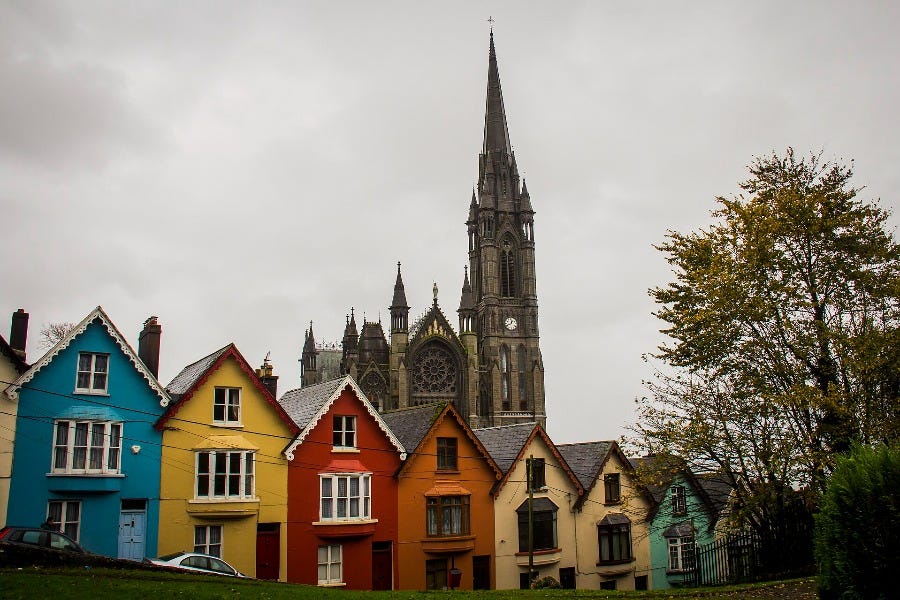
The 26-page report, “The Turning Tide? Recent religious trends on the island of Ireland,” concludes that Ireland still has one of the highest weekly Mass attendance rates in Europe, although it has seen a significant decline in Catholic affiliation.
The study, commissioned by the Irish bishops’ conference, points to data showing that Ireland has the fourth-highest percentage of weekly Massgoers among baptized Catholics, behind Poland, Slovakia, and Italy. This places it ahead of other traditionally Catholic countries such as Croatia, Portugal, and Spain.
The new report draws on the European Social Survey, which seeks to track attitudes, beliefs, and behavior in more than 30 countries in Europe. It noted that while religiosity had declined in Ireland since the European Social Survey began in 2002-2003, the most recent cycle of data collection in 2023-2024 showed “a strong uptick in religious affiliation and religious practice” in the country.
The study said this was “most strongly evident” among Catholics and Protestants aged 16 to 29.
But the report acknowledged that, although Irish Catholics as a whole are “among Europe’s more practicing,” there is “a significant drop-off” in practice among young adults.
In Ireland, 17% of Catholics aged 16 to 29 attend Mass weekly, placing the country in sixth place among the countries studied.
Yet the study highlighted 2023-2024 European Social Survey data suggesting that weekly Mass attendance among young Catholics is bouncing back after decades of decline.
The report asked whether this indicated there is “a ‘quiet revival’, or perhaps ‘turning tide’, in Ireland.”
The concept of a “quiet revival” stems from a contested 2025 study, which claimed that Christianity in England and Wales is growing, thanks to a resurgence of interest among young adults, especially men.
The new report argued that the idea that young adults were discovering Christianity as “something genuinely new and exciting” did not apply to Ireland because of the higher background levels of Christian practice. It said that another explanation was needed to account for “the early indications of a ‘turning tide.’”
It suggested that young adults were less likely to associate the Irish Church with the abuse scandal and more likely to see becoming Christian as a free, individual choice, rather than an obligation imposed at birth. It added that some young adults might find consolation in the faith after struggling with their mental health or might be inspired by online influencers. It called for further research into these possible factors.
The Irish bishops discussed the report at their spring plenary meeting, held March 2-4 in Maynooth.
In a video introducing the report, Archbishop Eamon Martin of Armagh said the study pointed to a rising interest in religion among young adults.
“I don’t think we should get ourselves too enthusiastic, thinking this is a complete reversal of the very obvious decline in religious practice over the last 10 to 20 years. However, it is saying something,” commented Martin, the Primate of All Ireland.
“‘The Turning Tide?’ is asking us to reflect on this phenomenon in the light of research and ask ourselves, what does this mean for us as Church, as parishes, as dioceses? How are we responding to this growing body of young people who want to know more about God, about Church, and about religion?”
The report also considers whether immigration is a factor in Ireland’s “relative Catholic strength.” The country has experienced a notable influx of migrants from majority Catholic countries such as Brazil, Poland, and Spain, as well as Catholics from the southern Indian state of Kerala.
The study concluded that “immigration has certainly contributed significantly to the
Irish Catholic population,” citing surveys showing a rise in the proportion of Catholics born outside of Ireland from 6% in 2002-2003 to 18% in 2023-2024.
But the report noted that “foreign-born Irish Catholics are not notably more or less practicing than their homegrown co-religionists.”
The study also noted the presence of Eastern Orthodox Christians in Ireland. Ireland’s Central Statistics Office has reported that Eastern Orthodox believers increased by 128% in the 11 years between the country’s 2011 and 2022 censuses. The growth has been attributed largely to immigration from Eastern Europe. The new report suggests the community’s size is now relatively stable.
The study focuses not only on the Republic of Ireland, but also Northern Ireland, which together constitute what the document calls “the island of Ireland.”
Northern Ireland, which has a population of almost 2 million people and is part of the U.K., has higher levels of religious affiliation and practice than the Republic of Ireland, which has a population of 5 million and is part of the European Union.
Citing 2025 studies by the Iona Institute, an Irish think tank, the report noted that 18- to 24-year-olds in the Republic of Ireland were less likely to identify as Catholic or attend Mass than any other generation, but more likely to do so in Northern Ireland.
The report was written by Stephen Bullivant, a professor of theology and the sociology of religion at St. Mary’s University, Twickenham, London, and Emily Nelson, who is studying for a sociology doctorate at Queens University Belfast.


Admittedly I only got to see a very narrow snapshot of the Church in my week there, but it seems like Ireland is speedrunning America's Catholic development post-abuse scandal: I saw a lot of young traditionally-minded Catholics and a lot of pious elderly Catholics and not much in-between.