
When presidents of bishops’ conferences and Eastern Catholic patriarchs gather in Rome next month to discuss Amoris laetitia, their meeting will have been organized largely by the Secretariat of the Synod of Bishops.
But the meeting is not a synod. And its thematic framework was originally published by the Dicastery for the Laity, Family, and Life.
The now-leading role that the secretariat has taken on in preparing for the meeting is part of what seems to be a growing influence of the Secretariat of the Synod under Pope Leo.
The Secretariat of the Synod of Bishops was created by Pope St. Paul VI in 1965, but it rose to greater prominence under Pope Francis, who convened several high-profile synods during his pontificate. In fact, before Francis’ 2022 reform of the curia, the Secretariat of the Synod was not even considered part of the curia, properly speaking.
Francis did not convene many extraordinary consistories of the College of Cardinals during his pontificate, but those he did convene were organized by the Secretariat of State, the traditional organizer of such events.
And when Francis held a special meeting — much like the one Leo is convening in October — on the protection of minors in the Church in 2019, he appointed a special committee of cardinals, bishops and experts to organize it.
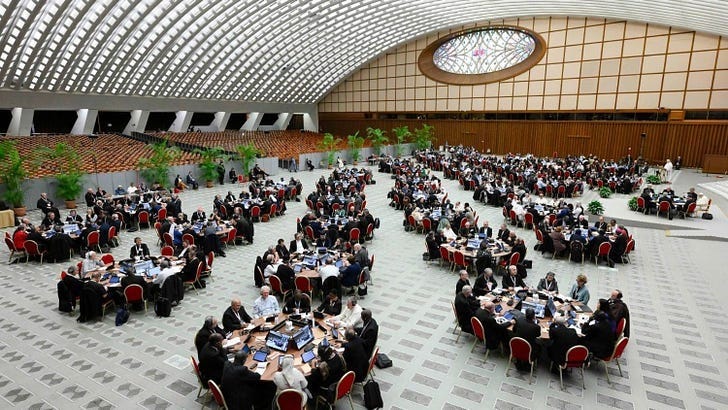
In contrast, the Secretariat of the Synod has been involved in the organization of Leo’s two extraordinary consistories and is now behind the organization of the Amoris laetitia meeting, which will function much in the way a synod typically does, but without that label.
In fact, the October gathering did not originally appear to fall under the umbrella of the secretariat. The Dicastery for the Laity, Family, and Life was in charge of publishing the thematic framework for the meeting in July.
There has been since a lack of clarity as to how the meeting will proceed and who is in charge of it. But sources close to the dicastery told The Pillar that most of the organizational work for the meeting has been taken over by the Secretariat of the Synod of Bishops, which is in charge of the discussion’s logistics.
The gathering will use the small-group methodology used in the Synod on Synodality and in both of Leo’s extraordinary consistories so far.
A bishop appointed to the Secretariat of the Synod told The Pillar that the secretariat continues to be as significant under Leo as it was under Francis, and that there is “constant communication” with the pope regarding the secretariat’s work. The bishop also confirmed that the secretariat was mostly in charge of the October meeting.
In January the Secretariat of the Synod played a significant role in the development of the first extraordinary consistory of Leo’s pontificate.
Journalist Diane Montagna reported in April that while the consistory would originally be held with plenary sessions, weeks before the consistory it was decided that it would use the small-group synodal methodology, with many pointing at Cardinal Mario Grech as a possible man behind the idea.
A spokesperson for the Secretariat of the Synod told Montagna that “the General Secretariat was not involved in the preparation of that important meeting.”
But several Vatican officials close to the Secretariat of the Synod told The Pillar that the secretariat has, indeed, been involved in both of Leo’s consistories.
At the same time, it’s possible that the involvement has not been official, much as with the October meeting, which is officially being prepared by the Dicastery for the Laity, Family, and Life, while the Secretariat of the Synod is doing much of the actual organization.
While much of its work seems to be taking place quietly in the background, the new responsibilities being handed to the Secretariat of the Synod seem to suggest that Pope Leo wishes to offer the group greater influence in the Vatican.