
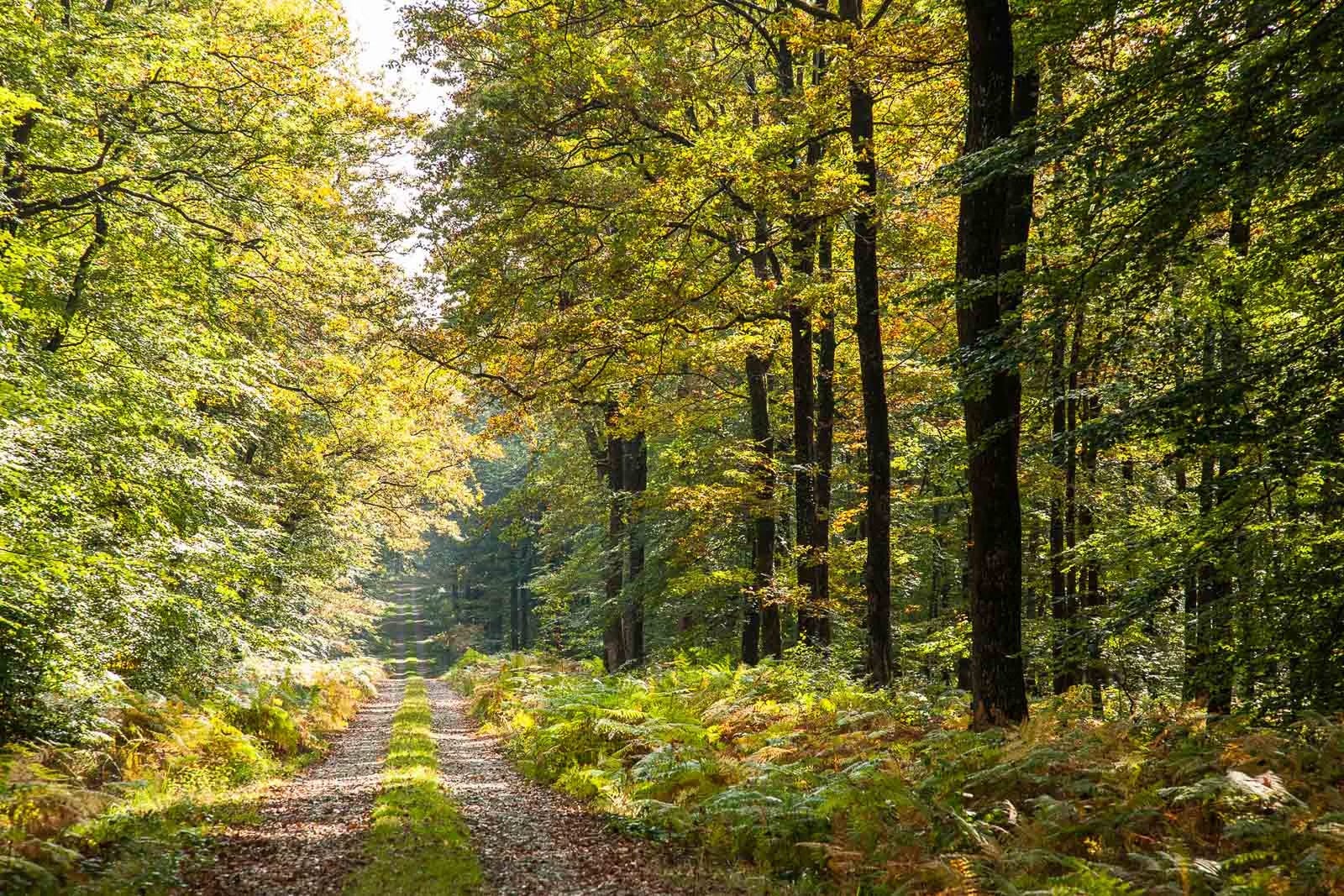
Just south of the French city of Le Mans, on a ridge of high ground above the Loire River, is the Forest of Bercé.
The oak trees of Bercé are known to grow especially tall and straight. This is no accident. Since at least the seventeenth century, the forest has been carefully managed, with beech trees planted alongside the taller oaks. The beeches compete with the oaks for light, forcing the oaks to stretch for the light above the canopy.
The result is not just taller oak trees, but oaks whose long trunks are unusually straight and, since there are few branches lower down, free of knots.
Three and a half centuries ago, France was competing with other European powers – notably England, Spain, and Portugal – to establish, defend, and expand their holdings in the New World and to protect transatlantic trade.
That meant having a strong navy. And a strong navy, in the age of sail, meant access to whole forests of mature, straight-grained, oak trees. So the French crown began managing its royal forests with an eye to producing the best timber for shipbuilding.
When the French fleet pinned General Cornwallis to the peninsula at Yorktown, forcing his surrender to General Washington in 1781, there is a fair chance some of those French frigates were built with oak from the Forest of Bercé.
We don’t build a lot of wooden ships anymore, at least our navies don’t. But the timber of Bercé is still in demand, for example, in meeting the cooperage needs of the French wine industry. And the forest is known for its natural beauty, as a place for mushroom picking, and so on.
But the truth is, the only reason I know about the Forest of Bercé is because of the fire which nearly destroyed the Cathedral of Notre Dame in Paris back in 2019.
Rebuilding the roof of Notre Dame exactly as it had been before the fire required hundreds of enormous oak timbers–timbers of exceptional length and strength which can only come from mature oaks grown under those certain conditions conducive to producing long, straight, knot-free trunks. Mature oak timbers do, in fact, grow on trees, but they don’t grow overnight. They take centuries.
And that bring us back to the foresight of the French crown, three or four hundred years ago, planting beech trees to help their oak trees grow into the sort of oaks which, centuries later, might make a keel timber for a frigate or even a truss for rebuilding the roof of the world’s most famous cathedral.
There is a lesson here about Providence.