Hey everybody,
We’re almost to the end. Tomorrow’s the Annunciation. Then Sunday is Palm Sunday, and we’re into Holy Week.
Lent is coming to a close, dear readers, and you’re reading The Tuesday Pillar Post.
And today, as it happens, is the feast of St. Oscar Romero.
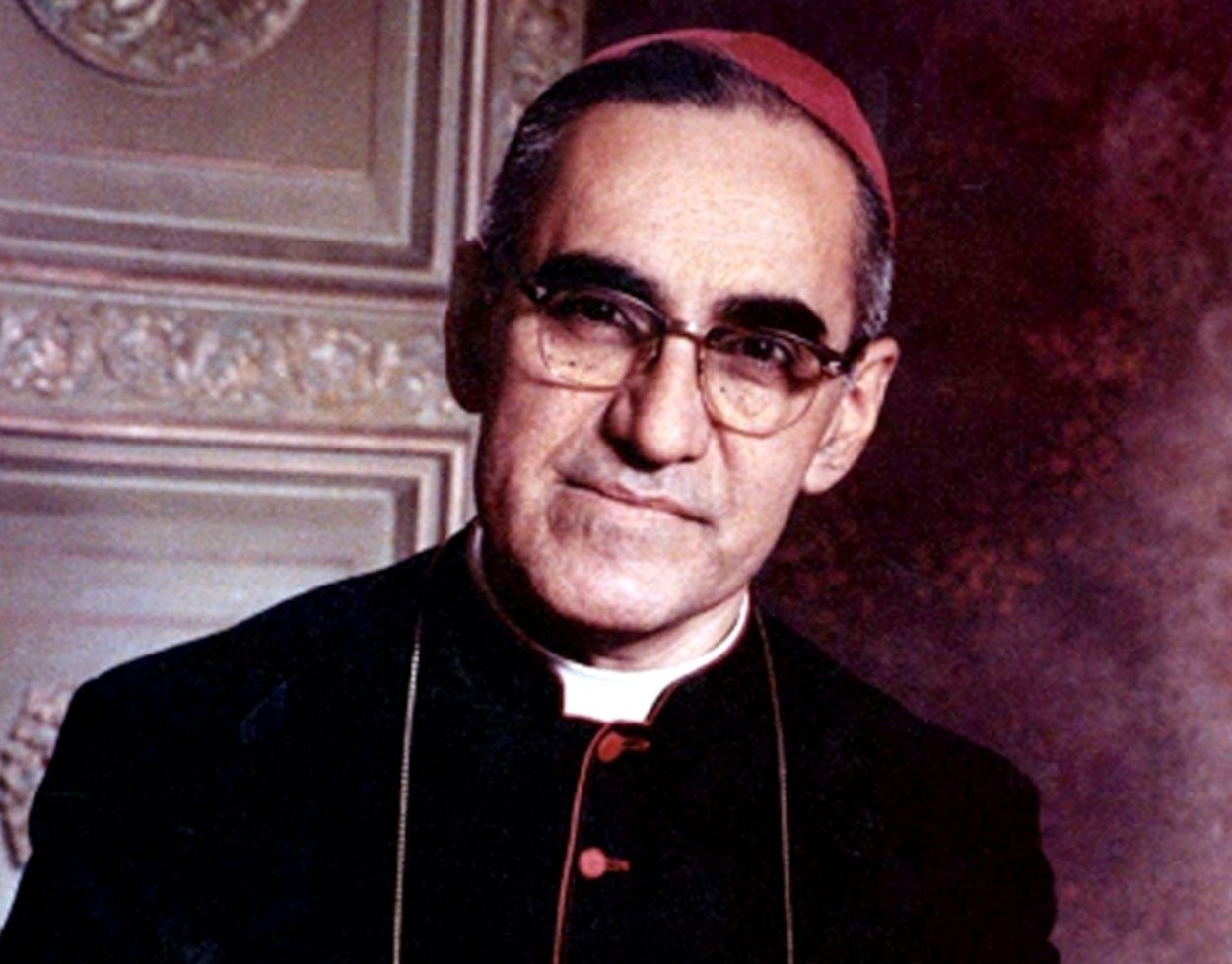
Romero was in 1980 the archbishop of San Salvador, who became a sharp critic of El Salvador’s military junta, which arrested, exiled, or killed dissidents, leading to the brutally violent Salvadoran Civil War.
The archbishop was deeply impacted by the March 12, 1977 killing of Fr. Rutilio Grande, who in early 1977 denounced the deportation of a Colombian priest. Grande was killed soon after by Salvadoran government security forces, along with a 72-year-old man and a teenager.
Romero’s homily for the funeral is regarded as something of a theological gem, which set forth the Church’s social justice commitment in the context of the mystery of salvation — with Christ at the center.
Here’s an excerpt:
“True love is what moved Father Rutilio Grande as he died with the two campesinos at his side. That is how the Church loves. She dies with them, and with them she presents herself to heaven’s transcendence, for she loves them. And it is significant that Father Grande was gunned down precisely when he was traveling to impart to his people the message of the Mass and salvation. A priest was with his campesinos, on his way to meet his people, to identify himself with them, to live with them—this was an inspiration of love and not revolution.
It is precisely because it is love that inspires us, sisters and brothers, that we want to tell those responsible that we love them. Who knows if those who are responsible for this criminal act (and therefore excommunicated) are hearing these words on a radio there in their hideout and in their conscience? We want to tell them: ‘Brother criminals, we love you, and we ask God to pour forth repentance into your hearts because the Church is incapable of hatred; the Church has no enemies.’ Her only enemies are those who declare themselves as such. But even these she loves, and like the dying Jesus she says: ‘Father, forgive them for they know not what they do.’”
Here’s the news.
The news
After Easter, Chaldean bishops are expected to gather in Baghdad — assuming the war allows them to — to elect a new patriarch for the sui iuris Eastern Catholic Church.
Ahead of that, The Pillar talked with Archbishop Bashar Warda, a leader in the Chaldean Catholic Church, who faced a high-profile dispute with Sako in recent years over governance of the Chaldean Catholic Church.
Warda told The Pillar that the Chaldean Church is at a pivotal moment — and laid out both his assessment of the present, and his hopes for the future.
I’ll tell you something: I lived in Nebraska for five great years (we miss you, Shire!), and the devotion there to Fr. Flanagan is real, and palpable.
But if you don’t live in Nebraska, and if you haven’t seen a couple of Golden Age movies about the guy, you probably don’t know much about him. I certainly didn’t when I got to the Cornhusker State.
So here’s a quick sketch of Fr. Flanagan, who joins a pantheon of American figures nearing the prospect of canonization.
The priest’s death was remarkable — but as is so often the case, his remarkable death was preceded by a remarkable life.
You can read about that life here.
Join University of Dallas President Jonathan J. Sanford and Mary Rice Hasson, senior fellow at the Ethics and Public Policy Center and co-founder of the Person & Identity Project, for a discussion on the urgent question of how we form young people for lives of genuine meaning, purpose, and virtue in a fragmented culture. Watch Now.
The improvised device did not explode, and participants at the march tackled the attacker — a 39-year-old man who, according to police, belongs to a group who have caused similar disturbances in the past.
The archbishop of Lisbon — Portugal’s ecclesiastical patriarch — told The Pillar after the attack that “violence is never the way. It does not build up, it does not dignify, it does not serve the truth. And it is all the more painful when it threatens the more fragile among us, especially children, who should always be a sign of hope, and not exposed to fear.”
There has been a lot of speculation about when he will come to the U.S., and when he will visit South America, especially Peru, where he spent decades in ministry.
But the pope’s first European trip is upcoming, and the choice he’s made is a surprise: Pope Leo is headed to Monaco on Saturday for a very quick nine-hour visit.
Why, exactly? Well, the pontiff hasn’t said.
But Luke Coppen breaks down some reasons why the pontiff might be headed to the principality.
They’re worth considering — right here.
Bishops in India’s second largest state said that a new “freedom of religion act” could see anyone jailed if they are found to facilitate “unlawful conversions” — which could be seen as any conversions from Hinduism to Christianity.
Less than 1% of the area’s population is Christian, and bishops say the law is part of a deepening persecution of Christians in India.
The prelate, Bishop Marcus Stock, is presently the Bishop of Leeds and the temporary apostolic administrator of both Middlesbrough and Hallam — in other words, he’s already leading all three, and he’s undertaking a major conversation about the prospect of their consolidation.
English Catholics have considered that the consultation could be the beginning of a period of considerable consolidation across the country, with an overall trend of declining Mass attendance, even if the number of catechumens and candidates in the country is growing.
To tell you the truth, I’m not personally invested in the precise future of England’s dioceses, since I could probably only name about half of them anyway.
But I am deeply interested in the process going on in England, and most especially, in its transparency.
Consider that four years ago, in 2022, wonderment emerged across the United States over the prospect of a merger between the dioceses of Steubenville and Columbus, Ohio. The pushback came soon after The Pillar broke the news of the prospective merger — with local clergy and lay leaders saying they had not been consulted at all about the future of their local Church.
Steubenville’s Bishop Jeff Monforton said otherwise — even while saying that the merger was basically a done deal. But as locals pushed back, they also made the case that Monforton had led their diocese toward ruin — seeing the shuttered cathedral become an unusable shell, mostly by neglect — and that under the right leadership, the diocese could and would flourish.
Amid all that controversy — and two Vos estis lux mundi investigations — Monforton was transferred to an auxiliary bishop role (widely regarded as a demotion) and the diocese has seen two different apostolic administrators lead it since.
There’s some question now about whether Monforton’s initial announcements just got well ahead of their skis, and whether his announcement of a done deal was supposed to be something much more like floating a possibility. There’s an equal question about whether outgoing nuncio Cardinal Christophe Pierre insisted on secrecy during the very limited discussions Monforton actually had — the cardinal has a basically reflexive disposition toward secrecy in ecclesiastical processes.
But whatever happened, and however it happened, the fallout became much more strident than it ever needed to be. Meanwhile, the prospect of Steubenville’s merger remains shrouded in secrecy, with no one certain if the issue is still on the table, and what will eventually happen.
Sources close to Pope Leo have told The Pillar that the pontiff has expressed reservations about any quick decision on Steubenville’s future, but there’s been little official communication at all.
Back in 2022, Monforton said a merger of Steubenville and Columbus could be a “template” for future mergers in the U.S. — but the last four years suggest that’d be a template of bad feelings, rumors, and division.
In the U.K., Pope Leo seems to have devised his own template: Publicly announced, open conversations about an issue of major importance in the life of the Church.
A cynic might say that such conversation is merely window dressing — a good way to prevent unrest amid an already-made decision that will likely be unpopular. But the truth is, I don’t see much cause to be cynical about Leo’s stated commitment to good governance, and — barring the emergence of information to the contrary — I don’t see any reason to think that a particular decision is a fait accompli.
Instead, I think that Leo — through the English bishops’ conference and the apostolic nuncio — has been given good reason to think some diocesan mergers might be necessary, and is interested in what might emerge from a process of consultation.
That sounds like synodality to me — not about synodality itself, mind you, but about the life of the Church. English Catholics are being invited to pray together about the future of their local Church, and then make their views known to their local pastors.
What happens will be up to the pope. But it would be bad governance, and basically an own goal, to give voice in a public way to three presbyterates, and the people of three dioceses, if you had no intent of even considering what they have to say.
American Catholics — especially those living in declining Rust Belt and East Coast dioceses, where population and demographic shifts have left some dioceses increasingly empty of practicing Catholics — should watch all of this very carefully. And Appalachian Catholics should ask whether that kind of public consultation might be coming soon to a diocese near them.
There is an obvious practical question to be asked here, which I first saw posed on twitter.com this weekend: 2028 is two years from now. Does the bishop intend to get some of his seminarians hitched by then, or does he imagine that a sub-two-year training program would suffice to get some married men up to speed for the priesthood?
Or does he hope that some of the 60ish permanent deacons in his diocese might sign up to defy ecclesiastical law on his behalf, in order to be elevated to the sacred presbyterate?
Or has he been running a secret “married guys” seminary somewhere?
We’ll find out. For now, the bishop says simply that the training for these future married priests will be “discreet” and away from the media spotlight.
There’s a lot to take issue with: Mostly that the bishop seems intent on “being the change he wants to see” in the Church through defiance — an out-and-out disregard for ecclesiastical law which ordinarily prohibits the ordination of married men in the Latin Catholic Church.
If I had to guess, I’d say he’ll likely back down before it actually happens, saying that the threat was worth it to get the conversation about married priests moving in the Church.
But if you ask me, this is exactly the wrong way to go about effecting the change he’d like to see in ecclesiastical discipline.
I’m going to tell you readers something, and I want you to promise me not to freak out.
Promise? Ok. Here it goes.
I have no objection to the widespread ordination of married men to the priesthood in the Latin Catholic Church.
Now, mind you, there is a longstanding and very beautiful theological tradition of celibate priesthood in the Catholic west, and I think it’s important we take that seriously.
To say that celibacy is a merely disciplinary issue runs the risk of discounting the practically-apostolic pedigree of clerical celibacy as a tradition, and the theological richness expressed through a celibate clergy dedicated in a pure and beautiful way to the Holy Sacrifice of the Mass.
A celibate clergy speaks to the call toward singular preoccupation with the Kingdom, by its singularly pure dedication to the ministry of the altar.
The theologian Max Thurian said well that celibate priests “are the sign of the fullness of love which will come about in the kingdom,” and a “sign of the world to come,” in the resurrection of the dead.
It would be a tragedy to lose the celibate tradition of priesthood in the West.
But culturally, it would not be a tragedy to see alongside it the emergence of a married secular presbyterate — or rather, more of a married presbyterate, considering that many western dioceses (at least in the U.S.) already have married priests serving among their numbers.
This is not for me about a shortcut to “getting more priests.” Instead, I think a mixed community of married and celibate men might well lead to healthier secular clerical cultures — not because married men are de facto healthier or more functional than unmarried men, but because heterogeneous groups often avoid the neuroses and peculiarities which come from insulated homogeneity.
And I think a mixed community of married and celibate priests might well even strengthen the (obviously) celibate episcopate, especially if it contributes to healthier clerical cultures in which celibate priests will be formed for episcopal orders.
Now, to be clear, I know just as many married men who are absolute oddballs (and probably unfit for ministry) as I know oddballs among the Church’s celibate clergy.
But the healthiest and happiest celibate clerics I know are those who have deep, real, and accountable relationships with both celibates and families, with single people and married people, from all walks of life. And I can’t help but wonder if clerical culture would be richer, hardier, and more life-giving if it were shaped by some state-in-life diversity, too.
And if clerical culture were richer, hardier, and more life-giving, well, it’s possible the rest of ecclesiastical culture would be too.
I could be wrong about that. Readers might well object strenuously, and I won’t begrudge them that. (Ed wants me to tell you that he disagrees with me, and will be apparently writing about why in The Friday Pillar Post.)
But I also know at least some segment of readers will hear my openness to a conversation about clerical celibacy as a sign of closet heterodoxy.
(Or, if they feel like psychoanalyzing me, as a sign of unmet vocational longing. This one, I can promise you, is not true. I’ve no desire to be a vir probati, though I can easily recommend a half dozen good ones, just from the top of my head. In truth, I like the lay vocation too much!).
I’ve got other thoughts on clerical celibacy, and perhaps Ed and I will discuss them on The Pillar Podcast this week.
But the problem with the conversation about clerical celibacy is that it’s usually freighted with other things — and one’s perspective on clerical celibacy is often taken as a sign of orthodoxy, or lack thereof.
In other words, the issue has been co-opted by ecclesiastical culture wars, and that prevents any reasonable discussion or synodal discernment, as it were, about the place of celibacy in the life of the Church.
Enter Bishop Johan Bonny of Antwerp. And consider how the bishop has gotten in his own way. The case he’s made for ordaining married men is connected to his support for women’s ordination — he seems to think that ordaining married men will move the Church closer to ordaining their wives. And again, his plan for all of this is disobedience, couched in some language about the primacy of conscience and synodal discernment, etc etc etc.
By his rhetoric, Bonny has made a disciplinary issue a doctrinal one — and that, more than anything, seems the perpetual fate of this discussion. The same thing, by the way, happened during the pan-Amazonian synod, when discussion about celibacy was usually followed by breathless denunciation of Ordinatio sacerdotalis, or the offensively silly suggestion that an inculturated Amazonian church would confect some kind of local tuber root as a Eucharistic species.
The Church, in my view, would benefit from serious conversation about what it’s learned since Benedict XVI — no liberal’s liberal, obviously — broadened the possibilities for ordaining married men to the priesthood. It would benefit from real synodal discernment about whether celibate and married priests could — or should — thrive alongside each other in the Latin Church.
But that won’t happen as long as Belgian “reformers” like Bonny mount this sort of charge, or propose more “synodality” as a mode of advancing their foregone conclusions.
Tombs into tabernacles
This newsletter is a bit late because I traveled yesterday to the funeral of my friend Gina Barthel, about whom I wrote some last week.
Gina was an abuse survivor several times over — a woman who carried extraordinary crosses, and whose wounds manifested in real and lasting mental health challenges.
She was a woman who loved Jesus Christ more than nearly anyone I’ve ever met. And her funeral had me wondering whether Gina, or someone like her, might be the saint of the Church’s abuse crisis — a person whose “Catholic story” wasn’t anywhere close to neat and tidy, but who exhibited heroic virtue just in the effort it took to face going to Mass.
Gina taught me not to judge faith by outward pieties or external practices — and she taught me how many traumatized people, hanging on to the Church by just their fingernails sometimes, have lived a depth of virtue and faith I can only ever hope to attain.
If she’s a saint someday, she’ll be the saint of crooked lines and jagged paths, and the faithfulness of a God she refused to give up on, even when most of us would have walked away from his Church. I was moved at her funeral, by some of the holiest people I’ve ever met, all mourning a tough-talking, dirty-joking, often outrageous woman, who — we knew — was among the disciples Christ loved the most.
And because it’s Lent, I want to share with you a story I was especially moved by, shared in the homily of Bishop Andrew Cozzens. Because it was livestreamed, I take it as fair game for sharing with you all right now.
Cozzens shared that in her final months, Gina talked with him about the fear of death she had — a fear she knew was irrational, but which she nonetheless maintained.
“In particular,” Cozzens said, “she was overcome with terror as she imagined death, by the fear of being put into a casket and into a tomb.”
“To her it seemed like she would be enclosed in a dark place… she couldn’t get it out of her head, and it caused her anxiety as she thought about death coming.”
Gina knew that she would not experience her body’s entombment. But the fear persisted. So Cozzens encouraged Gina to take that fear to the Lord in prayer, to share with Jesus this fear that she had.
“I’m afraid of death,” she prayed, “I don’t want to be enclosed in a casket or in a tomb.”
When she named it, the Lord spoke to her.
In fact, in a “mystical way,” Cozzens said, the Lord “invited her to imagine herself in that tomb. And then to imagine Jesus coming in there with her.”
“And there in that prayer … the tomb became a tabernacle. The place where Jesus lives, always,” the bishop said.
“It’s an enclosed place. Even a dark place. But it’s a dwelling place of love.”
“And Gina realized that for her, the tomb would mean to be with Jesus, forever, in a dwelling place of love. It was such a profound grace for her that it overcame for her the fear of death, at the deepest level.”
Jesus wants to turn our tombs into tabernacles. To fill our dark places with light. To make our places of fear his dwelling places of love.
That’s his gift for us this Lent. Blessed be God forever.
—
Please be assured of our prayers. And please pray for us. We need it.
And also, I want to ask you a favor. Please consider becoming a paying subscriber to The Pillar. We can not do this without subscribers. We can’t. We need you. (Yes, that means you). Today’s the day:
See ya in Holy Week.
Yours in Christ,
JD Flynn
editor-in-chief
The Pillar


I'm not theologically opposed to married priests (like you, I've known some). My primary concern is for wives and current or future children. Especially in this overly busy modern world that is a ton for a wife of a priest to shoulder. There's been some interesting surveys of deacons' wives which probably would be helpful if this were ever to really be considered.
I can see your argument for a richer ecclesiastical life with a mix of married and unmarried priests. One example to look at is the Personal Ordinariate of the Chair of St. Peter which has just that. I do think that some care would have to be given to providing training and support for clergy wives. That would be a particularly sacrificial form of marriage to always be sharing one's husband with Christ in very particular and often inconvenient ways. The Orthodox clergy wives I know received some specific formation during their husband's seminary training so perhaps that would be a model to look at.