The pontifical delegate to the beleaguered Institute of the Incarnate Word has announced a new general council, as part of Vatican efforts to reform the congregation, and a new website for the group, largely because Vatican-appointed officials had been unable to determine who was actually running the group’s official site.
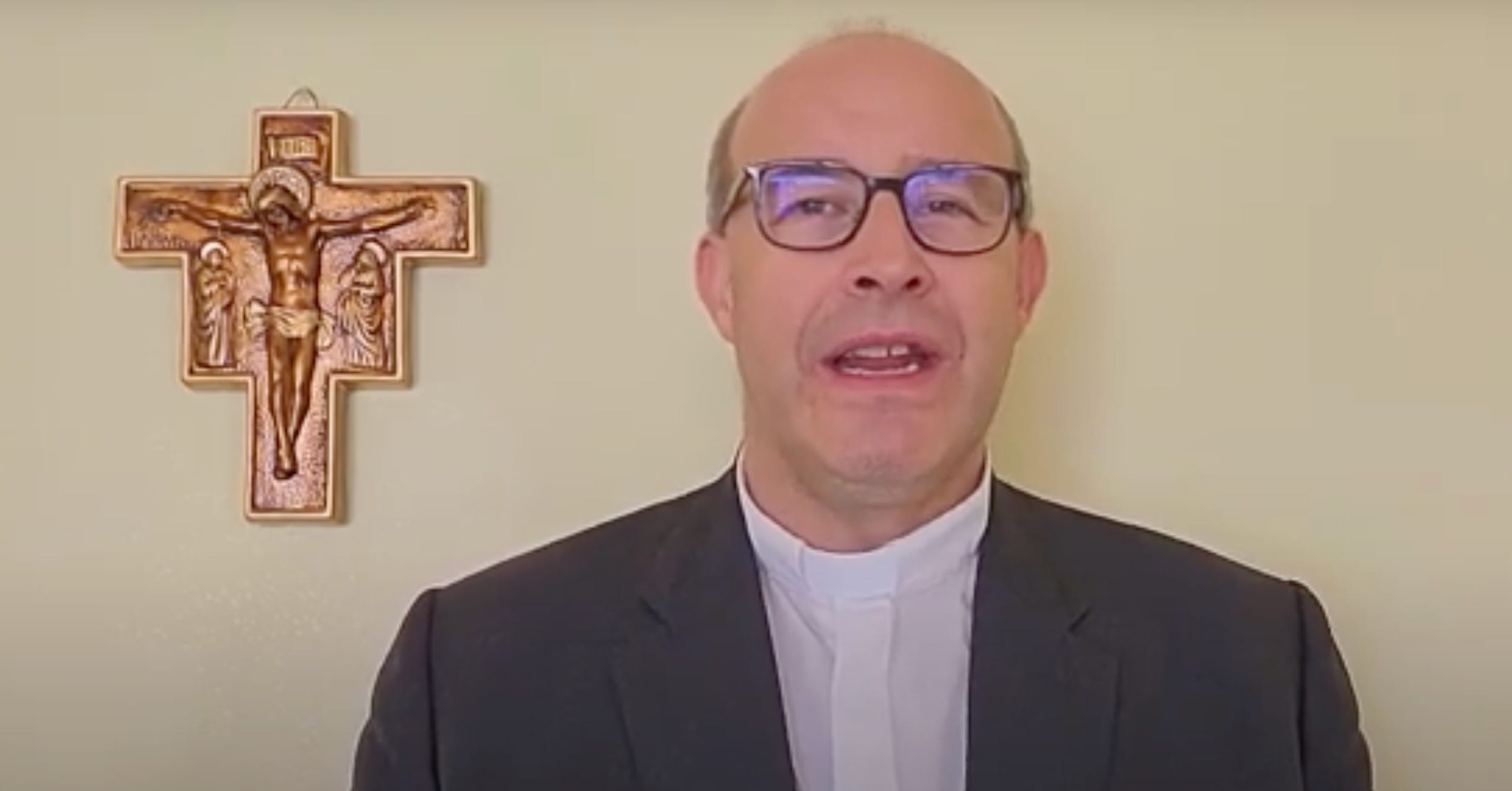
The moves come after a recent decision to revise the group’s formation programs, amid a three-year moratorium on the admission of new members.
The institute has been accused of maintaining a cult of personality around its late founder, who was found canonically guilty before his death of abusing seminarians, and of covering up sexual and psychological abuse by some of its priests. And the Vatican-appointed commissioner of the group accused members last year of failing to recognize the harm caused by its founder, and of resisting reform efforts.
—
The appointment of a new leadership council is the first major public measure made by Bishop José Antonio Satué of Málaga, who became the congregation’s delegate in January 2025.
Satué was appointed after the congregation’s previous Vatican-appointed commissary accused the group’s authorities of largely ignoring Vatican orders and forming a parallel internal government.
Satué, who is Bishop of Málaga, Spain, appointed a new general council for the institute by a Jul. 25 decree sent to members of the institute Aug. 18.
The decree, obtained by The Pillar through sources close to the pontifical delegation, asserts that Satué was appointed on December 8, 2024 as delegate “entrusting him the guidance of the institute… with all powers of government, according to universal law and the constitutions of the institute.”
“The same decree confers upon the pontifical delegate… the capacity to choose other collaborators, with the obligation to inform the dicastery immediately.”
The decree adds that the Dicastery for the Institutes of Consecrated Life and Societies of Apostolic Life approved the appointment of five collaborators for Satué:
Fr Ervens Mengelle, IVE, as vicar general.
Br. Giampiero Pettenon, SDB, as treasurer general
Fr. Diógenes Urquiza, IVE as general councillor with special responsibilities for IVE’s contemplative monasteries.
Fr. Giampiero Gambaro OFM Cap., as general councillor with special responsibilities as procurator.
Fr. Paolo Crivelli, FFB, with special responsibilities in the area of formation.
Satué also confirmed Fr. Antonio Munduate and Francisco García Villalobos, who had been appointed in December alongside Satué, as additional collaborators in the oversight of the organization.
A religious institute’s general council assists the major superior, or the papal commissioners appointed to oversight, with the day-to-day leadership of the group.
Several of the appointed council members have previous leadership experience in the IVE, especially connected with previous Vatican efforts to see the group reformed.
Mengelle became the IVE’s vicar general during a Vatican-supervised general chapter for the IVE, and was assistant of Cardinal Santos Abril as pontifical commissary to the group between 2020 and 2025.
Urquiza had also been appointed by the Vatican as part of the group’s general council in 2019. Both Mengelle and Urquiza had been appointed to IVE’s general council during one of the many Vatican interventions of the institute. Mengelle was appointed during the Vatican’s extraordinary supervision of the institute’s 2016 general chapter and Urquiza was appointed later, when Abril was appointed as apostolic commissary of IVE.
Pettenon had also collaborated with Cardinal Santos Abril from September 2021 as legal representative of the institute in Italy.
The religious family of the Incarnate Word, founded in Argentina in 1984, and consists of a male branch called the Institute of the Incarnate Word, a female branch known as the Servants of the Lord and the Virgin of Matará, a secular third order, and contemplative branches.
The Vatican’s consecrated life dicastery had announced in January 2025 that Sr. Clara Echarte, F.I., and Bishop José Antonio Satué would serve as pontifical delegates of the female and male branches, with full powers of governance.
The announcement of the special governing delegates followed a Vatican decree which imposed a three-year moratorium on the admission of new members.
—
In an email sent Tuesday to all members of IVE, Satué said that the “new configuration of the general council, with clearly defined functions for each of its members, will contribute, God willing, to bringing more efficiency in the government of the IVE that was entrusted to us.”
“I am profoundly thankful for the generosity of these persons, who offer their time and talents for love of the Church,” Satué added.
In his email, Satué also said that the group had launched a new website for the institute because “after consulting the provincials and councilors of the general government, we were not able to determine who runs www.ive.org or the email accounts finished in @ive.org. It would be irresponsible to continue using a website that is thought to be official and cooperative email accounts without identifying the administrators.”
Satué added that the new website is the “only official website, and the rest of them should not be used as reference in the publications (website and social media included) of the institute’s houses and provinces.”
The new website has a section for filing complaints to the apostolic delegate. While the old website did not mention anything about the institute’s founder having been condemned for abusing seminarians, the new website has a section on “complaints against Fr. Buela and corresponding canonical procedures.”
On July 30, the delegate and his collaborators also established a commission to revise “the formative processes of IVE … following the prohibition to admit new candidates in novitiates for a three-year period. In particular, the Dicastery had three areas of concern: initial discernment, formative itinerary, and formation of formators.”
The delegation had gone quiet for more a year after the death of Pope Francis and Satué’s appointment as bishop of Málaga, but Satué had written a sharply worded letter to the IVE in March 2025, accusing members of resisting the Institute’s reform.
“I am encountering strong resistance to admitting something obvious: the Institute of the Incarnate Word, like any ecclesial institution and like the Church itself— semper reformanda —must recognize the harm caused by some of its members and certain dynamics—internal and external—that do not reflect the style of Jesus Christ,” he wrote at the time.
Satué started his letter by thanking the IVE’s leadership for their missionary work but despite his praise for the IVE, Satué wrote that its authorities have not collaborated with him and has not grappled with its founder’s abuse — nor that of other members of the IVE.
“We can only move forward with an attitude of sincere conversion. Remember that ‘what is not assumed, is not redeemed,’ as Saint Irenaeus of Lyon teaches and you preach so many times,” the bishop wrote.
In his letter last week, Satué added that “At many times, I have had the feeling that the love for the Institute is so big that it does not allow you to acknowledge concrete elements in which a need for reform is evidenced.”
“I will not ask you to love the Institute less, on the contrary! I ask you to love it more and better, with eyes more open, to identify both the good and the evil,” he said.
Satué closed that letter expressing concern that ongoing “resistance to recognize mistakes” would “spoil the great good that has been done.”
Some within the group have interpreted that letter as a sign that the Vatican might be considering suppression of the IVE.
But a senior DICSAL source told The Pillar this month that the suppression is not on the table for the group, and while the delegate’s team has been met with resistance, “they’re actively working with the reform and we’re quite hopeful that it will end well.”
“We’re concerned with some governance issues, such as placing extremely young and inexperienced people in positions of power, what seems to be the systematic burnout of many priests, and unresolved issues with the founder,” the source told The Pillar.
Sources close to the pontifical delegation told The Pillar that one of the main issues is that certain provinces have seemed to attempt circumventing the three-year moratorium on new novices by accepting them as “volunteers,” who lived as novices in all but name.
But while significant problems remain unresolved, Satué has expressed some optimism about the IVE and its place in the Church.
Moreover, Satué has publicly acknowledged that IVE’s missionary spirit—sending its priests to places with few Catholic clergy, war zones, and some of the poorest countries in the world—is a positive aspect that should be appreciated.
But at the same time, commissaries, visitators, and delegates appointed to the IVE have consistently criticized an apparent tendency to disobey orders from the Vatican. In a 2022 letter, Cardinal Santos Abril, then apostolic commissary to the IVE, accused former members of Buela’s inner circle, including Fr. Gustavo Nieto, of running a shadow government for the institute during the cardinal’s tenure as commissary.
While some members of the institute have been more collaborative during the new pontifical delegation, sources close to the delegation told The Pillar that former authorities of the institute had made appeals against governing decisions made by the pontifical delegate, and some had gone all the way to the Apostolic Signatura, slowing down the work of the pontifical delegation.
While sources agreed that the reform of IVE’s male branch will be difficult but is possible, a source close to the delegation expression more pessimism about the reform props told The Pillar that “unfortunately, the female branch has followed the example of those in the male branch that in the past had confronted the Vatican… they have hidden things, lied and that won’t end well.”
—
The IVE has also been accused of moving priests accused of abuse to other provinces of the congregation without opening a canonical investigation or establishing any formal sanctions against them.
Cardinal Abril’s 2022 letter charged that some members continued to view Fr. Buela “as a priest unjustly persecuted by the Holy See, and the victims are considered false and insincere.”
“The two institutes organize pilgrimages to his tomb, and his writings have been republished and disseminated,” it said.
While in 2016, the Vatican confirmed that Buela had been found guilty of sexual misconduct with IVE seminarians, the institute’s official website still includes a biography for Buela as the group’s founder, without mentioning his canonical conviction.
And despite his canonical convictions, some provinces of the institute published commemorative videos when he died in 2023, and he received multitudinary funerals in Italy and Argentina with the presence of hundreds of members of both branches.
For its part, the 2024 Vatican decree announcing the appointment of the pontifical delegates also noted that the dicastery has “over the years… followed with great attention the situation, delicate in several respects,” of the IVE, including the founding of the female institute “despite the negative opinion expressed by the then Congregation for Institutes of Consecrated Life.”
Since its inception in 1984, the institute has had six different pontifical commissaries or delegates in different periods of its history.
The first restrictions on the institute were placed in 2001, when then-pontifical commissioner Bishop Alfonso Delgado announced the closure of the IVE’s seminary in the Diocese of San Rafael, Argentina, where the institute was born. The decision was revisited a few months later, and the IVE was instead told to relocate its seminary to Italy.
After years of rumors against Buela, the then-Congregation for Institutes of Consecrated Life and Societies of Apostolic Life published a decree in January 2010 ordering the “removal of Fr. Carlos Buela from the office of Superior General of the Institute of the Incarnate Word.”
It also obliged Buela to “reside, until further orders, away from the own Institute, in the [French] Abbey La Pierre Qui Vire under the authority of the Abbot who can regulate its contacts with the members of the Institute of the Incarnate Word” due to “inappropriate behavior with young members of the Institute.”
The Vatican later clarified that all of the victims in question were young adults.
In 2016, the Diocese of San Rafael in Argentina said in a statement that “the Holy See determined the veracity of the complaints and the imputability to Father Buela of inappropriate behavior with adults.”
The statement said the Vatican had determined “that he is forbidden to be in touch with members of the IVE; he cannot make any statements or appear in public or partake in any kind of activity or meeting.”
These prohibitions were allegedly largely ignored, however, which prompted the pope to appoint Spanish Cardinal Santos Abril as pontifical commissary of the male branch in 2019, replacing Msgr. Angelo Todisco, who had served as pontifical assistant of IVE between 2016 and 2019.
In 2021, a special canonical tribunal, constituted by Abril, concluded that Buela had committed grave crimes against the Sixth Commandment using violence against five members and former members of the Institute.
Buela appealed the decision, but died in April 2023, before a final decision could be issued.
Cardinal Abril repeatedly cited a lack of cooperation from members in the IVE and, in a 2022 letter, said the former superior general, Fr. Gustavo Nieto, had created a “shadow government, as it had happened with all former commissaries.”
On April 19, 2023 – four days before Buela died – the cardinal sent an additional letter to the institute, in which he highlighted further concerns, some of which seem to have inspired the Vatican’s decision to appoint special delegates to both male and female institutes with full governing control.
Abril expressed particular concern about the number of members who had left the Institute saying that “with incomplete information, 275 religious (most of them priests) have abandoned the IVE: there have been 125 reductions to the lay state, 52 incardinations in other dioceses, 5 processes in the [Congregation] of the Doctrine of the Faith, 11 expulsions and almost 50 exclaustrations [from the contemplative branch].”
Abril added that “IVE has a very distorted map (...) the number of professed religious in the IVE corresponds to two middle-sized provinces in any religious institute, while IVE has 13 Provinces and 4 Delegations (...) in 44 nations and almost 100 dioceses.”
“Many [places where IVE is supposed to be present], about 70, can hardly be called communities,” the cardinal said, “having just one or two religious. And the rest of the presences are not even canonically erected.”
Although the cardinal ordered the prohibition of new IVE foundations and the suppressing those established after June 2019, his order went largely ignored, which may have prompted the appointment of a new pontifical delegate for the male branch, and a first delegate for the female branch.
The decree appointing the new delegates mentions that the delegates will have “all government powers” and “full faculties” to change and derogate the constitutions to “start a profound revision of the right [of the Institute].”
The decree of appointment for Bishop Satué to take charge of the male branch notes “a great weakness in the formation process, that is one of the factors that has contributed to the high number of desertions from the institute, which has lost close to 40% of its members since its beginnings.”
“Likewise, [the previous canonical visitation] showed a lack of care for the constitution of its communities, sometimes formed by only two members or by isolated priests with a pastoral task, affecting common fraternal life, which is one of the essential elements of religious life.”


I have great hopes with Fr Mengelle as the vicar general. Over the past 6 years I have known him, he is a tireless workhorse and a lover of Lord in the Sacred Scriptures.