Venezuelan interior minister blasts bishop urging release of political prisoners
Cabello accused the bishop of defending “murderers.”
The interior minister of Venezuela, who is alleged to lead a government-protected drug cartel, accused a local bishop of defending “murderers,” after the prelate called for the release of political prisoners.
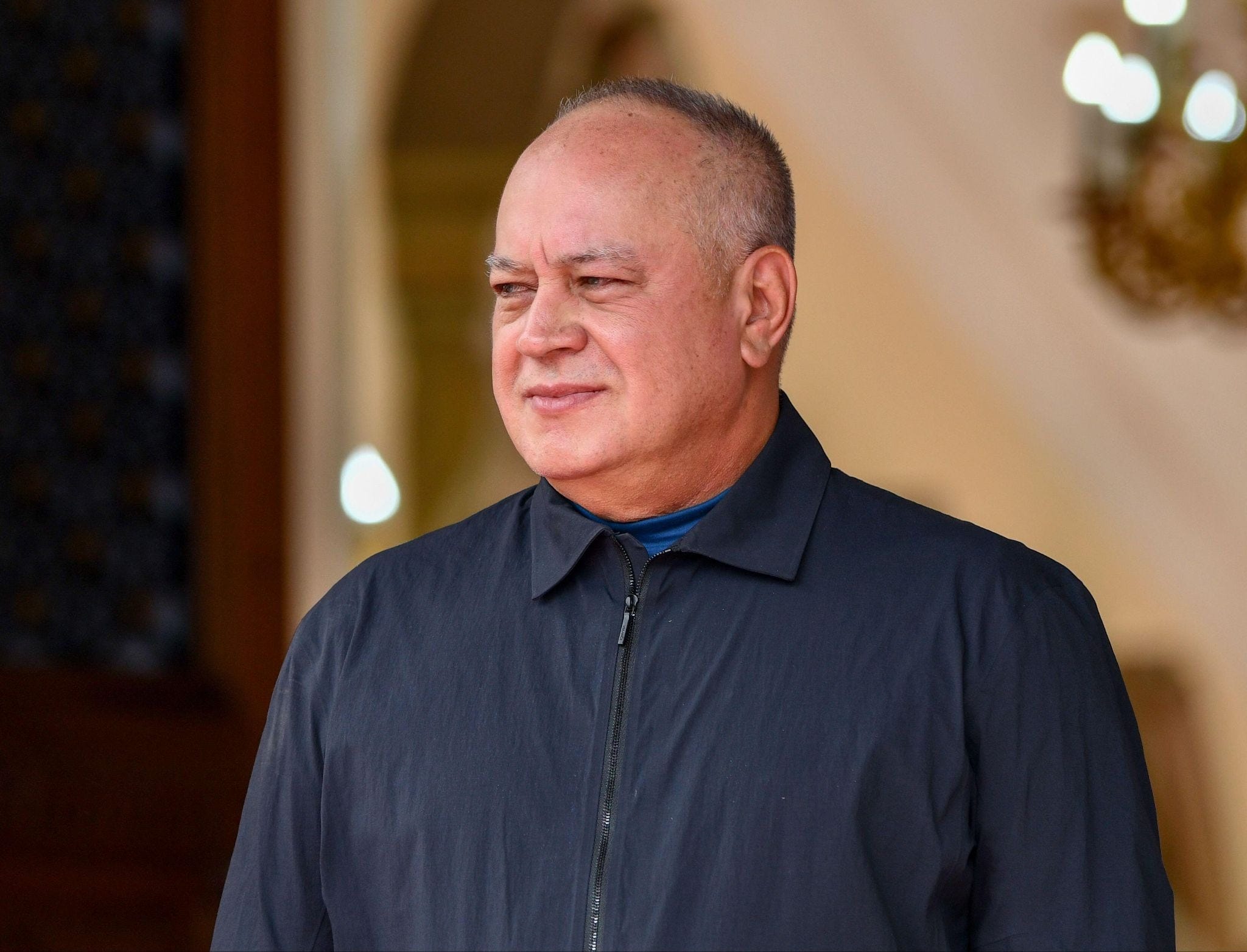
Diosdado Cabello, Venezuela’s interior minister, criticized Archbishop Polito Rodríguez last week, saying that the archbishop “preached the same nonsense as usual,” after Rodríguez urged the government to follow through on promises of a mass release of political prisoners.
Cabello said on a local television program Jan. 15 that many of the political prisoners in Venezuela are drug traffickers and murderers. He said the bishops should not be defending “criminals.”
“Instead of preaching at Mass about peace, about the union of Venezuelans, he came out and preached the same nonsense as usual,” Cabello said of Archbishop Rodríguez.
For years, U.S. authorities and independent investigators have accused Cabello of being deeply involved in transnational drug trafficking networks tied to the so‑called Cartel of the Suns, a criminal structure allegedly composed of senior Venezuelan military and political officials that smuggles large quantities of cocaine toward the United States and Europe.
Cabello has been indicted in the United States on narco‑terrorism and drug‑distribution charges.
Separately, human rights organizations and critics of the Venezuelan regime have linked Cabello to serious human rights abuses. As interior minister of the country, Cabello has been associated with the arbitrary detention, intimidation, torture, disappearance, and violent repression of political opponents, journalists, and activists.
On Jan. 14, Archbishop Rodríguez celebrated a Mass before the procession of the Divina Pastora, the patroness of Barquisimeto. The procession is one of the largest Marian processions in the world, with as many as 3 million people in attendance.
Traditionally, the homily that accompanies the procession is charged with a strong social and political tone. Rodríguez’s was no exception.
The archbishop said that Christians “cannot resign themselves before evil, before anything that goes against human dignity and destroys fundamental human rights: the right to life, freedom of speech, right to vote, and other civil and political rights.”
“Regrettably, for decades, corruption has become part of our culture. We’ve gotten used to it in our families, in our institutions, in our homes, in the economy, in politics, which has resulted in an ethical and moral decomposition that affects all,” he said.
The archbishop criticized the government for announcing a “massive” release of political prisoners while freeing fewer than 10%, according to local human rights groups.
“We pray for all the [political] prisoners, for their families. We applaud that some of them have been freed, but many more are missing, whose cries can no longer be ignored. Therefore, their prompt release shall be a gesture of reconciliation and justice,” he said.
Human rights groups estimate Venezuela has somewhere between 800 and 1,000 political prisoners. While the government claimed last week to have freed 400 of them, local organizations report that fewer than 100 have actually been released.
The pope has also addressed the situation in Venezuela, with a careful statement in his Jan. 4 Angelus, a day after the U.S. operation to capture dictator Nicolas Maduro.
The pope said that “the good of the beloved Venezuelan people must prevail over every other consideration and lead us to overcome violence and to undertake paths of justice and peace, safeguarding the country’s sovereignty, ensuring the rule of law enshrined in the Constitution, respecting the human and civil rights of each person and of all.”
He echoed that language in his address to diplomats a week later. In addition, he received opposition leader and Nobel Peace Prize Award winner María Corina Machado in a private audience on Jan. 12, the first time a high-profile Venezuelan opposition leader has been received in a private audience by the pope.
While the Vatican did not disclose the contents of the meeting, Machado said the tone was positive, and that she asked the pope to intercede in the release of political prisoners in Venezuela.
This is not the first time Cabello has insulted or threatened a bishop over a Divina Pastora homily.
In 2023, then-apostolic administrator of Barquisimeto, Bishop Víctor Hugo Basabe said in his Divina Pastora homily that Venezuela had been “hurt, beaten, betrayed, and ransacked to the utmost.”
Cabello took offense at the homily and called Basabe an “opposition leader” who had “tarnished” the “extraordinary show of faith of the Catholic people” with his “low-politics, malicious speech.”
“That ecclesiastical hierarchy has historically turned its back on the people,” he said in a press conference. They haven’t realized that their attitude has led other religions to welcome so many Venezuelans, thanks to the petty politics of the episcopal conference, every last one of them.”
After Cabello’s statements, government supporters began protesting the bishop. Some also interrupted him during Mass, and allegedly cut internet service so that the Mass could not be live-streamed. The government of the Iribarren Municipality, where Barquisimeto is located, declared the bishop persona non grata.
But Basabe said he would not back down.
“We have the duty to denounce anything that goes against the people of God. We cannot stay silent,” he said in an interview afterward.
“I will never agree with the political actions of those in the government because it has led to worsening the life of people and breaking families due to migration ... I will never agree with the political actions of someone that, having all the power and all the resources, have led the people to this situation,” Basabe said.

